



Pakistan claims 130 Taliban fighters killed in 'Operation Ghazab lil Haq'
- In Reports
- 02:40 PM, Feb 27, 2026
- Myind Staff
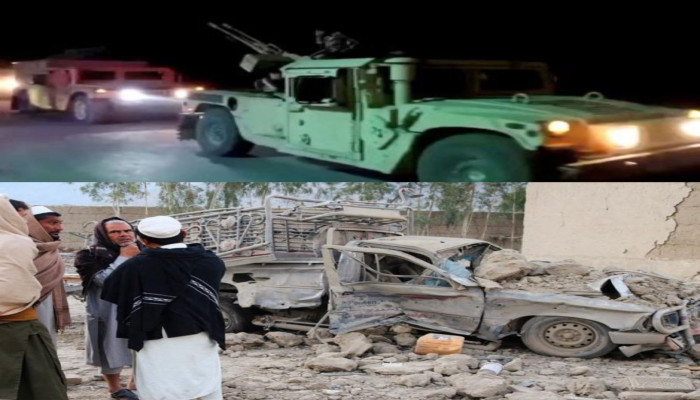
Tensions between Pakistan and Afghanistan have sharply escalated after Pakistan announced a large-scale military action called ‘Operation Ghazab lil Haq’. Islamabad claimed that more than 130 Taliban fighters were killed during the operation, which began late Thursday night. The move came after Pakistan accused the Afghan Taliban of attacking several of its border posts.
According to Pakistani officials, the operation was launched in response to what they described as repeated aggression from across the border. The military action reportedly included airstrikes on major Afghan cities, including the capital, Kabul. Loud explosions and gunfire were heard in Kabul for more than two hours, as reported by the news agency AFP.
An AFP reporter in Kandahar, the southern Afghan city where Taliban Supreme Leader Hibatullah Akhundzada is based, said jets were heard flying overhead. Airstrikes were also reported in other areas, including Paktia.
Pakistan’s Defence Minister, Khawaja Asif, confirmed that the operation was underway. He said that the armed forces were giving a strong and decisive reply to attacks carried out by the Afghan Taliban. Declaring that tensions had reached a breaking point, he stated, “Our patience has run out. Now there is an open war.”
He also said that Pakistan had tried to improve relations and maintain normal ties with Afghanistan, both directly and through friendly countries. “The forces of Pakistan had given a decisive response to aggression from the Afghan Taliban,” he said. He added that Pakistan’s earlier role had been “positive,” especially in hosting Afghan refugees over the years. However, he stressed that the country could no longer tolerate continued attacks.
The conflict between the two neighbours has been growing since the Taliban returned to power in Afghanistan in 2021. Relations have remained tense, with both sides accusing each other of supporting militant groups. Islamabad has repeatedly accused the Taliban government of giving shelter to the Tehrik-i-Taliban Pakistan (TTP), which has carried out many attacks inside Pakistan as part of its long-running insurgency. Kabul has denied these accusations. Afghan authorities argue that Pakistan allows groups that target Afghanistan and does not respect Afghan sovereignty.
The first major recent clash between the two countries happened during the October 11–12 weekend in 2025. At that time, Afghanistan carried out revenge strikes on Pakistan, blaming it for an attack in Kabul. Around 70 people were killed on both sides during those clashes. Since then, both countries have launched strikes against each other from time to time, leading to dozens of additional deaths.
There were efforts to reduce tensions. Qatar and Turkey brokered a ceasefire, and several rounds of negotiations followed. However, these talks failed to bring a long-term solution. The ceasefire did not hold, and cross-border violence continued.
The Taliban government confirmed that Pakistani airstrikes had taken place. Taliban spokesperson Zabihullah Mujahid said there were no casualties from the air attacks. He wrote on X, “The cowardly Pakistani military has carried out airstrikes in certain areas of Kabul, Kandahar, and Paktia; fortunately, there have been no reported casualties,” he wrote on X in the early hours of Friday.
Hours before that statement, Mujahid had announced “large-scale offensive operations” at the border “in response to repeated violations by the Pakistani military”.
Meanwhile, the Afghan Defence Ministry reported that eight of its soldiers were killed in the land offensive linked to the latest fighting.
Pakistan has described the current situation as a full-scale conflict, using the words “open war” to explain the seriousness of the crisis. The government says it had made repeated attempts to maintain peace and normal relations but was forced to act after continued attacks on its border posts.
The situation now marks one of the most serious escalations between the two countries in recent years. With airstrikes, ground offensives, and strong statements from both sides, tensions remain extremely high. Despite past mediation efforts and temporary ceasefires, there appears to be no immediate path to peace as both countries continue to blame each other for the violence.



 Loading...please wait
Comments