




Osman Hadi’s brother warns Yunus, ‘if you can’t give justice, you have to flee’
- In Reports
- 05:25 PM, Dec 24, 2025
- Myind Staff
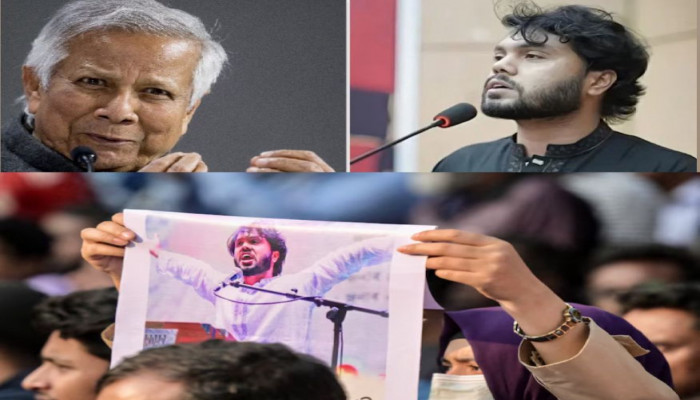
Bangladesh is witnessing growing political unrest following the assassination of youth leader Sharif Osman Hadi, an incident that has further intensified the country’s already fragile political situation. Hadi’s killing has triggered widespread protests, violent clashes, and strong allegations against the interim government led by Muhammad Yunus.
Sharif Osman Hadi, a 32-year-old activist, poet, and spokesperson of the Inqilab Manch movement, was shot on December 12 in Dhaka while attending an election campaign event. He was critically injured in the attack and later flown to Singapore for medical treatment. Despite efforts to save him, Hadi succumbed to his injuries on December 18. His death has since sparked nationwide outrage and unrest.
Following the assassination, Hadi’s brother, Omar Hadi, publicly accused the interim Yunus administration responsible for the killing. He alleged that the murder was carried out deliberately to cancel the upcoming Bangladesh parliamentary elections. Addressing political leaders and the authorities, Omar expressed deep anger and mistrust toward the government, accusing those in power of failing to deliver justice.
“If you can’t give justice, then you have to flee,” Omar Hadi warned, directly confronting the interim leadership. He further accused the government of attempting to use his brother’s death as a political tool. “You have killed Osman Hadi and you want to cancel the election showing him,” he said, reflecting growing suspicion among citizens about the intentions of the current administration.
Omar Hadi made it clear that his family and supporters would not remain silent. “If Hadi does not get justice, you also have to leave this country,” he declared, stressing the seriousness of the allegations and the anger felt by many across Bangladesh.
Hadi’s funeral became a major public event marked by heavy security arrangements. Tens of thousands of people gathered to pay their last respects, turning the ceremony into a powerful demonstration of public emotion and resistance. Many mourners chanted slogans such as, “Hadi’s blood will not go in vain,” highlighting the symbolic importance Hadi had come to hold among young activists and political supporters.
Sharif Osman Hadi had emerged as a prominent figure during the July 2024 uprising, which played a key role in the removal of former Prime Minister Sheikh Hasina from power. Known for his outspoken nature and refusal to compromise, Hadi was widely viewed as a strong and influential voice in Bangladesh’s political future. Many believed he could have played a major role in the upcoming parliamentary elections scheduled for February.
Omar Hadi called on the authorities to take immediate action and ensure accountability. He urged the government to “bring all murderers who killed Hadi” to justice, echoing a wider demand among supporters for transparency and an independent investigation. His words resonated with many who see the case as a test of the government’s credibility and commitment to the rule of law.
During public gatherings, Omar repeatedly described his brother as someone who stood firm against pressure and intimidation. He stated that Hadi “never bowed down,” a phrase that became a rallying cry among mourners and protesters. The statement reflected Hadi’s reputation as a fearless activist who refused to give in to political threats.
The assassination has raised serious concerns about political violence and the safety of activists in Bangladesh. It has also deepened the ongoing crisis surrounding the country’s political transition and upcoming elections. With protests continuing and trust in the interim government weakening, the demand for justice in Sharif Osman Hadi’s case has become a central issue in national politics.
As tensions continue to rise, the killing of Sharif Osman Hadi remains a powerful symbol of the unrest gripping Bangladesh. His death has not only shaken the political establishment but has also strengthened calls for accountability, justice, and a transparent electoral process. Whether the authorities can address these demands remains uncertain, but public pressure shows no sign of fading.



 Loading...please wait
Comments