




Oregon Education Department recognizes distinction between sacred Swastika and Nazi 'Hakenkreuz'
- In Reports
- 10:21 PM, Jul 22, 2024
- Myind Staff
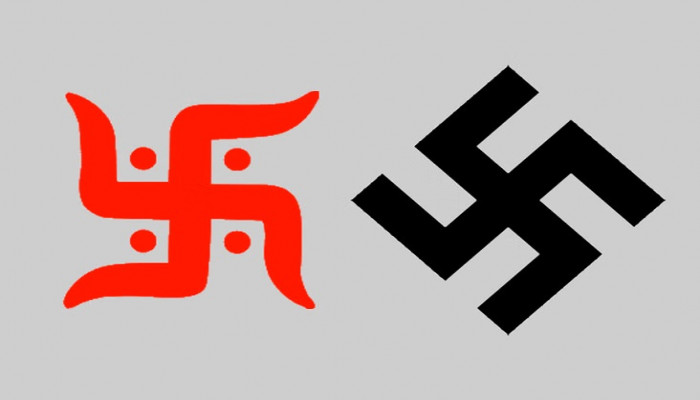
As a major win for the Hindu community worldwide, the Oregon Education Department in 2021 officially acknowledged the distinction between the sacred Swastika and the Nazi 'Hakenkreuz.' This landmark recognition aims to correct widespread misconceptions and educate the public on the differences between these symbols.
According to an official release titled "Every Student Belongs — Learning the Difference Between Symbols" on Oregon.gov, the Swastika is described as a Sanskrit term symbolising auspiciousness and elements of the natural world. It holds significant religious and cultural importance in Hinduism, Buddhism, Judaism, Jainism, and some Native American traditions.
The Education Department clarified that the hooked cross, often mistakenly labeled as the Swastika, is actually the 'Hakenkreuz,' a hate symbol associated with Nazi ideology. The release emphasized the importance of distinguishing between the two, stating, "While the hooked cross image is commonly referred to as a ‘swastika,’ the actual Nazi and Neo-Nazi symbol is correctly labeled as a ‘hakenkreuz,’ the German word for ‘hooked cross.’ Connect the dots through education and clarification about the terminology."
The sacred Swastika, which translates from its Sanskrit roots to mean "well-being," dates back approximately 6,000 years and is depicted in ancient rock and cave paintings. Scholars generally agree that it originated in India. It has been a symbol of good luck, prosperity, and auspiciousness in various cultures, including the Vikings and Greeks, besides Hindus, Buddhists, and Jains.
In Hinduism, the Swastika was first mentioned in the Vedas and symbolises many things, including Surya (the sun) and Brahma, the creator. It is also the emblem of Ganesha, the god of good luck. The Swastika is traditionally used to mark the opening pages of account books, doors, and thresholds in both Hinduism and Jainism.
Historical evidence also shows the Swastika's usage in ancient Greece, the ancient city of Troy, by the Druids, the Celts, Nordic tribes, and even early Christians, including the Teutonic Knights, a German medieval military order.
The American Jewish Committee, a prominent Jewish advocacy organization, released a leaflet to clarify the distinction between the ancient Swastika and the Nazi 'Hakenkreuz.' Despite these efforts, many continue to conflate the two symbols, perpetuating cultural insensitivity and Hinduphobia.
A recent case in Australia highlighted this issue when Uber de-platformed a Hindu woman named Swastika for five months. She successfully fought against the decision, underscoring the need for greater awareness and education regarding the Swastika's true meaning and significance.
Image source: Swarajya



 Loading...please wait
Comments