



‘One call from PM Modi could help end Iran–Israel conflict’: UAE Envoy
- In Reports
- 12:41 PM, Mar 10, 2026
- Myind Staff
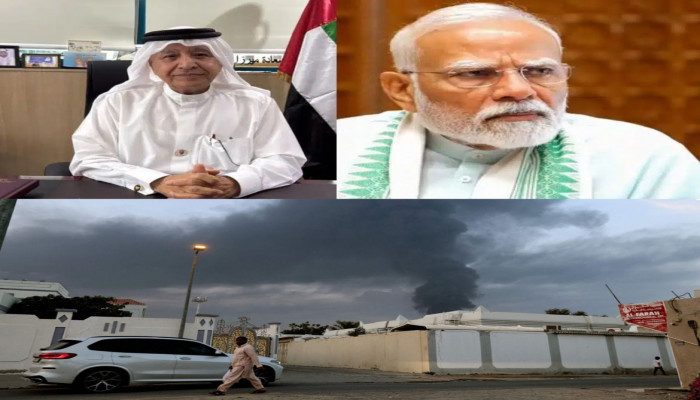
The United Arab Emirates has said it does not want to be drawn into the ongoing conflict between Iran and Israel. Hussain Hassan Mirza, the first UAE Ambassador to India, said the country has no reason to be involved in the war and will not allow its territory to be used by either side for military action.
Speaking about the conflict, Mirza said that the UAE wants to stay away from the fighting and maintain stability in the region. He made it clear that the country does not want to become part of the war between Iran and Israel.
“To be honest, I'm not sure why we are involved. There is no reason for the UAE to be involved in this,” Mirza said.
Mirza explained that Abu Dhabi is in a sensitive geopolitical position. The UAE is geographically close to Iran and, at the same time, maintains diplomatic relations with Israel under the Abraham Accords. Because of this position, he said the country could also help in bringing the two sides together for talks if needed.
“We can negotiate between the two,” he said.
During the conversation, Mirza also spoke about India’s role in the region and the influence of Prime Minister Narendra Modi. According to him, PM Modi enjoys strong respect not only among political leaders in the Gulf but also among the people and business communities in the region. This credibility, he said, extends to both countries involved in the conflict.
Because of this trust, Mirza expressed confidence that India could play an important role in reducing tensions. He said that even a single phone call by the Indian Prime Minister to the leaders of Iran and Israel could help resolve the crisis.
“One phone call from Mr Modi to the counterparts in Iran and Israel can solve this issue, can end this issue. One phone call,” Mirza said.
Mirza further said that his confidence comes from the respect and standing that PM Modi has with both sides involved in the conflict. He referred to the two sides as “warriors” who are currently engaged in a conflict that is affecting the region.
“They are fighting each other on our soil. That is unacceptable,” he said.
At the same time, Mirza clarified that he was speaking from a civilian perspective and not from a military standpoint.
“I am not a military guy,” he said, while adding that reports of limited damage in the conflict so far appear to be accurate according to his assessment.
Meanwhile, the conflict between Iran and Israel continues with no clear signs of stopping. The war has continued even during the political transition in Iran following the selection of Mojtaba Khamenei as the country’s new Supreme Leader. Israel’s military has launched a fresh wave of strikes targeting central Iran and also hit Hezbollah infrastructure in Beirut.
The human impact of the conflict is also increasing. Iran’s ambassador to the United Nations said that 1,332 civilians have been killed so far and thousands of others have been injured in the fighting. In another development, the United States confirmed that a seventh American soldier died while receiving treatment.
Mirza’s remarks highlight the growing concern over the ongoing conflict in the region. At the same time, his comments also point to the possibility that diplomatic efforts by global leaders could help reduce tensions and bring the situation closer to a peaceful solution.



 Loading...please wait
Comments