




Oil tanker struck by an unknown projectile near Strait of Hormuz
- In Reports
- 12:47 PM, Jul 07, 2026
- Myind Staff
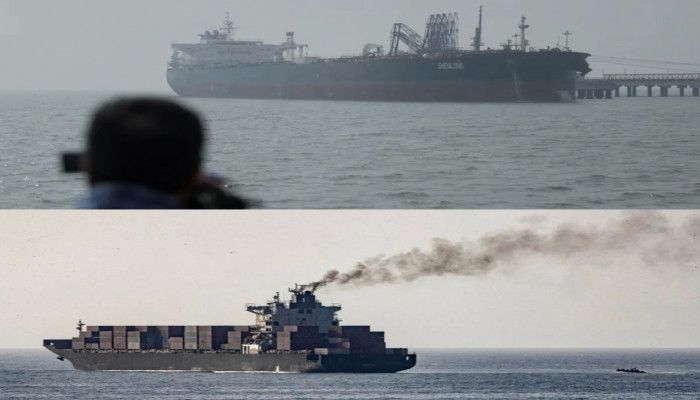
An oil tanker caught fire after an "unknown projectile" struck it near the Strait of Hormuz on Monday, raising fresh concerns over security along one of the world's busiest energy shipping routes. The incident took place off the coast of Oman, close to a key passage used for global oil transportation. Authorities have started an investigation, while a later report claimed that another commercial ship also came under attack.
The United Kingdom Maritime Trade Operations (UKMTO) said the incident happened around eight nautical miles east of Limah, Oman. The tanker was travelling southbound when the projectile hit the vessel on its port side and started a fire.
In a post on X, UKMTO said, "A tanker has reported being hit by an unknown projectile on the port side, causing a fire, whilst travelling southbound." The agency confirmed that there were no reports of injuries among the crew. It also said the incident had not caused any environmental damage.
UKMTO advised all vessels passing through the area to remain alert. The agency said, "Vessels are advised to transit with caution and report any suspicious activity to UKMTO," while confirming that authorities were investigating the incident.
Later on Monday, Axios reported that Iran had launched missiles at commercial vessels in the same region. The report cited two unnamed US officials. According to Axios, one of the officials said Iran had "fired at least two missiles at commercial ships." The report also said another commercial vessel was struck and suffered significant damage. Officials have not released further details about the second ship.
The latest incident has once again brought attention to the Strait of Hormuz, a strategic waterway that plays a major role in global energy trade. The route became a major flashpoint during the recent West Asia conflict. Iran blocked the strait during the conflict, and several commercial vessels faced attacks while travelling through the area. These developments disrupted shipping and pushed global energy prices higher.
The United States later responded by imposing its own naval blockade in the region. It also carried out retaliatory strikes against Iran after accusing Tehran of targeting commercial shipping. The confrontation increased tensions in the Gulf and raised concerns about the safety of international trade passing through the waterway.
Commercial shipping resumed after Washington and Tehran signed a memorandum of understanding last month. The agreement aimed to end the conflict and reopen the Strait of Hormuz for international shipping. The move allowed commercial vessels to return to the route after weeks of uncertainty.
Despite the agreement, Iran has stated that shipping operations will not return to the system that existed before the conflict. Tehran has said it will not allow vessels to move freely through the strait under the earlier arrangements. Iranian authorities have also warned ships against using routes outside a designated shipping corridor that runs along the country's coastline.
The Strait of Hormuz remains one of the world's most important maritime routes for oil exports. Gulf countries depend on the passage to transport crude oil and other energy supplies to international markets. Many Asian countries receive a large share of their energy imports through this route.
According to the US Energy Information Administration, nearly 20 million barrels of crude oil passed through the Strait of Hormuz every day in 2024. The agency estimated that the waterway handled around one-fifth of the world's total crude oil supply. Any disruption in the region can affect global energy markets and international shipping, making incidents such as Monday's attack a matter of worldwide concern.



 Loading...please wait
Comments