




Oil tanker explodes in Strait of Hormuz after hitting naval mine
- In Reports
- 09:31 PM, Jul 27, 2026
- Myind Staff
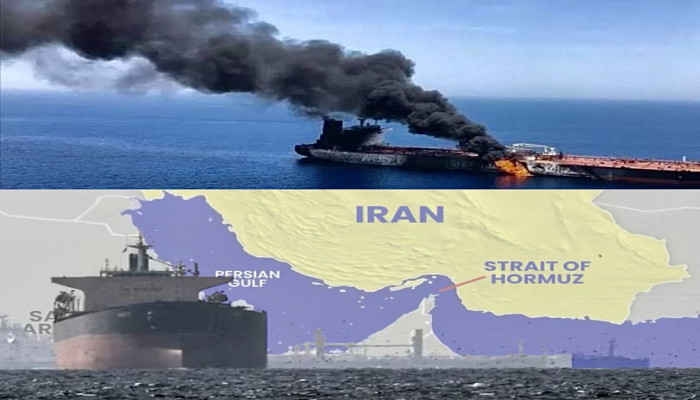
An oil tanker reportedly exploded after hitting a naval mine in the Strait of Hormuz on Sunday, according to Iranian media reports. The reports claimed the vessel struck the sea mine after it allegedly moved outside the designated shipping route set by Iranian authorities for maritime traffic in the strategically important waterway. Iranian media described the tanker as a "violating" vessel. However, officials did not immediately release details about the ship's ownership, destination or the extent of the damage caused by the explosion.
The incident took place at a time when tensions remain high across West Asia. The conflict involving Iran, the United States and Israel has continued for months, with no clear signs of a permanent resolution. The reported explosion has added another layer of concern in one of the world's busiest oil shipping routes.
On the same day, Iran announced that it had temporarily suspended its retaliatory attacks against American allies in West Asia. Iranian officials said they decided after the United States stopped carrying out military strikes on Iranian territory over the past two nights. The announcement has raised hopes that the prolonged confrontation between Washington and Tehran could move towards de-escalation. Despite this development, both countries remain on high alert.
Army spokesman Mohammad Akraminia said Iran's military actions had always followed a retaliatory strategy. He explained that Tehran decided to stop its operations after the recent pause in American attacks. Speaking about the situation, he said, "These attacks continued until two nights ago, but over the past two nights the Americans have stopped their attacks."
He further added, "Since… our strategy has essentially been retaliatory, we have also halted our retaliatory operations." His remarks indicated that Iran's decision was directly linked to the temporary halt in US military operations. At the same time, Iranian officials made it clear that the pause should not be viewed as a permanent end to the confrontation.
The latest developments follow months of military escalation across the region. The conflict initially centred around the Strait of Hormuz, one of the world's most important maritime trade routes. Over time, the confrontation spread across West Asia and expanded beyond the shipping corridor. Military operations later targeted American military installations, commercial shipping routes and several US allies in the region.
The temporary reduction in hostilities has revived speculation that diplomatic talks between Tehran and Washington could resume. However, reports from the United States suggest that diplomacy is not the only factor behind the current pause in military operations.
According to CNN, which cited a Pentagon official, American military operations against Iran are currently "on hold." The report came even after President Donald Trump warned on Friday that the United States could launch attacks on a "much higher level" if necessary. The report suggested that military operations remain suspended for now despite the strong warning from the US President.
A separate report by The New York Times, quoting people familiar with internal discussions, stated that plans for further military escalation have been delayed. The report said officials raised concerns over shrinking supplies of key defence systems, including Patriot interceptor missiles. It also stated that the White House is assessing the wider impact of any expanded conflict. Officials are considering the possible consequences for Gulf allies as well as the global economy before making further decisions.
CNN also reported that Vice President JD Vance and Chairman of the Joint Chiefs of Staff General Dan Caine advised caution during a White House meeting held on Friday. According to the report, General Caine informed President Trump that the US military had the capability to carry out the available military options. At the same time, he also warned about the risks involved in expanding the conflict further.
Despite the current pause, Iran signalled that the situation remains unresolved. Iranian military officials warned that retaliatory operations would restart if the United States resumed strikes against Iranian territory. The warning underlined that the current calm remains temporary and depends on future actions by both sides.
The latest developments have come just ahead of Israeli Prime Minister Benjamin Netanyahu's scheduled visit to Washington on Tuesday. During the visit, Netanyahu is expected to meet President Trump. Their discussions are likely to focus on the ongoing conflict involving Iran, security in the Strait of Hormuz and the broader situation across West Asia. The outcome of those talks could play an important role in shaping the next phase of the regional crisis.



 Loading...please wait
Comments