




Oil hits $119 as Trump intensifies pressure on Iran with blockade and strike plans
- In Reports
- 12:11 PM, Apr 30, 2026
- Myind Staff
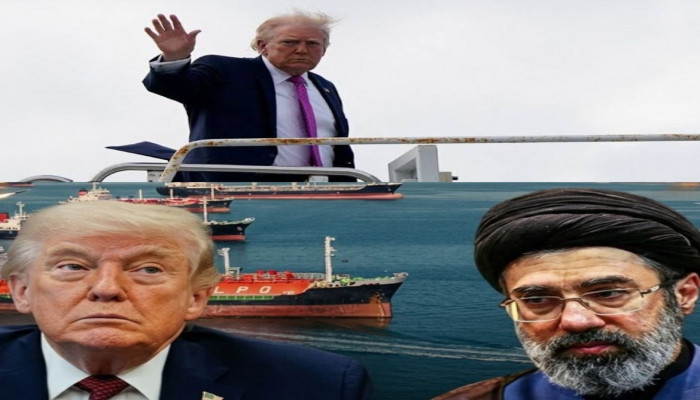
Global oil prices surged sharply as tensions between the United States and Iran escalated, with Brent crude reaching $119 a barrel. The rise came as Donald Trump strengthened efforts to pressure Tehran through a continued naval blockade and possible military action. The price of Brent oil jumped more than 7% in a single day, hitting its highest level since June 2022.
The spike followed Trump’s remarks to Axios, where he made it clear that the blockade on Iranian ports would remain in place until Iran agreed to a nuclear deal. He said, “they are choking like a stuffed pig and it is going to be worse for them.” His comments signalled a firm stance on continuing economic pressure. Later, Trump added that both sides are still in contact, stating that “Iran has come a long way, the question is whether they will go far enough... Now, Iran just has to say we give up”.
Discussions around strategy have been ongoing within the US administration. According to a report by The Wall Street Journal, Trump reviewed options during a Situation Room meeting on Monday. He considered resuming bombing or stepping back from the conflict. However, he concluded that both options carried greater risks than continuing to restrict Iran’s oil revenues. This approach is seen as a high-stakes attempt to push Iran into accepting terms it has long resisted.
The impact of these developments has been clearly visible in the oil market. Prices have now erased all losses recorded after the US and Iran agreed to a temporary ceasefire. Investors are increasingly concerned about the possibility of a prolonged conflict, which has added pressure to already tight supply conditions.
At the same time, Trump met top oil industry leaders at the White House to discuss maintaining the blockade while managing its effects on global and domestic markets. The meeting included representatives from major companies such as Chevron Corporation, Trafigura Group, Vitol Group, and Mercuria Energy Group. Chevron confirmed that its CEO, Mike Wirth, was present.
The meeting was led by US Treasury Secretary Scott Bessent, who has been at the forefront of efforts to increase economic pressure on Iran. Other key officials in attendance included Vice President JD Vance and White House Chief of Staff Susie Wiles. The discussions focused on how to continue the blockade if required, while limiting its impact on American consumers. Officials also reviewed steps already taken to stabilise the oil market, including domestic production, oil futures, natural gas supply, and shipping operations. Progress in Venezuela following the US capture of its former leader, Nicolás Maduro, was also discussed.
The situation in the Strait of Hormuz has further intensified concerns. The near-closure of this critical route has disrupted the flow of about 13 million barrels of crude oil per day. To manage the shortage, countries have been relying on stored reserves and emergency stockpiles. These measures have helped in the short term but may not be sustainable if tensions continue.
The blockade of Iranian oil exports remains central to the US strategy. Bessent has described it as a way to cut off Iran’s revenue by stopping crude sales, forcing oil into storage, and eventually shutting down production at some wells. He stated on X that “Iran’s creaking oil industry is starting to shut in production” due to these restrictions. The administration has also taken additional steps, including extending a temporary waiver that allows foreign vessels to transport crude between US ports. It has also eased some sanctions to permit limited purchases of Russian crude transported by sea.
While the economic pressure continues, military preparations are also underway. According to Axios, US military commanders have developed a plan for a short and intense wave of strikes on Iran. The aim is to further increase pressure on the Iranian leadership. However, there is no confirmation on whether these plans will be executed.
Iran, on its part, has shown no indication of giving in. Parliament Speaker Mohammad Bagher Ghalibaf criticised Trump’s approach, accusing him of trying to force Iran into surrender through economic pressure and internal division. He said, “Trump explicitly divides the country into hardliners and moderates and then immediately talks about a naval blockade to force Iran to surrender through economic pressure and internal divisions.” He added that national unity is the only way to “counter the enemy”.
Trump has argued that divisions within Iran’s leadership have slowed decision-making. Recent US and Israeli attacks have also weakened Iran’s command structure by killing several top leaders. At the same time, there is uncertainty about how long Iran can continue under current conditions. According to analytics firm Kpler, the country may only have 12 to 22 days of storage capacity left before it is forced to shut down wells, which could cause permanent damage.
The rising oil prices have also created political pressure within the US. Officials in the Trump administration have said that energy costs will fall once the conflict ends. However, the current rise in oil and gasoline prices is a concern ahead of the upcoming November midterm elections, which will decide whether the Republican Party retains control of Congress.
Amid these developments, the Federal Reserve has kept interest rates unchanged. However, the decision revealed growing divisions among policymakers due to uncertainty caused by the Middle East conflict. Four officials opposed the decision, marking the first time since October 1992 that so many members have dissented in a Federal Open Market Committee vote.
Officials including Cleveland Fed President Beth Hammack, Minneapolis Fed President Neel Kashkari, and Dallas Fed President Lorie Logan, supported keeping rates steady but disagreed with language suggesting future rate cuts. The committee noted that they “supported maintaining the target range for the federal funds rate but did not support inclusion of an easing bias in the statement at this time.” Meanwhile, Governor Stephen Miran voted in favour of reducing rates by a quarter point.
The Federal Reserve maintained its benchmark rate between 3.5% and 3.75%. Markets reacted negatively, with the S&P 500 and US Treasuries both declining after the announcement. Investors had largely expected the Fed to keep rates unchanged for the rest of the year. The central bank also updated its statement, noting that “developments in the Middle East are contributing to a high level of uncertainty about the economic outlook,” replacing earlier language that described the situation as uncertain.



 Loading...please wait
Comments