




NTPC ties up with US-based Clean Core to advance thorium fuel use in India
- In Reports
- 04:50 PM, Jan 02, 2026
- Myind Staff
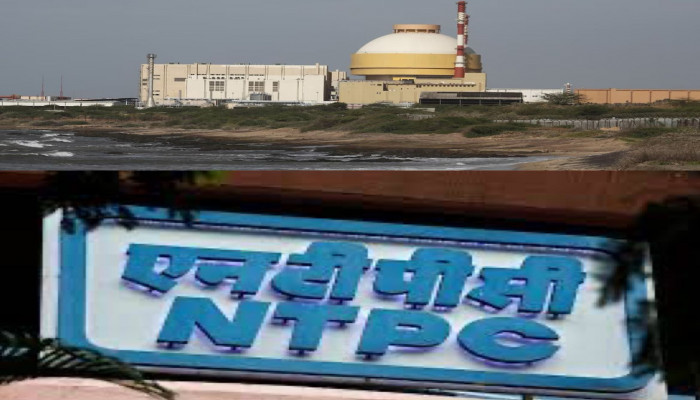
India’s largest power producer, National Thermal Power Corporation Limited (NTPC Ltd), has partnered with a US-based company to explore the use of thorium as an alternative nuclear fuel in India’s nuclear reactors. The move marks an important step in India–US cooperation in atomic energy and comes at a time when India is looking to strengthen its long-term energy security and reduce its dependence on imported uranium.
According to a report by The Indian Express, Chicago-based Clean Core Thorium Energy (CCTE) has entered into a partnership with NTPC to develop thorium-based nuclear fuel. This development follows the passage of the Sustainable Harnessing and Advancement of Nuclear Energy for Transforming India (SHANTI) Act, 2025, which has opened the nuclear sector to private participation for the first time.
CCTE has become only the second US Company in nearly two decades to receive an export licence from the US Department of Energy to sell nuclear technology to India. The licence allows the company to work with Indian entities in the sensitive nuclear fuel space, which has traditionally remained under strict government control.
Sources cited in the report said NTPC’s board has approved a proposal to make a minority equity investment in CCTE. This investment is described as a strategic, early-stage participation in the development of thorium fuel. However, the proposal will require approval from the Ministry of Power before it can move forward.
The investment aligns with NTPC’s long-term plans to set up 30 gigawatts (GWe) of nuclear power capacity by 2047. It also fits into NTPC’s broader goal of entering the nuclear fuel cycle, in line with India’s strategic and energy security priorities.
One of the key advantages of this collaboration is that the thorium-based fuel developed by CCTE can be used in India’s existing pressurised heavy water reactors (PHWRs). This means India may not need to build new reactor designs to start using thorium fuel. Instead, thorium could be loaded directly into the current reactor fleet, strengthening fuel security.
The SHANTI Act, passed earlier this year, has played a crucial role in enabling this partnership. The law allows private companies to participate in nuclear power operations and fuel management for the first time. It also leaves room for possible foreign involvement in the future, making collaborations like the NTPC–CCTE partnership possible.
Thorium has long been seen as central to India’s nuclear strategy. India has large domestic reserves of thorium but limited uranium resources. Thorium produces less long-lived radioactive waste and carries lower risks of nuclear proliferation compared to uranium. These factors make it an attractive option for India’s long-term energy independence.
Traditionally, the use of thorium was planned for the final stage of India’s three-stage nuclear programme, which required the development of new and advanced reactor systems. However, CCTE has taken a different approach.
The company has developed a new type of fuel that blends thorium with high-assay low-enriched uranium, known as HALEU. This blended fuel allows thorium to be used in existing PHWRs. The fuel is called ANEEL, which stands for Advanced Nuclear Energy for Enriched Life.
According to CCTE, ANEEL is designed to improve reactor safety, reduce nuclear waste, lower operating costs, and increase energy output, all while staying within existing safety limits.
CCTE’s founder and Chief Executive Officer, Mehul Shah, is of Indian origin. The company received its export licence from the US Department of Energy in August 2025. This came after assurances were given earlier in the year by India’s Department of Atomic Energy and the nuclear regulator, the Atomic Energy Regulatory Board (AERB), to US authorities.
Earlier in March, the US government had also approved New Jersey-based Holtec International to transfer nuclear technology to Indian entities under the restrictive “10CFR810” regulations.
Former Atomic Energy Commission chairman Anil Kakodkar explained how the new fuel could help India move faster in its thorium programme. He said India could use its existing PHWR capacity to irradiate thorium along with HALEU, converting thorium into fissile uranium-233 on a large scale.
“This could allow India to move into the thorium phase of its nuclear programme earlier, without waiting for large-scale deployment of fast breeder reactors,” Kakodkar said.
He also pointed out that delays in the development of fast breeder reactors have slowed India’s nuclear roadmap. Using PHWRs for thorium conversion, he said, offers a practical alternative. Kakodkar added that the spent fuel from these reactors could later be recycled for further power generation, including in advanced systems such as molten salt reactors.
Globally, most nuclear power plants use light water reactors, which rely on ordinary water as both coolant and moderator. While the SHANTI Act allows the import of foreign reactor technologies, experts believe that using India’s existing PHWR fleet provides a strategic safeguard against import dependence.
PHWRs are particularly suitable for thorium use because heavy water absorbs fewer neutrons, making thorium-based fuel cycles more efficient. According to data from the International Atomic Energy Agency, India currently operates 19 of the more than 45 PHWRs in use worldwide.
The NTPC–CCTE partnership could therefore play a key role in advancing India’s thorium ambitions while strengthening domestic fuel security within the existing nuclear framework.



 Loading...please wait
Comments