




NSA Ajit Doval’s secret VSSC visit finds no sabotage behind repeat PSLV third-stage failures
- In Reports
- 01:07 PM, Feb 05, 2026
- Myind Staff
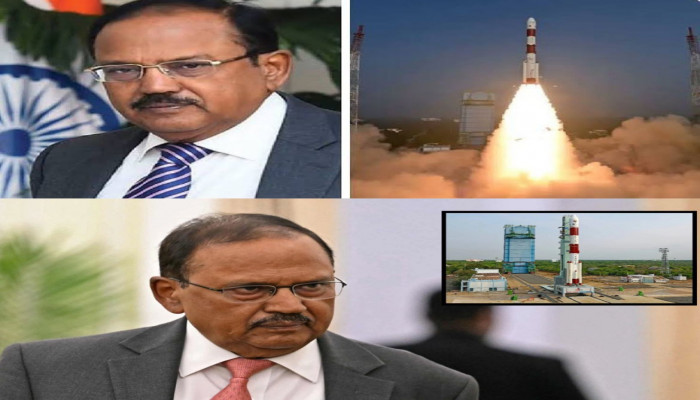
India’s space programme faced another major setback after a Polar Satellite Launch Vehicle (PSLV) mission failed on 12 January 2026, triggering serious concerns at the highest levels of the government. The failure happened during the third stage of the flight, repeating a similar incident from last year and forcing a deep investigation into whether the problem was technical or deliberate.
The PSLV, considered ISRO’s most dependable launch vehicle, was carrying an important Earth observation satellite along with several high-value commercial payloads. These payloads were linked to major international investments, making the mission extremely important not just for science, but also for India’s reputation in the global commercial launch market.
However, the mission suffered a critical anomaly when the third stage failed to ignite properly. This stage is essential for pushing the rocket to the required orbit, and its failure led to the loss of the main satellite and damage to the commercial payloads.
What made the incident more alarming was the fact that it closely resembled the failure of PSLV-C61 on 18 May 2025, which also collapsed due to a third-stage ignition issue. That earlier mission had carried a classified satellite meant for strategic government purposes. With two similar failures happening within a short span, speculation began growing about possible sabotage or major design flaws.
Following the January 2026 failure, National Security Advisor Ajit Doval reportedly made a secret visit to the Vikram Sarabhai Space Centre (VSSC) in Thiruvananthapuram on 22 January. The visit was carried out completely off-camera and was authorised directly by Prime Minister Narendra Modi, according to sources mentioned in the report.
A senior VSSC official stated that Doval’s visit was necessary because the PSLV’s third stage and its propulsion system are designed and tested at the VSSC. During the visit, Doval closely examined technical details and questioned engineers about propulsion sequencing, fuel management procedures, and flight telemetry.
Sources said Doval’s main purpose was to investigate the sabotage angle, especially considering the sensitive nature of the payloads in the two failed missions. The probe reportedly included reviews of manufacturing logs, quality assurance records, and pre-launch checklists. Doval also met propulsion experts and examined issues related to igniter performance and thrust vector control systems, both of which were seen as central to the repeated failures.
After the review, no evidence of external interference was found. Union Science and Technology Minister Jitendra Singh later confirmed the conclusion and said sabotage had been ruled out. Singh stated that the failures were caused by technical shortcomings, not malicious activity.
The conclusion brought relief to stakeholders, especially because the earlier PSLV-C61 mission in 2025 was believed to support defence reconnaissance needs, which had intensified suspicion at the time.
ISRO Chairman V. Narayanan acknowledged that the issue has become a repeated concern. He described the third-stage problem as a “persistent challenge” linked to engine restart reliability under vacuum conditions. Even though the Vikas engine is a proven design, its failure twice in quick succession has led ISRO to begin urgent redesign efforts.
Initial investigation findings suggest the failure may have been caused by a turbopump malfunction or irregular oxidiser flow during the reignition phase. These components operate under extreme pressure, and even minor deviations can result in complete mission failure. ISRO’s failure analysis committee is now comparing data from both the 2025 and 2026 incidents to locate the exact cause.
The failures have also created major commercial losses. Customers from Europe and Asia now face delays and financial setbacks. ISRO has promised compensation through insurance and has assured customers of re-flight opportunities. Still, the repeated failures have affected confidence in PSLV, which had completed four successful missions before 2025.
Strategically, the damage is significant. The Earth observation satellite on the January 2026 mission was meant for border monitoring and disaster management, both of which are crucial dual-use applications. The 2025 mission carried even more sensitive hardware.
Doval’s involvement highlighted the growing overlap between national security and space technology in India. With ISRO moving forward with projects like Gaganyaan and heavy-lift launches using LVM-3, the failures have exposed critical vulnerabilities. Doval’s role also signals that defence-linked launches will likely face increased oversight going forward.
ISRO has already responded by forming a high-level review board, including experts from DRDO, to fast-track improvements in the third-stage reignition system. Possible upgrades include redundant igniters and AI-based health monitoring systems.
Publicly, ISRO has tried to remain calm. Somanath said, “Failures are stepping stones,” while recalling past recovery efforts such as the GSLV-D1 mishap. However, pressure remains high to restore PSLV’s reliability before future key launches.
The government has reiterated support for ISRO. Singh has announced increased funding for propulsion research and development, including collaboration with private players such as Skyroot and Agnikul to expand India’s launch options.
The report also noted that even major global competitors have faced similar challenges, including China’s Long March failures and SpaceX’s early Starship setbacks. It stressed that India’s strength lies in fast improvements and indigenous manufacturing under Atmanirbhar Bharat.
ISRO is now aiming for a PSLV-C64 re-flight by June 2026, incorporating lessons from Doval’s review and internal technical audits. The mission will be crucial for rebuilding trust and maintaining India’s momentum in the global space race.



 Loading...please wait
Comments