




NSA Ajit Doval and Wang Yi hold progressive and forward-looking talks
- In Reports
- 12:57 PM, Jun 23, 2026
- Myind Staff
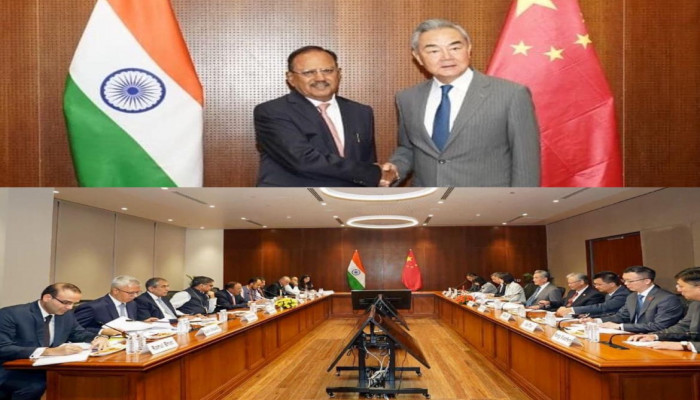
National Security Adviser Ajit Doval met Chinese Foreign Minister Wang Yi in New Delhi on Monday and held discussions on the current state of India-China relations. The two leaders reviewed recent developments and assessed progress towards normalising relations after a military stand-off along the Line of Actual Control (LAC) that lasted for more than four years.
The meeting took place on the sidelines of the BRICS National Security Advisers’ meeting being hosted in New Delhi. Wang Yi attended the meeting in his capacity as Director of the Office of the Central Commission for Foreign Affairs, a role that also makes him China’s top official for national security affairs. The discussions were part of ongoing diplomatic efforts by both countries to improve relations and address outstanding issues following years of tensions along the border.
External Affairs Ministry spokesperson Randhir Jaiswal shared details of the meeting on social media. According to him, “The two sides reviewed recent developments in bilateral relations and noted progress towards gradual normalisation.” He described the discussions as “constructive and forward-looking”.
During the meeting, Doval stressed the importance of maintaining stable relations between the two neighbouring countries. Jaiswal said Doval “underlined that stable, predictable and constructive bilateral relations contribute to building trust and better understanding between the two sides”.
The meeting comes at a time when both countries are taking gradual steps to rebuild ties after relations reached one of their lowest points in decades. The prolonged military stand-off along the LAC had significantly affected diplomatic engagement and cooperation between the two sides. Since an agreement was reached in October 2024 to end the stand-off, India and China have been working towards restoring normal relations while continuing discussions on border-related concerns.
Ahead of the meeting, Chinese Ambassador Xu Feihong highlighted the importance of the BRICS National Security Advisers’ gathering. He stated on social media that the Chinese side would use the June 22-23 meeting to exchange views on the international security situation, major international and regional issues, and ways to jointly respond to conventional and non-conventional security challenges.
The NSAs’ meeting is an important part of preparations for the upcoming BRICS Summit, which India will host in September as the current chair of the grouping. The discussions among security officials are expected to contribute to broader conversations that will take place during the summit.
This is Wang’s first trip to India in nearly a year and comes amid continuing efforts by both countries to improve diplomatic engagement. He had skipped the BRICS Foreign Ministers’ meeting hosted by India in May since it coincided with US President Donald Trump’s visit to Beijing.
Before this visit, Wang had travelled to India in August 2025. During that trip, he met both Ajit Doval and External Affairs Minister S. Jaishankar. The meetings focused on bilateral relations and the ongoing process of addressing issues related to the border dispute.
The process of normalisation gained momentum after India and China reached an understanding in October 2024 to end the military standoff along the LAC. The dispute, which continued for more than four years, pushed the relations to a six-decade low. Since then, both governments have taken several measures to restore trust and improve cooperation.
As part of these efforts, Doval visited China in December 2024 for a meeting under the Special Representatives mechanism, which deals with the boundary question between the two countries. This was followed by Wang’s visit to India in August 2025 for another round of talks under the same framework. These discussions mainly focused on disputed sections of the border and confidence-building measures intended to reduce tensions and prevent future confrontations.
In addition to high-level diplomatic engagement, both countries have introduced practical measures to improve relations. India and China have resumed direct flight services between the two countries. The Kailash Mansarovar Yatra to Tibet has also been revived after a long pause. India has eased visa regulations for Chinese citizens, making travel easier.
China has also taken steps that are seen as confidence-building measures. Beijing has relaxed certain restrictions on the export of heavy machinery, rare earth magnets and fertilisers to India. These moves have helped improve economic and people-to-people exchanges, which had been affected during the period of strained relations.
The latest meeting between Doval and Wang reflects the countries’ commitment to maintaining dialogue and gradually strengthening bilateral ties. While challenges remain, recent developments indicate that India and China are moving forward with efforts to restore stability, improve trust and expand cooperation in areas of mutual interest.



 Loading...please wait
Comments