



Noida wage protests turn violent, workers demand fair pay and better conditions
- In Reports
- 05:23 PM, Apr 13, 2026
- Myind Staff
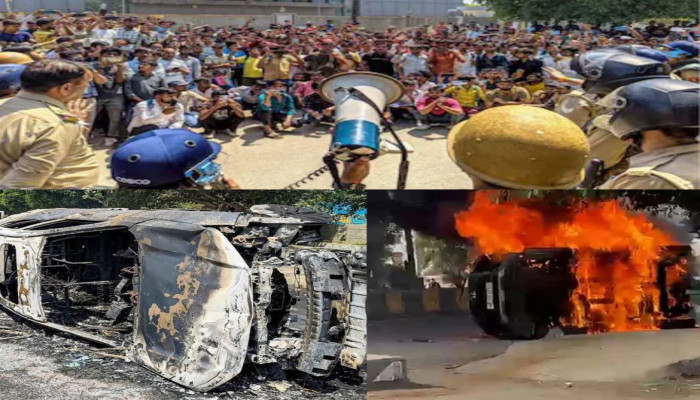
A protest by factory workers in Noida escalated into violence on Monday, highlighting growing frustration over low wages and long working hours. The unrest took place in the Hosiery Complex located in Phase 2 of Uttar Pradesh’s Noida. Workers, many of them women, have been protesting for the past four to five days, demanding better pay and improved working conditions. Their anger intensified after a female worker was allegedly hit with a lathi during police action, which triggered stone-pelting and arson, including setting vehicles on fire.
Several workers shared their concerns about their income, saying it is not enough to meet rising living costs. They pointed out that their salaries have remained largely unchanged despite increasing expenses such as rent and cooking gas. The issue of inflation has made their financial situation more difficult, pushing them to take to the streets. Many workers said they are forced to work long hours but are still unable to support their families properly.
“We should be earning ₹20,000 for 8 hours of work. Instead, some companies give an increment of ₹280, or some other gives ₹300 as raise,” one woman told the news channel. “In the meantime, our house rent increases by ₹500.” Her statement reflects the gap between wages and the cost of living, which has become a major concern for workers in the area.
Another worker, Manju Devi, described her daily struggle. “Our salary is very low. I earn ₹13,000 [a month]. And I work 12 hours a day,” she said. “How can I raise four children on this salary? How can I feed and educate them?” she questioned. Her situation is not unique, as many workers at the hosiery units face similar conditions. They work extended hours but receive limited compensation, making it difficult to manage household expenses.
A third woman also spoke about the pressure caused by rising prices. “Our problem is that gas prices are increasing but our salaries are not increasing,” she said. This highlights how essential expenses are rising faster than wages, leaving workers with little room to save or improve their quality of life.
The protests, which began as peaceful demonstrations, gradually turned tense. Workers gathered to demand fair wages and better working conditions, including overtime pay and job security. However, the situation worsened on Monday, leading to clashes between protesters and police. Authorities responded by increasing police presence in the area to control the situation and prevent further damage.
The unrest also affected daily life in the region. Traffic movement was severely disrupted, especially on the Delhi-Noida DND Flyway. Commuters were stuck for hours due to diversions, as the Chilla Border connecting Delhi and Noida was closed following the violence in Phase 2. This caused inconvenience to thousands of people travelling between the two cities.
Earlier, efforts had been made by the administration to address the workers’ concerns. On Sunday, Noida’s District Magistrate, Medha Roopam, held a meeting with senior officials, including the Principal Secretary (Labour) and the Labour Commissioner of Uttar Pradesh. The discussion focused on ensuring the protection of workers’ rights and maintaining industrial peace in the region.
"An important meeting was held in the Noida Authority to maintain industrial peace, in which the Principal Secretary (Labour) and Labour Commissioner, UP, participated virtually and discussed topics including the protection of workers' interests, double payment for overtime, bonus, weekly holidays, and workplace safety," the DM wrote on X.
Despite these discussions, workers continued their protests, indicating that their demands have not yet been met. The situation remains tense, with authorities closely monitoring developments. The incident has once again brought attention to the challenges faced by industrial workers, especially in sectors where wages have not kept up with economic changes.
The protests in Noida underline a larger issue affecting many workers across the country. Long working hours, low pay, and rising living costs are creating stress and dissatisfaction. As the situation unfolds, both workers and authorities will need to find a solution that ensures fair treatment while maintaining peace and stability in the industrial area.



 Loading...please wait
Comments