




Nobel Prize 2026 in medicine honours three scientists behind optogenetics breakthrough
- In Reports
- 05:13 PM, Oct 05, 2026
- Myind Staff
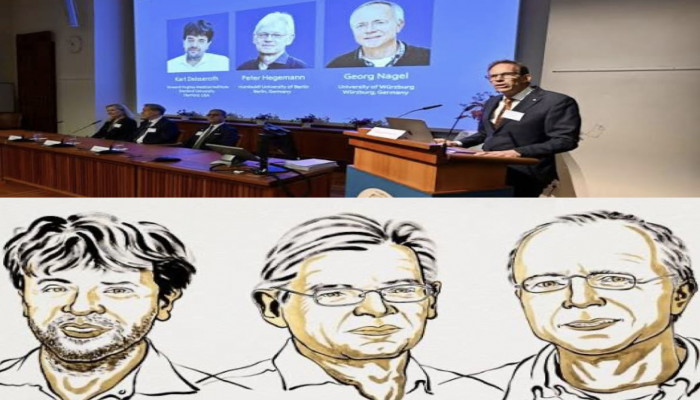
The Nobel Prize in Medicine has been awarded to Karl Deisseroth, Peter Hegemann and Georg Nagel for their research that led to optogenetics, a technique that allows scientists to control the activity of individual nerve cells using light. The announcement was made Monday at the Karolinska Institute in Stockholm, marking the start of Nobel Prize week.
The Nobel committee recognised the three scientists “for discoveries leading to optogenetics, which makes it possible to switch on or off the activity of individual nerve cells in a living brain.” Their research has given scientists a powerful way to study how the brain works and how individual nerve cells influence its functions.
Optogenetics uses light-sensitive proteins known as light-gated ion channels to control nerve cells. Researchers can use light to activate or silence specific neurons in a living brain. The technique has become an important tool in neuroscience and is now used in laboratories across the world to investigate brain activity and understand its complex processes.
“This method is now being used in laboratories around the world to reveal the brain’s mysteries,” the committee wrote on social platform X.
The award carries prize money of 12 million Swedish kronor, which is around $1.2 million. The amount remains the same whether the prize goes to an individual, a small group of laureates or an organisation.
Last year, the Nobel Prize in Medicine went to Mary E. Brunkow, Fred Ramsdell and Dr Shimon Sakaguchi. They were recognised for discoveries explaining how the immune system identifies harmful germs while avoiding attacks on the body's own tissues. Their work uncovered a key mechanism that helps regulate the immune system, known as peripheral immune tolerance.
Experts described those findings as important for understanding autoimmune diseases. These include Type 1 diabetes, rheumatoid arthritis and lupus.
The medicine prize opens this year’s Nobel announcements. The physics prize will follow on Tuesday, while the chemistry prize will be announced on Wednesday. The literature prize is scheduled for Thursday.
The Nobel Peace Prize will be announced on Friday. The Nobel Memorial Prize in Economic Sciences will follow on October 12, completing this year’s Nobel announcements.
Nobel Prize 2026 in medicine honours three scientists behind optogenetics breakthrough
The Nobel Prize in Medicine has been awarded to Karl Deisseroth, Peter Hegemann and Georg Nagel for their research that led to optogenetics, a technique that allows scientists to control the activity of individual nerve cells using light. The announcement was made Monday at the Karolinska Institute in Stockholm, marking the start of Nobel Prize week.
The Nobel committee recognised the three scientists “for discoveries leading to optogenetics, which makes it possible to switch on or off the activity of individual nerve cells in a living brain.” Their research has given scientists a powerful way to study how the brain works and how individual nerve cells influence its functions.
Optogenetics uses light-sensitive proteins known as light-gated ion channels to control nerve cells. Researchers can use light to activate or silence specific neurons in a living brain. The technique has become an important tool in neuroscience and is now used in laboratories across the world to investigate brain activity and understand its complex processes.
“This method is now being used in laboratories around the world to reveal the brain’s mysteries,” the committee wrote on social platform X.
The award carries prize money of 12 million Swedish kronor, which is around $1.2 million. The amount remains the same whether the prize goes to an individual, a small group of laureates or an organisation.
Last year, the Nobel Prize in Medicine went to Mary E. Brunkow, Fred Ramsdell and Dr Shimon Sakaguchi. They were recognised for discoveries explaining how the immune system identifies harmful germs while avoiding attacks on the body's own tissues. Their work uncovered a key mechanism that helps regulate the immune system, known as peripheral immune tolerance.
Experts described those findings as important for understanding autoimmune diseases. These include Type 1 diabetes, rheumatoid arthritis and lupus.
The medicine prize opens this year’s Nobel announcements. The physics prize will follow on Tuesday, while the chemistry prize will be announced on Wednesday. The literature prize is scheduled for Thursday.
The Nobel Peace Prize will be announced on Friday. The Nobel Memorial Prize in Economic Sciences will follow on October 12, completing this year’s Nobel announcements.



 Loading...please wait
Comments