




‘No authority’: India rejects Hague ruling on Indus Waters Treaty suspension
- In Reports
- 01:28 PM, Sep 01, 2026
- Myind Staff
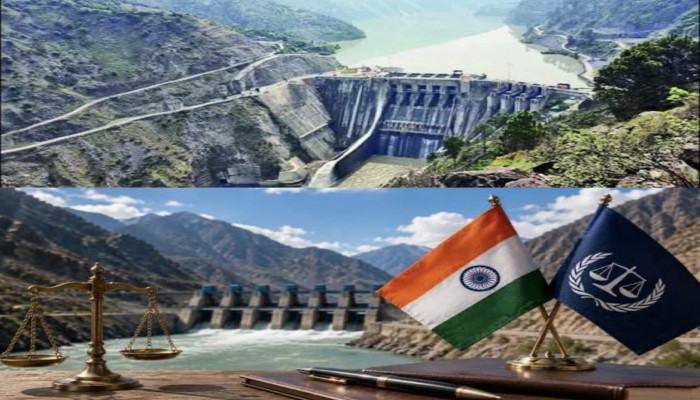
India has rejected a ruling by the Hague-based Permanent Court of Arbitration on the Indus Waters Treaty, saying the tribunal has no authority to question New Delhi’s sovereign decisions. The government has maintained that its decision to keep the water-sharing treaty with Pakistan in abeyance remains in force.
The Court of Arbitration, one of the world’s oldest permanent forums for international disputes, said India had no valid grounds to end or suspend the treaty. It also held that the agreement between India and Pakistan remains fully operational. India, however, has refused to accept the ruling and said the tribunal itself was created in violation of the treaty.
The Indus Waters Treaty was signed in September 1960 to regulate the sharing of the waters of the Indus River System between India and Pakistan. The agreement sets out how the two countries can use the rivers and also provides a mechanism to resolve disputes over water-related projects.
India suspended the treaty a day after the Pahalgam terror attack on April 22 last year, which killed 26 people. New Delhi also announced several other measures against Pakistan following the attack. India has since maintained that the treaty will remain suspended until Pakistan takes verifiable and irreversible steps to dismantle cross-border terror networks operating from its territory.
Reiterating its position, India has said that “blood and water cannot flow together”. The government has linked the future of the treaty to action against terrorism and has made clear that it will not resume the treaty’s operations until Pakistan takes the required steps.
The Ministry of External Affairs strongly rejected the latest ruling. "This so-called Court was constituted by the World Bank in patent breach of the terms of the Treaty and India categorically rejects its so-called award, just as it has firmly rejected all prior pronouncements by this illegally constituted body," the Ministry of External Affairs said in a statement.
The ministry also said India has never recognised the tribunal as a legally valid body. It said New Delhi has consistently maintained that the creation of the Court of Arbitration itself violates the terms of the Indus Waters Treaty.
Pakistan had approached the arbitration process over disagreements linked to the design of India’s Kishenganga and Ratle hydroelectric projects. Both projects are located on rivers in the western part of the Indus River System. Pakistan has raised objections to aspects of the projects and sought a ruling through the arbitration mechanism.
India has opposed the arbitration process from the beginning. New Delhi has argued that disputes related to the design and technical aspects of the projects should be handled by a Neutral Expert under the mechanism provided in the treaty.
India has also objected to the Court of Arbitration examining the same issues at the same time. New Delhi has said that allowing both mechanisms to consider the disputes goes against the dispute-resolution process agreed upon by India and Pakistan under the treaty.
India has maintained that it never appeared before the Court of Arbitration. It has also refused to recognise or take any action based on the body’s earlier pronouncements. New Delhi has continued to reject the tribunal’s authority over the disputes involving the hydroelectric projects.
The government has now made it clear that it will take the same position on the latest ruling. India said the so-called tribunal cannot decide on matters linked to the country’s sovereign actions. It also said any future pronouncements from the body will not change India’s position or affect the projects being developed by the country.
"This so-called Court of Arbitration has no jurisdiction whatsoever to pronounce on India's sovereign decisions. Its pronouncements, now or in the future, will have no effect on India's actions in connection with the projects being undertaken by India," it said, asserting "India's decision to hold the Indus Waters Treaty in abeyance remains in force".
The latest development deepens the dispute between India and Pakistan over the Indus Waters Treaty. While the Court of Arbitration has said the treaty continues to remain in force, India has rejected the tribunal’s authority and reiterated that the suspension will continue. New Delhi has also tied any reconsideration of the treaty to Pakistan taking concrete action against cross-border terrorism.



 Loading...please wait
Comments