



NITI Aayog pushes for creation of National Job Skilling Policy
- In Reports
- 08:08 PM, Mar 20, 2026
- Myind Staff
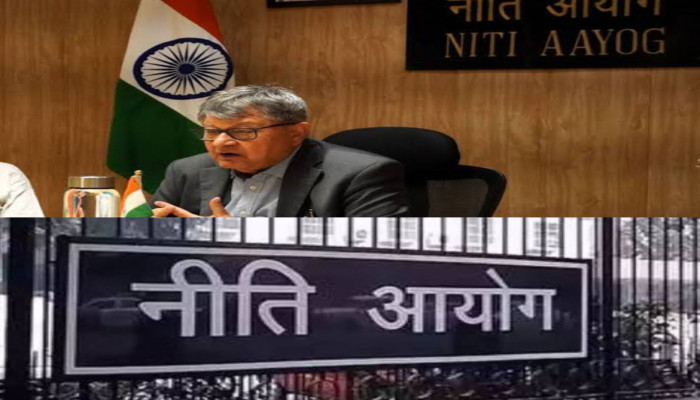
A working paper by NITI Aayog has proposed the creation of a National Job Skilling Policy aimed at strengthening India’s skilling ecosystem and improving employment outcomes. The paper highlights the urgent need to better connect education with job opportunities. It suggests integrating the efforts of ministries responsible for employment and skill development to create a more coordinated system. The proposal also includes launching an Annual Skills and Employment Survey, along with a dedicated data bank and digital portal. These measures are intended to help track skill demand, guide policy decisions, and ensure that training programs are aligned with industry needs.
The report, titled Education and Skilling for Employment: From Credentials to Learning Outcome, is authored by Arvind Virmani. It stresses the importance of improving the productivity of India’s young population as the country works toward becoming a developed nation by 2047. "As India aims to become a developed country by 2047 under the PM's vision of ‘Viksit Bharat’, improving the productivity of its young population is essential," the paper states. The document underlines that while access to education has increased over the years, the quality of learning outcomes remains a major concern.
According to the paper, there is a noticeable gap between academic qualifications and actual skills. "There is a gap between the credentials or degree and the learning expected of students with those qualifications, with many students lacking the job skills needed to secure matching jobs," it said. This mismatch has created a situation where many graduates struggle to find jobs that match their education. The report also points out that formal education alone does not guarantee better wages or improved economic mobility, which raises concerns about the effectiveness of the current system.
The paper further explains that India’s education and skilling landscape faces several structural challenges. One of the key issues is the need to improve minimum learning outcomes to match the benchmarks required for a higher per capita GDP by 2047. Another concern is the high dropout rate, especially between primary and secondary education levels. These gaps weaken the foundation of the workforce and limit long-term growth potential.
The report also highlights the low level of formal training provided by companies in India. It notes that only 7.7% of firms in the country offer structured training programs to their employees. This is lower compared to countries like Vietnam and Indonesia, where the figures stand at 8.7% and 8.4%, respectively. "This could be partly due to more competitive labour markets for corporate employees," it said.
The paper suggests that companies need to be encouraged to invest more in employee training. It recommends that large firms should allocate a greater portion of their funds toward skill development and also contribute to upgrading Industrial Training Institutes (ITIs) and polytechnics.
The importance of corporate participation becomes clearer when compared to other countries. The report states that nations such as Thailand, Malaysia, and Mexico have a much higher percentage of firms offering training programs, at 18%, 24%, and 38%, respectively. "This will be critical, if we want the Indian private sector to compete with Thailand, Malaysia and Mexico, with 18%, 24% and 38% of their firms having employee training programs," it added. This comparison shows that improving training practices is necessary for India to stay competitive in the global market.
Another key recommendation in the paper is the need to invest in training the trainers. This is especially important for low and medium-skilled jobs, including blue-collar occupations such as repair, maintenance, and construction. The report emphasises that the quality of trainers directly affects the quality of the workforce. It also calls for capital subsidies to help training institutions purchase better tools and equipment. "Capital subsidies are needed to buy quality tools and equipment as it impacts the training outcomes," it said. Better infrastructure can lead to more effective skill development and improved job readiness.
In addition, the paper suggests recognising skill development as a service industry. This step can help expand access to bank credit and make it easier to obtain visas for international opportunities. Such recognition would also give the sector a more formal status and encourage further investment. Overall, the proposed National Job Skilling Policy aims to create a system where education, training, and employment are closely linked, ensuring that India’s workforce is better prepared for future challenges.



 Loading...please wait
Comments