




NIA to probe Hamas link in 2025 Pahalgam attack
- In Reports
- 06:45 PM, Jun 02, 2026
- Myind Staff
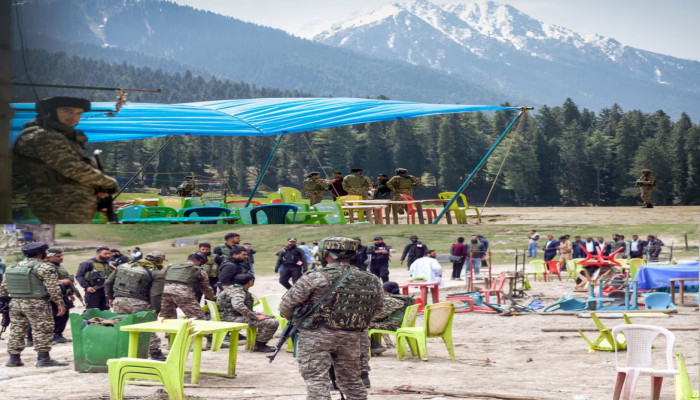
The National Investigation Agency (NIA) has widened its investigation into the 2025 Pahalgam terror attack and is now examining a possible “Hamas angle” in the case. Investigators are looking into whether the methods used in the attack were influenced by the tactics employed by terror groups in West Asia. The agency is studying possible structural, tactical, and operational links between Pakistan-based terror organisations and extremist groups operating in the region.
The development is part of a larger investigation into what authorities have identified as the “D-6” terror conspiracy. According to investigators, the network was designed to replicate the brutal close-range attack methods seen during the October 7 attacks in Israel. Officials believe the Pahalgam attack was not an isolated incident but part of a much broader terror plan.
The attack took place on April 22, 2025, in Baisaran Valley, a popular tourist destination in South Kashmir. It claimed the lives of 26 people, most of whom were tourists. The incident became the deadliest attack on civilians in Jammu and Kashmir in nearly twenty years.
As part of the investigation, NIA officials have found several indicators suggesting that the attackers followed a pattern different from traditional terrorism seen in Kashmir. According to the agency, the operation closely resembled the methods associated with Hamas’s Al-Qassam Brigades.
Investigators revealed that terrorists linked to the Pakistan-backed Lashkar-e-Taiba (LeT) and its proxy outfit, The Resistance Front (TRF), allegedly singled out victims before killing them. The attackers reportedly forced people to recite religious verses and checked for physical markers to determine their identity. Victims were then shot at close range.
Another key aspect under investigation is the use of action cameras during the attack. Officials said the terrorists recorded the killings in real time using mounted cameras. The footage is believed to have been intended for propaganda and psychological impact.
The NIA recently traced the history of a GoPro Hero 12 Black camera recovered from one of the neutralised terrorists. According to the investigation, the camera was manufactured legally in Europe and later shipped to an authorised distributor in China. It was activated in the Chinese city of Dongguan before eventually being smuggled across the border and reaching Lashkar-e-Taiba operatives in Jammu and Kashmir.
The findings have prompted the agency to investigate whether local operatives received support through digital channels. Officials are examining the possibility that extremists may have accessed online manuals, dark-web blueprints, or encrypted financial networks linked to global pan-Islamic terror groups. The probe is focused on identifying whether technological assistance played a role in planning and executing the attack.
Investigators are also treating the Pahalgam massacre as the first operational stage of the larger D-6 terror plot. According to intelligence inputs, the conspiracy involved plans to carry out attacks in multiple Indian cities using vehicle-borne improvised explosive devices (VBIEDs), commercial drones, and shoulder-fired rockets.
Authorities believe the intended targets included major temples and military logistics facilities. The alleged objective was to create large-scale disruption and casualties across different parts of the country.
Speaking on the ongoing investigation, Union Home Minister Amit Shah said, “If needed, we will go to the netherworld… We will go everywhere possible to find individuals who are linked to this terror blast network.”
While security forces have eliminated the terrorists believed to have carried out the Pahalgam attack, investigators are now concentrating on those who planned and directed the operation from across the border. The attackers were identified as foreign mercenaries Suleman, Hamza Afghani, and Zibran. All three were killed during Operation Mahadev in the Dachigam forests.
With the attackers neutralised, the NIA’s primary focus has shifted to uncovering the larger network behind the conspiracy. Investigators are working to identify the handlers, financiers, and facilitators operating from safe havens in Pakistan.
As part of the international probe, a Special NIA Court in Jammu has issued a Letter Rogatory to judicial authorities in China. The request has been sent through the United Nations Convention against Transnational Organised Crime (UNTOC). Through this legal process, investigators aim to trace the financial transactions connected to the purchase of tactical equipment used in the attack and identify those involved in procuring the gear.
At the same time, the agency is mapping the network of over-ground workers (OGWs) within India. Officials are trying to identify educated and technically skilled individuals who may have helped facilitate logistics, arranged safe houses, managed communication systems, and supported drone-related operations.
The investigation is focused on understanding how local support networks may have helped connect Pakistan-backed terror groups with modern extremist methods used globally. By examining digital, financial, and logistical links, authorities hope to uncover the full extent of the conspiracy and prevent similar attacks in the future.



 Loading...please wait
Comments