



NGT clears path for Rs 80,000 crore mega development plan in Great Nicobar
- In Reports
- 03:23 PM, Feb 17, 2026
- Myind Staff
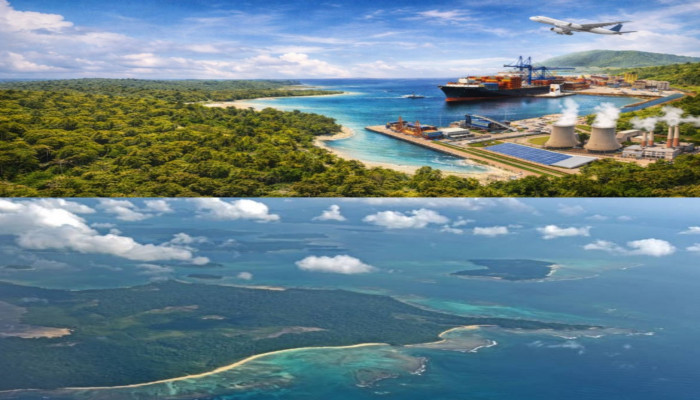
The National Green Tribunal (NGT) has upheld the environmental clearance granted to the Great Nicobar Island mega infrastructure project worth Rs 80,000 crore. The tribunal stated that it found “no good ground to interfere” with the earlier approval, allowing the project to move forward.
A six-member special bench of the NGT passed the order on Monday. The project is planned as a major infrastructure hub and includes an international container transhipment terminal, an international airport, a power plant, and a township. The development will be spread across 166.10 square kilometres.
The scale of the project has raised serious concerns because a large portion of the area involves environmentally sensitive land. Out of the total land proposed for development, about 130.75 sq km is forest land, while around 84.10 sq km falls under tribal territory. This makes the project highly sensitive from both an ecological and a social perspective.
The order was passed by the Eastern Zone Bench of the NGT in Kolkata, headed by Justice Prakash Shrivastava. The bench disposed of multiple petitions that had challenged the environmental clearance issued in November 2022. Along with rejecting the pleas, the tribunal directed the authorities and regulatory bodies to ensure that all conditions linked to the environmental clearance are followed strictly.
The tribunal noted that in earlier legal proceedings related to the same project, it had already refused to interfere with the environmental clearance. It also mentioned that the remaining issues pointed out during the first round of litigation were later reviewed by a High-Powered Committee. According to the tribunal, the committee addressed the concerns that were raised, and sufficient safeguards were included in the clearance conditions.
In its order, the tribunal said that the project carries strong strategic importance for India. It added that, considering this importance and other relevant factors, it did not see a valid reason to stop or block the project. The tribunal, as quoted in a CNN-News18 report, said that safeguards have been provided and that it does not find any strong ground to interfere with the environmental clearance.
At the same time, the NGT stressed that development in a fragile and sensitive area like Great Nicobar must be done carefully. It stated that authorities must maintain a balance between development needs and environmental protection. The bench also highlighted the need for strict compliance with laws, including the Island Coastal Regulation Zone (ICRZ) Notification, 2019, which regulates construction and activity in coastal zones.
The Great Nicobar infrastructure project was granted environmental clearance in November 2022. Before that, it also received in-principle forest clearance in October 2022. Since then, environmental groups and activists have expressed concerns about the impact the project could have on forests, biodiversity, coastal ecosystems, and local communities.
Among the main challengers of the project was senior environmental activist Ashish Kothari, who filed two key pleas before the NGT. He argued that certain parts of the proposed construction fall under ICRZ zones where development is restricted or not allowed.
According to Kothari, the planned development includes areas that should be protected under coastal rules. He claimed that about 57 hectares of port land, 60 hectares meant for the airport, 81 hectares planned for a defence township, and around 503 hectares for a general township are located within ICRZ zones. These zones, he said, restrict or bar such construction activities.
However, the tribunal concluded that the environmental clearance already includes enough safeguards and conditions to manage the impact. It also referred to the earlier legal proceedings and the High-Powered Committee’s findings, stating that these steps addressed the concerns raised.
Even though the NGT refused to interfere, it clearly instructed authorities to ensure that all environmental conditions are followed properly. The tribunal directed that regulatory bodies must monitor the project and ensure that every condition mentioned in the environmental clearance is complied with fully.
The tribunal also observed that such development projects, especially in ecologically sensitive island regions, require careful planning and responsible execution. It warned that environmental norms must not be ignored and said that the strict implementation of rules is necessary.
The NGT’s decision has led to strong reactions from the Congress party, which has opposed the project. Congress leaders argued that the project could cause major ecological harm. Congress general secretary in charge of communications, Jairam Ramesh, said the NGT’s decision was “deeply disappointing.” He claimed there is clear evidence that the project could have disastrous ecological impacts.
Ramesh also stated that the conditions mentioned in the clearance may not be enough to prevent the long-term damage that could occur. He added that the matter is still being argued in the Calcutta High Court, which he described as the only remaining hope for those opposing the project. He shared his views in a post on X.
Congress parliamentary party chairperson Sonia Gandhi had earlier also criticised the project. She called it a “planned misadventure” and claimed that it poses an existential threat to the island’s indigenous tribal communities. She also accused the BJP-led government of pushing the project forward without proper sensitivity and of making a mockery of legal and deliberative processes.
The Great Nicobar project remains a major subject of debate. Supporters see it as an important development step that can strengthen India’s strategic presence and improve infrastructure in the region. Critics, however, fear that it may harm forests, coastal ecosystems, and tribal communities living on the island.



 Loading...please wait
Comments