




New US student visa rule could cost economy up to $400 billion a year: PIIE Report
- In Reports
- 03:46 PM, Jul 28, 2026
- Myind Staff
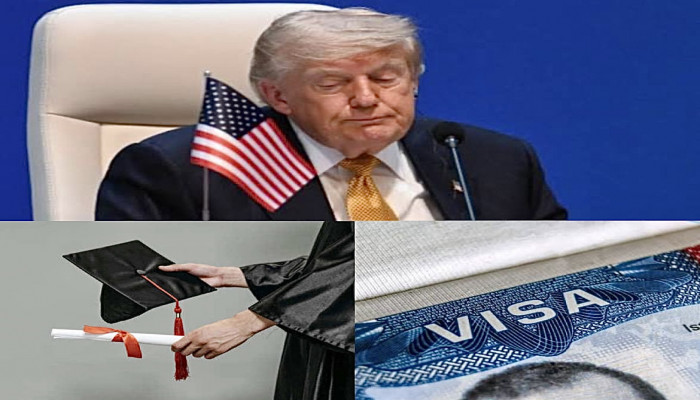
The Trump administration's new rule that limits how long international students can stay in the United States could have serious economic consequences, according to a report by the Peterson Institute for International Economics (PIIE). The report says the policy could reduce the country's annual economic output by as much as $400 billion. It also warns that the rule could weaken the United States' innovation ecosystem and make American universities less attractive to students from around the world.
The new regulation was issued in July and is scheduled to take effect in September. It replaces the long-standing "duration of status" policy that allowed international students to stay in the United States for as long as they continued to meet the conditions of their student visa. Under the new rule, most international students will receive a fixed stay of up to four years. Students who wish to continue their studies or remain in the country for post-graduation employment after that period must apply for an extension.
According to the PIIE report, the rule gives US immigration authorities greater control over whether international students can remain in the country after graduation through Optional Practical Training (OPT). The OPT programme allows international graduates to work in jobs related to their field of study for a limited period after completing their education. The report says the new system could create uncertainty for students who plan to gain work experience in the United States after graduation.
The report raises particular concern about the impact on science, technology, engineering and mathematics (STEM) graduates. It says the United States has benefited for years from highly skilled international students who contribute to research, innovation and business growth. According to the report, US-trained foreign STEM graduates file patents at four times the rate of typical college graduates. It also says they establish high-growth startups at six times the rate of US-born graduates. The report argues that reducing the number of these graduates in the workforce could affect the country's long-term innovation capacity.
PIIE estimates that the United States could face major economic losses if the new rule discourages international students from choosing American universities. The report projects that a sustained one-third decline in annual international student enrolment could reduce the country's economic output by between $200 billion and $400 billion every year or ~ 0.7 per cent to 1.3 per cent of the country's Gross Domestic Product (GDP). The report adds that such losses would extend beyond universities and affect several sectors that benefit from international education.
The report also highlights the importance of higher education as an export industry for the United States. It notes that international education accounts for around 5 per cent of US services exports. Students from other countries spend money on tuition, housing, transportation, food and other daily expenses during their stay. The report says a decline in international enrolment would reduce these export earnings and weaken economic activity linked to higher education.
Beyond direct financial losses, the report says the country could also experience slower innovation and weaker productivity growth. It argues that international students often become researchers, entrepreneurs and skilled professionals who contribute to technological development and economic expansion. A reduction in their numbers could limit future discoveries, business creation and scientific progress.
The PIIE report also questions the Trump administration's reasons for introducing the new regulation. The administration has argued that the policy will help prevent visa fraud and strengthen national security. However, the report says the evidence used to support these claims represents only a very small share of the millions of student visas issued over the past two decades. It argues that existing monitoring systems already allow US authorities to identify students who violate visa rules or fail to meet immigration requirements.
According to the report, the administration's actual objective is to reduce the number of international students who remain in the United States for employment after completing their education through the OPT programme. The report refers to public statements made by senior US immigration officials. It says these officials have expressed their intention to reduce work opportunities available to F-1 student visa holders after graduation. The report argues that the new regulation aligns with that objective.
The report also outlines possible legal and legislative challenges to the policy. It says Congress has the authority to overturn the regulation under the Congressional Review Act if lawmakers decide that the rule would cause significant economic harm. The report suggests that legislators could review the policy in light of its projected impact on economic growth, higher education and the labour market.
In addition to congressional action, the report says the courts could also review the regulation. According to PIIE, legal challenges could argue that the administration did not properly assess the economic impact of the rule before finalising it. The report says a court could strike down the regulation if it finds that the required review process was incomplete or insufficient.
The report concludes that restricting international students could have long-term consequences for the United States. It says the country could face a shortage of highly skilled workers, slower innovation and lower global competitiveness. The report argues that international students have played an important role in strengthening the US economy through education, research and entrepreneurship. It warns that limiting their opportunities to study and work in the country could reduce economic growth while making the United States a less attractive destination for talented students from around the world.



 Loading...please wait
Comments