




New OBC law in Bengal removes 77 Muslim communities from reservation list
- In Reports
- 12:56 PM, Jul 01, 2026
- Myind Staff
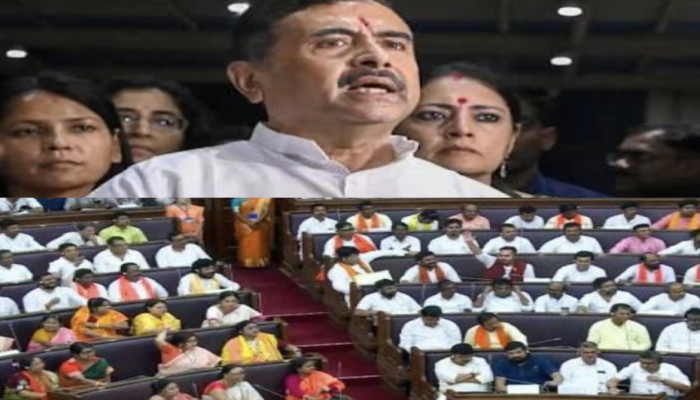
The West Bengal Assembly on Monday passed two bills that changed the state's reservation laws for the Other Backward Classes (OBCs). Under the new law, the government removed 77 Muslim communities from the OBC list. The decision follows the Calcutta High Court's order issued in May 2024. The new law also reduced the OBC reservation quota from 10 per cent to 7 per cent. It introduced changes in the OBC classification system and amended the West Bengal Backward Classes Commission Act, 1993.
Backward Classes Welfare Minister Gourishankar Ghosh said the previous Trinamool Congress government had included certain communities in the OBC list without following the required process. He said the government took this step only to extend special benefits to Muslims and did not conduct any survey before making the decision. The new government cancelled the inclusion of these communities in line with the High Court's order.
Speaking in the Assembly, Ghosh said, "The 66 communities included on the basis of surveys have been retained. The West Bengal Backward Classes Commission will now assess the actual socio-economic status of the OBC communities. The previous government had acted by completely bypassing the Commission. The new legislation will also help curb the issuance of fake OBC certificates."
The minister said the state would now allow the West Bengal Backward Classes Commission to examine the actual social and economic condition of OBC communities before taking any further decision. He said this process would ensure that only eligible communities receive reservation benefits. He also said the amended law would help stop the misuse of fake OBC certificates.
After the BJP government came to power in May, it announced that it would withdraw the OBC status granted to 77 Muslim communities during the Trinamool Congress government. It also declared that it would reduce the OBC reservation quota from 10 per cent to 7 per cent. The government said these decisions fulfilled one of its key election promises.
Gouri Shankar Ghosh said, "We had pledged in our manifesto that if we formed government, we would reinstate the original OBC list from 1993, a list that the Trinamool government had scrapped without any proper inquiry."
He further said, "Today, our bill on that was passed with 186 votes and the 'Goonda Daman' (Anti-Social Activity) Bill was also passed... it is an excellent bill... Our Chief Minister also announced that the UCC (Uniform Civil Code) will be implemented in Bengal next month, in August. We believe the UCC should be implemented, which is why our people voted for the BJP this time."
The Assembly passed the OBC bill with 186 votes. It also approved the Goonda Daman (Anti-Social Activity) Bill during the same session. The Chief Minister also announced that the state would implement the Uniform Civil Code (UCC) in August. The BJP government said it supports the implementation of the UCC and described it as another important commitment made to the people.
Indian Secular Front MLA Nawshad Siddiqui opposed the bill during the Assembly debate. He questioned the government's decision to reduce the reservation quota without presenting sufficient data. He argued that the state had not carried out the scientific assessment required before making such changes.
Siddiqui said, "According to the Supreme Court's directions, any change in reservation limits requires specific empirical data or scientific assessment. However, the state government, without proper data, is moving towards reducing OBC reservation, and this issue has not been addressed in the bill".
He further said, "We fear that reducing the reservation will deprive this community of opportunities in higher education and government jobs. The recommendations of the Mandal Commission have been disregarded. This bill will also undermine the very concept of social justice," Siddiqui added.
The new law marks a major change in West Bengal's reservation policy. The government said it acted in line with the Calcutta High Court's directions and restored the original OBC framework. The Opposition maintained that the government had failed to justify the reduction in reservation with proper evidence and warned that the decision could affect access to education and government employment for many people.



 Loading...please wait
Comments