




Netanyahu says Iran war not yet over, pushes for ending military dependence on US
- In Reports
- 08:25 PM, Jun 23, 2026
- Myind Staff
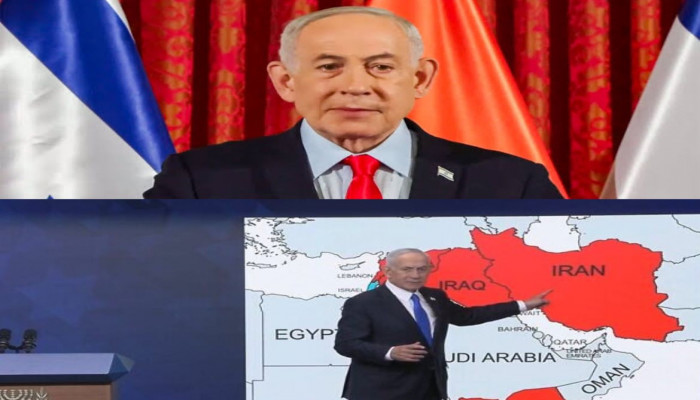
Israeli Prime Minister Benjamin Netanyahu has said that Israel must gradually end its military dependence on the United States and strengthen its own weapons-production capabilities. His remarks came on Tuesday during a meeting with reserve combat officers in Gush Etzion in the West Bank. Netanyahu also made it clear that Israel’s military campaign against Iran is still ongoing and that the conflict is not yet over.
Speaking to the officers, Netanyahu stressed the need for Israel to become more self-reliant in defence manufacturing. According to reports, he said the country must develop and produce more of its own weapons instead of relying heavily on foreign military assistance. His comments come at a time when tensions remain high in the region and discussions continue over a possible agreement between the United States and Iran.
Netanyahu highlighted the importance of national strength in dealing with Iran and the groups allied with it. Referring to Israel’s military actions, he said, “We are now confronting Iran and its proxies. We have struck them hard. It is not over yet, but it depends on our strength. Where we will be in 30 years depends on our strength. That is why what we are doing now is building even greater strength.”
The Israeli leader also acknowledged the support his country has received from Washington over the years. However, he argued that Israel should not remain dependent on external assistance for its security needs. Reaffirming his long-held position, Netanyahu said, “I greatly appreciate the support we have received — and that I have secured over the years — from our American friends. But today I say: We need our own independent weapons-production system. We must manufacture our own armaments.”
Netanyahu has spoken in the past about reducing Israel’s dependence on American military aid. However, his latest comments carry added significance because they come during a sensitive phase in relations between Israel and the United States. Israeli officials have expressed concerns about a preliminary agreement being discussed between Washington and Tehran to bring an end to the current conflict.
Israel believes that some aspects of the emerging deal could limit its ability to take independent military action when it considers such action necessary for national security. The Israeli government has reportedly been dissatisfied with parts of the proposed arrangement, fearing that it may not adequately address its security concerns regarding Iran.
The debate intensified after recent remarks by US Vice President JD Vance. Vance pointed to the extensive American role in supporting Israel’s defence capabilities. He stated that two-thirds of the defensive weapons protecting Israel were manufactured in the United States and paid for by American taxpayers. He also strongly criticised Israel for opposing the proposed Iran agreement.
Just days after Vance’s comments, Netanyahu again emphasised the importance of military independence. He said, “We need to free ourselves from dependence, continue building more and more strength, incorporate more and more technology, and train more and more generations of commanders like you — because ultimately that is what will determine our position.”
The current US-Iran agreement has faced criticism from several prominent Israeli political figures. Many have argued that the deal does not sufficiently address Israel’s longstanding security concerns. Critics believe that the arrangement focuses more on diplomatic progress than on the threats Israel perceives from Iran.
Netanyahu has repeatedly maintained that Israel will continue to protect its security interests regardless of any international agreement. He has also consistently stated that preventing Iran from acquiring nuclear weapons remains one of Israel’s primary strategic objectives. His latest remarks reinforced the message that Israel intends to preserve its ability to act independently if it believes its security is at risk.
Israeli National Security Minister Itamar Ben-Gvir also voiced strong opposition to the proposed agreement. In a statement, he insisted that any deal negotiated by US President Donald Trump would not restrict Israel’s decision-making authority. Stressing Israel’s sovereignty, Ben-Gvir wrote, “Trump’s agreement does not bind us. Israel is not subject to the United States, and we are an independent and sovereign nation!”
His comments reflected a broader sentiment among some Israeli leaders who believe that the country must retain complete freedom in making security decisions. They argue that Israel’s defence policies should be determined by its own assessment of threats rather than by diplomatic agreements reached by other nations.
The latest statements from Netanyahu and other Israeli officials underline growing concerns in Israel about the future direction of regional diplomacy. While discussions continue over a possible agreement between the United States and Iran, Israel has made it clear that it intends to maintain its military readiness and strengthen its defence capabilities. Netanyahu’s call for greater self-reliance in weapons production signals a long-term effort to reduce dependence on foreign military support while ensuring that Israel can respond independently to security challenges in the years ahead.



 Loading...please wait
Comments