




Netanyahu keeps Door Open for Eisenkot alliance amid coalition crisis in Israel
- In Reports
- 03:21 PM, Nov 02, 2026
- Myind Staff
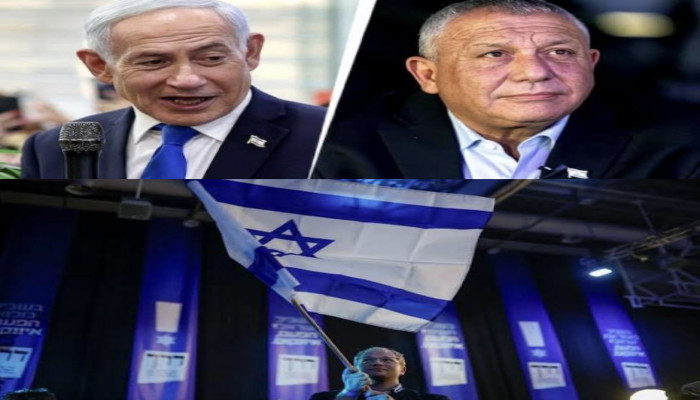
Israeli Prime Minister Benjamin Netanyahu has not ruled out forming a coalition government with Yashar party leader Gadi Eisenkot, despite publicly rejecting the idea of a unity government, Israeli media outlet i24 News reported on Monday.
Sources close to Netanyahu's Likud party told Israeli media that the prime minister was keeping his options open and that they were "examining every option".
Netanyahu is reportedly concerned that Eisenkot could join hands with Arab-led parties and ultra-Orthodox factions to form an alternative coalition and remove him from power.
The possibility of an alliance comes after Israel's October 27 parliamentary elections left Netanyahu's bloc without a majority in the 120-member Knesset.
Netanyahu's bloc secured 53 seats, down from 68 in the outgoing parliament. The opposition bloc led by Eisenkot won 48 seats, while Arab-led parties secured the remaining 19 seats.
The opposition and Arab-led parties together have enough seats to form a government. However, it remains unclear whether they can agree on a common coalition.
Netanyahu has described the possibility of Eisenkot joining hands with Arab parties as treason. His remarks have drawn criticism from political opponents, who accuse him of trying to block an alternative government.
Dozens of protesters gathered outside Eisenkot's home on Sunday to oppose a coalition involving Arab-led parties. Other demonstrations in recent days have supported the formation of a Jewish-Arab coalition.
The coalition talks have coincided with a dispute over the election results. Netanyahu's Likud party has questioned the conduct of the polls but has presented no evidence that the alleged irregularities affected the outcome.
Likud cited several suspected attempts to bribe voters. Police arrested three political activists before voting began on October 27 after finding envelopes of cash in their possession.
Two days later, police arrested four more suspects over their suspected links to the Islamist Ra'am party, which denied any involvement.
On Sunday, a judge declined or questioned police requests for further restrictions on the three initial suspects. Authorities released one suspect under certain conditions, placed another under eight days of house arrest and extended the third suspect's detention by two days.
Allegations of possible foreign interference have also prompted Israel's Shin Bet security service to launch an investigation at the election committee's request.
However, election committee chief and Supreme Court Justice Noam Sohlberg said that even if the suspicions were substantiated, they would not undermine the integrity of the electoral process or the overall results.
Eisenkot accused Netanyahu of running an organised campaign to delegitimise the election outcome, including claims that Qatar had supported opposition parties. Qatar has denied funding activities aimed at influencing the vote.
The election results are expected to receive official certification this week. President Isaac Herzog will begin consultations with elected parties on Wednesday before choosing a candidate to form the next government.
The selected candidate will have to negotiate with other parties to secure a parliamentary majority. If the talks fail, Herzog can invite another candidate to form the government. Fresh elections remain possible if no coalition emerges.



 Loading...please wait
Comments