




Netanyahu, JD Vance held candid talks on disagreements over the Iran War: Report
- In Reports
- 02:43 PM, Jul 31, 2026
- Myind Staff
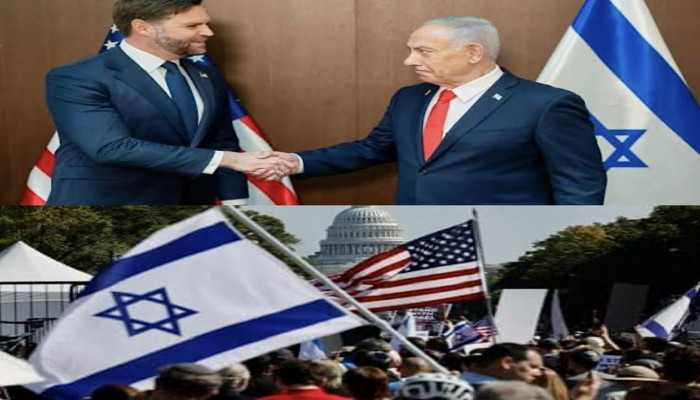
Israeli Prime Minister Benjamin Netanyahu and US Vice President JD Vance held a private meeting in Washington on Tuesday to discuss growing differences over the Iran war and the direction of US policy. According to an Axios report, the meeting allowed both leaders to address months of tension that had developed over the conflict and Washington's diplomatic approach towards Iran. Officials from both sides described the discussion as open and straightforward.
The meeting took place at Blair House in Washington. Officials familiar with the talks said both leaders spoke openly about the issues that had strained their relationship in recent months. The discussions focused on Vance's criticism of Israel, Netanyahu's concerns over US policy, and the broader relationship between the two allies.
A senior Israeli official said Netanyahu directly raised concerns about Vance's recent public comments on Israel and the Israeli government. He also expressed concern over Israel's standing among Republicans in the United States. The official described the meeting by saying, "It was a frank and candid conversation."
A US official gave a similar account of the discussion and said, "The conversation was direct." Both sides indicated that the meeting allowed the two leaders to speak honestly about their disagreements before they developed into a deeper political divide.
Although the Trump administration has continued to support Israel publicly, JD Vance has become one of the strongest critics of Netanyahu within President Donald Trump's inner circle since the Iran war began. As the conflict continued, Vance expressed increasing concern over Netanyahu's handling of the war. He also questioned Israel's approach to Washington's diplomatic efforts with Tehran.
Vance gradually took on a larger role in shaping the administration's Iran policy. He strongly supported the US-Iran memorandum of understanding, which aimed to advance diplomacy between Washington and Tehran. Netanyahu privately opposed the agreement. However, according to the report, he chose not to criticise it publicly and hoped it would eventually fail.
The disagreements extended beyond policy. Netanyahu reportedly became frustrated with several of Vance's public remarks. The Israeli leader was particularly unhappy after Vance accused him of encouraging opposition to the Iran agreement and questioned his loyalty to President Donald Trump. Netanyahu also privately expressed dissatisfaction with Vance's growing influence over US decisions related to the war.
Vance also developed concerns of his own during the dispute. According to the report, he believed that Netanyahu's allies, along with pro-Netanyahu media outlets in Israel and the United States, were attempting to damage him politically. These developments added further strain to the relationship between the two leaders.
Tuesday's meeting helped reduce those tensions and allowed both sides to discuss their concerns directly. Officials viewed the conversation as an effort to improve communication before disagreements became more serious.
The report also referred to a tense phone conversation between the two leaders in March. During that call, Vance challenged Netanyahu's assessment of the war. He argued that several predictions made by the Israeli prime minister had not come true. One example involved Netanyahu's belief that a popular uprising could bring down the Iranian regime. Vance reportedly described that assessment as overly optimistic.
After the ceasefire was announced on April 8, Vance became the strongest supporter of diplomacy with Iran inside the Trump administration. He repeatedly argued that President Trump's main objective should remain preventing Iran from obtaining a nuclear weapon. He also maintained that the United States should avoid becoming involved in another long military conflict in the region.
As debate over the US-Iran agreement continued, Vance publicly warned Israeli officials against criticising Washington's diplomatic efforts. Speaking in June, he said, "If I was in the cabinet of the Israeli government, I might not be attacking the only powerful ally that I have anywhere left in the entire world." The remark reflected his belief that Israel should avoid creating further friction with its closest ally.
A month later, Vance appeared on Joe Rogan's podcast and again criticised some members of the Israeli government. During the interview, he accused them of trying to influence US policy to keep the conflict active instead of supporting diplomatic efforts. His comments highlighted the growing policy differences between sections of the US administration and the Israeli leadership.
During the same podcast, Vance also claimed Jeffrey Epstein had connections to "the highest levels of Israeli intelligence." He did not provide evidence to support the allegation. The remark attracted criticism from several quarters, with critics accusing him of promoting conspiracy theories involving Israel.
The meeting between Netanyahu and Vance marked an important step in managing differences that had surfaced over the Iran War and Washington's diplomatic strategy. While both leaders remain divided on several issues, officials from both sides indicated that the discussion was open, direct and aimed at improving communication. The meeting also reflected the importance of maintaining close coordination between the United States and Israel as debates over Iran, regional security and diplomatic policy continue.



 Loading...please wait
Comments