




Netanyahu considers offering Eisenkot rotational premiership to end Israel’s political deadlock
- In Reports
- 06:08 PM, Nov 28, 2026
- Myind Staff
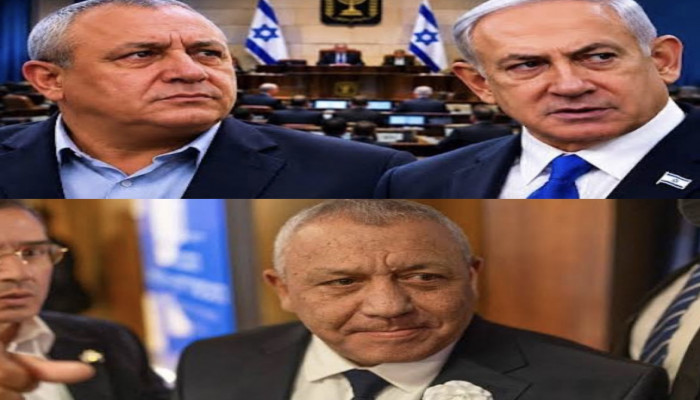
Israeli Prime Minister Benjamin Netanyahu is considering offering Yashar party leader Gadi Eisenkot a rotating premiership to form a national unity government and end the country’s political deadlock, The Jerusalem Post reported.
Sources familiar with the discussions told the publication that Netanyahu could announce his willingness to serve as the second prime minister under the proposed arrangement. He may present the decision as one taken “for the security of Israel”. One source said the announcement could come as early as this weekend if negotiations make further progress.
Neither Netanyahu’s office nor Eisenkot has publicly confirmed the proposal.
The move comes after weeks of coalition negotiations between Netanyahu’s Likud party and Eisenkot’s Yashar alliance. The October 27 election failed to give any political bloc a clear majority.
Netanyahu has repeatedly called for a unity government since his political bloc lost its parliamentary majority. Representatives of Likud and Yashar have continued discussions this week, with other parties also involved.
According to Maariv, negotiators aim to finalise coalition agreements and submit them to the Knesset by December 1. The proposed timeline also includes talks with United Torah Judaism (UTJ) and other parties expected to join the potential coalition.
However, members of the bloc seeking political change fear Netanyahu could use the remaining negotiation period to prevent an alternative government from taking power.
The Times of Israel reported Netanyahu could offer Eisenkot a rotating premiership as a political tactic to stall alternative coalition talks and trigger a new election.
Yisrael Beytenu chairman Avigdor Liberman wrote on X, “The change government is taking shape. I wouldn’t rule out the possibility that [Netanyahu] will offer Gadi Eisenkot a rotation in which Netanyahu would serve second, but everyone needs to understand: this is merely a ploy.”
Rotating premierships have previously helped resolve coalition deadlocks in Israel. Under such agreements, coalition partners decide in advance to take turns serving as prime minister during the government's term.
Meanwhile, Eisenkot has questioned Likud’s commitment to forming a unity government. In a statement on Friday, he said five negotiation meetings had already taken place, The Jerusalem Post reported.
“Two weeks and five meetings constitute a sufficient timeframe in which an agreement could have already been reached, had there been a genuine desire to do so,” he said.
Eisenkot stressed that unity should focus on policies and values rather than political positions. “Unity is not a discussion about seats or who gets to go first; it is a discussion about substance and values,” he wrote, accusing Likud of showing “no willingness to make progress on any substantive issue.”
He also questioned whether Likud was genuinely interested in reaching an agreement. “Is the Likud heading toward serious negotiations and a partnership that entails compromise, or is it merely maintaining a facade while employing a strategy to stall for time?”
Eisenkot said joining another Netanyahu-led government without meaningful changes would betray voters seeking political change after the October 7 attacks and the events of recent years. However, he added that negotiations remained possible if Likud was ready to make “bold leadership decisions.”



 Loading...please wait
Comments