




Netanyahu announces ‘Hexagon of Alliances’ with India, Greece, Cyprus amid regional tensions
- In Reports
- 12:40 PM, Feb 24, 2026
- Myind Staff
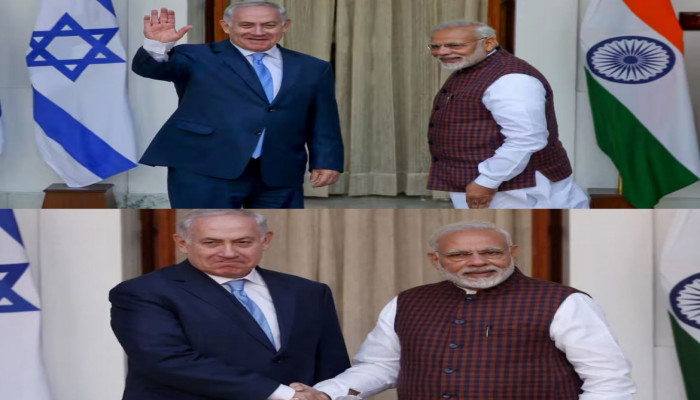
Israeli Prime Minister Benjamin Netanyahu unveiled a new strategic vision called a “hexagon of alliances” during a cabinet meeting on 22 February 2026. The announcement came just days before Indian Prime Minister Narendra Modi is scheduled to visit Israel on 25–26 February. The timing signals a deeper coordination between the two countries at a crucial geopolitical moment.
Speaking at the cabinet session, Netanyahu described the emerging framework as a “hexagon of alliances” that would bring together countries located around or within the Middle East. He directly named India, Greece, and Cyprus as key partners in this structure. In addition, he referred to unnamed Arab states, African nations, and Asian partners that could also be part of the grouping. According to Netanyahu, the goal is to unite these countries around shared interests and common threats, especially extremist forces in the region.
Netanyahu identified two main adversaries in his remarks. The first, he said, is the “radical Shia axis,” led by Iran and supported by its regional proxies. Israel has been actively targeting this axis in recent military and security operations. The second concern, he noted, is an “emerging radical Sunni axis.”
Sources suggest that this emerging Sunni grouping refers to efforts by Turkey and Pakistan to bring countries such as Egypt and Saudi Arabia into an anti-Israel alignment. Israeli officials believe that such outreach could shift regional balances and create new diplomatic and security challenges.
Netanyahu made it clear that this new bloc is intended to be strong and independent. He emphasised that it would not rely on outside financial backing, including from the United States. Instead, it would be built on direct cooperation in areas such as security, economy, technology, and diplomacy among the member nations.
India was highlighted as a central pillar of this proposed structure. Netanyahu described India as a global power with a uniquely close relationship with Israel. Over the years, the partnership between the two countries has grown from a defence-based relationship into a broader strategic alliance. Today, cooperation includes advanced defence systems, cybersecurity, innovation, and agriculture, among other areas.
Prime Minister Narendra Modi’s upcoming visit is expected to strengthen this partnership further. During his two-day visit, Modi will address Israel’s Knesset. He will also join Netanyahu at an innovation-focused event in Jerusalem, reflecting the strong technological collaboration between the two countries. In addition, Modi is scheduled to visit Yad Vashem, Israel’s official memorial to the victims of the Holocaust.
Talks during the visit are expected to focus on joint defence production, high technology, artificial intelligence, and quantum computing. These discussions align closely with India’s broader goals of defence modernisation and increasing indigenous manufacturing under its self-reliance initiatives. Israeli expertise in advanced defence and technological systems is seen as valuable for India’s long-term plans.
The timing of the announcement also connects with wider regional and global developments. Israel has been actively promoting the India-Middle East-Europe Corridor (IMEC), a connectivity and trade initiative aimed at linking India to Europe through the Middle East. The proposed hexagon of alliances could support such connectivity projects by ensuring greater regional stability and maritime security.
Greece and Cyprus, both longstanding partners of Israel in the Eastern Mediterranean, add important dimensions to the bloc. Their involvement strengthens maritime cooperation, energy security, and regional naval coordination. Together, these countries form a network that stretches from South Asia to the Mediterranean.
However, analysts note that this initiative may increase tensions in existing rivalries. Turkey and Pakistan could respond by intensifying diplomatic efforts with Muslim-majority countries. Critics may view the formation of such a bloc as a further escalation in proxy competition across the Middle East and South Asia.
At the same time, the initiative reflects Israel’s effort to broaden its diplomatic reach beyond traditional Western partners. By integrating a major power like India into a structured regional framework, Israel aims to reshape alignments in the Middle East. The development also comes amid global realignments under President Trump’s administration, where new and non-traditional partnerships are gaining prominence in countering Islamist extremism.
Observers believe that formal agreements or concrete announcements may emerge from Modi’s visit, marking a new phase in India-Israel cooperation. If realised, the “hexagon of alliances” could become a significant platform for coordinated economic growth, technological innovation, and collective security efforts against radical threats.
The announcement underscores the growing maturity of the India-Israel strategic partnership and highlights a broader effort to build multilateral cooperation in a rapidly changing geopolitical landscape.



 Loading...please wait
Comments