




Nepal interim government signs 10‑Point agreement with Gen‑Z leaders amid internal rift
- In Reports
- 05:16 PM, Dec 11, 2025
- Myind Staff
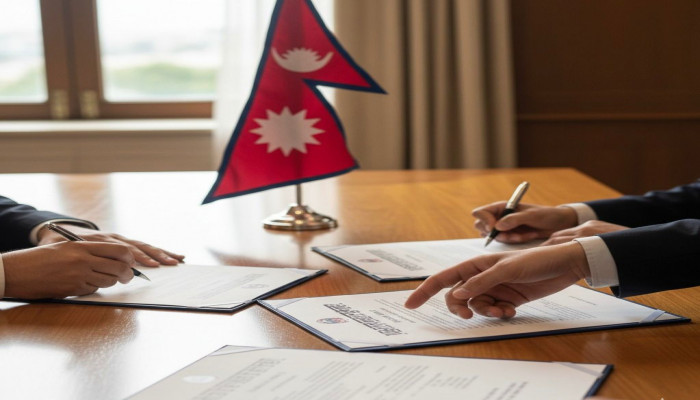
Nepal’s interim government and representatives of the Gen‑Z People’s Movement signed a 10‑point agreement late on Wednesday evening at the Prime Minister’s Office in Singha Durbar. The pact aims to address the key demands of youth activists, provide support to victims of past protests, and pave the way for political stability ahead of the upcoming elections.
The signing ceremony was attended by Interim Prime Minister Sushila Karki and leaders from multiple Gen‑Z factions, including the Gen‑Z Movement Alliance, the Council of Gen‑Z led by Sudan Gurung, and the Gen‑Z Front led by Rakshya Bom. Some splinter groups were present while others openly opposed the agreement. The internal rift within Gen‑Z became evident when one faction tore up the draft agreement immediately after it was signed, protesting the pact and questioning its basis.
The agreement contains commitments on several fronts, including recognition for protest victims, constitutional and electoral reforms, governance improvements, and institutional accountability. The key provisions of the pact include:
- Recognition of individuals who died during the September 8–9 Gen‑Z protests as martyrs, along with support for their families.
- Provision of free medical treatment, education, employment opportunities, and social security for those injured during the movement.
- Establishment of a Martyrs’ Memorial Foundation to honour the contributions of victims.
- Formation of a high-level commission to investigate violent incidents during the protests and recommend reforms.
- Introduction of constitutional and electoral reforms, including a “None of the Above” (NOTA) voting option, primary elections, and a minimum candidacy age of 21 years.
- Ending of partisan influence in state institutions and strengthening of anti-corruption mechanisms.
- Formation of a Gen‑Z Council to advise the government and support democratic processes.
Interim Prime Minister Sushila Karki described the agreement as an important milestone in Nepal’s political transition. She said, “The struggle has continued to date from September 8 and 9. Today, we have completed a step of this struggle by reaching an agreement.”
She further added, “The activists encouraged us, saying that this agreement will leave a record in history and ensure that the Gen‑Z martyrs and the injured would get identification of their struggle.” Karki highlighted that Nepal’s earlier conflicts had lacked such formal recognition and stated that this pact would ensure that the sacrifices of protestors were acknowledged officially.
Gen‑Z representatives expressed optimism about the pact. Sudan Gurung of the Gen‑Z Council stated, “This agreement marks the first step toward fulfilling the demands of the movement and protecting the rights of our martyrs and injured colleagues.” Rakshya Bom of the Gen‑Z Front said, “We expect the government to implement the agreement sincerely and create institutional mechanisms to prevent similar incidents in the future.”
The signing followed weeks of negotiations after the nationwide youth protests in September, which forced former Prime Minister K P Sharma Oli to resign.
Officials said the government will now move forward with implementing the provisions of the pact. This includes setting up commissions, providing support to victims, strengthening anti-corruption measures, and introducing electoral reforms. Authorities also emphasised the role of the Gen‑Z Council in advising the government on democratic processes and ensuring accountability.
Despite the agreement, internal divisions within the Gen‑Z movement remain a challenge. Some activists have rejected the pact, arguing that it does not fully represent their demands. Observers said that while the agreement is a significant step toward political stability, Nepal still faces challenges in unifying youth voices and ensuring effective implementation of reforms.
Nepal’s interim government and Gen‑Z leaders signed a 10‑point agreement addressing victims’ support, constitutional and electoral reforms, governance improvements, and anti-corruption measures. Interim Prime Minister Sushila Karki called it a historic step, saying the agreement provides official recognition for the Gen‑Z martyrs and injured activists. While the pact marks a step toward stability, internal disagreements within Gen‑Z factions underline the continuing challenges in achieving broad-based consensus and implementing reforms effectively.



 Loading...please wait
Comments