




NCERT introduces a section on Emergency in Class IX social science textbooks
- In Reports
- 01:15 PM, Jun 25, 2026
- Myind Staff
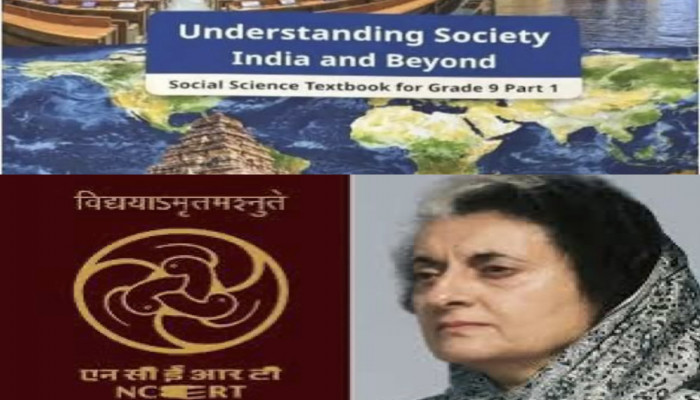
For the first time, the National Council of Educational Research and Training (NCERT) has introduced the topic of the 1975–77 Emergency in the Class 9 Social Science syllabus. The change has been made as part of the curriculum revision under the National Education Policy (NEP) 2020. Students will now learn about one of the most important periods in India's democratic history at an earlier stage of their education.
The topic has been included in Chapter 6 of the newly released Social Science textbook, Understanding Society: India and Beyond (Grade 9, Part 1). This marks a major change in the teaching of modern Indian political history at the secondary school level. The addition reflects NCERT's effort to help students develop a stronger understanding of constitutional values, democratic institutions and key events that shaped the nation.
Earlier, a detailed study of the Emergency was mainly limited to Class 12 Political Science. Students at the senior secondary level learned about its political, constitutional and democratic impact. With the latest revision, Class 9 students will now be introduced to the Emergency period much earlier. The move is expected to provide a stronger foundation for understanding India's democratic system and constitutional framework.
The inclusion of the Emergency is part of a wider curriculum overhaul being carried out under the National Education Policy 2020. The policy aims to make school education more multidisciplinary, competency-based and closely connected to India's historical and constitutional journey. NCERT has revised several aspects of the Social Science curriculum to align with these goals.
The new textbook also reflects changes in the way Social Science is taught. Greater importance has been given to civic awareness, constitutional principles and the development of critical thinking. Students are encouraged to understand how democratic institutions function and how they have evolved over time. The revised content seeks to provide a balanced understanding of India's social and political development.
The timing of this curriculum update is significant because 2026 marks 51 years since the National Emergency was imposed on June 25, 1975. The Emergency remained in force until March 1977 and is considered one of the most important and debated periods in independent India's political history.
During the Emergency, several democratic rights and freedoms were restricted. Civil liberties were suspended, press censorship was imposed and elections were postponed. The period continues to be studied as a major event that tested India's democratic institutions and constitutional safeguards.
By introducing the Emergency in the Class 9 syllabus, NCERT aims to familiarise students with this crucial chapter of Indian history at a younger age. The change is expected to strengthen their understanding of democracy, governance and constitutional values. It also reflects the broader objective of the NEP 2020 to connect students more closely with India's historical experiences and democratic evolution.
The revised Social Science curriculum represents an important step in helping students understand significant national events and their long-term impact on society. Through the inclusion of the Emergency, students will gain early exposure to a key period that shaped the course of Indian democracy and is highly relevant in discussions about constitutional rights, governance and democratic institutions.



 Loading...please wait
Comments