




Navi Pillay wins 2026 Nobel Peace Prize for work on human rights and international justice
- In Reports
- 05:49 PM, Oct 09, 2026
- Myind Staff
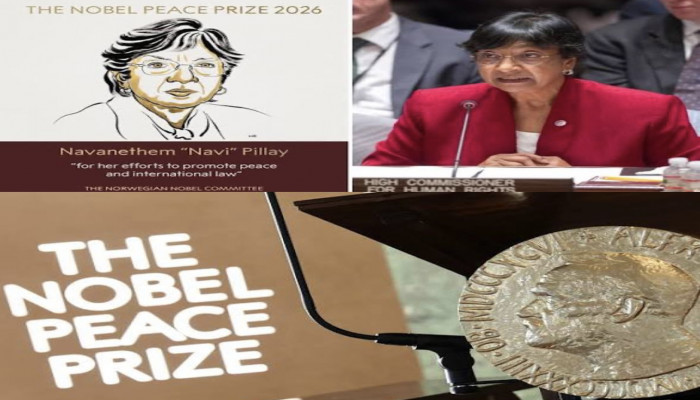
South African jurist Navi Pillay, who is of Indian Tamil origin, has won the 2026 Nobel Peace Prize for her efforts to advance international law, protect human rights and promote peace.
The Norwegian Nobel Committee honoured Navanethem “Navi” Pillay for her contributions to international justice and accountability. Her legal career includes several landmark roles in international institutions.
Pillay served as a judge at the International Criminal Tribunal for Rwanda, where she helped establish landmark legal precedents recognising rape as an act of genocide. She later served as a judge at the International Criminal Court. From 2008 to 2014, she held the position of United Nations High Commissioner for Human Rights.
In recent years, Pillay chaired a United Nations commission investigating alleged human rights violations in Israel and the Palestinian territories. Her work has focused on justice, accountability and the protection of fundamental rights.
Born on September 23, 1941, in South Africa, Pillay grew up under apartheid. Her parents were of Indian Tamil origin. She experienced racial discrimination and economic hardship during her early years. These experiences influenced her commitment to justice, equality and the protection of marginalised communities.
Pillay grew up in a family of eight children. Her father worked as a bus driver and took on several jobs to support the household, while her mother cared for the children. Despite financial difficulties, her parents prioritised education and believed their sons and daughters deserved equal opportunities to study.
In 2025, the Nobel Peace Prize went to Venezuelan opposition leader Maria Corina Machado for her efforts to promote democratic rights and secure a just and peaceful transition from dictatorship to democracy in Venezuela.
In 2024, the award was presented to Nihon Hidankyo, a Japanese grassroots movement representing survivors of the atomic bombings. The organisation received the honour for its campaign for a world free of nuclear weapons and its efforts to highlight, through survivors’ testimonies, why nuclear weapons must never be used again.
Between 1901 and 2025, the Nobel Peace Prize was awarded 106 times, recognising 143 laureates, including 112 individuals and 31 organisations. The International Committee of the Red Cross and the Office of the United Nations High Commissioner for Refugees have each received the award multiple times. 28 individual organisations have received the prize.
The first Nobel Peace Prize was awarded in 1901. Henry Dunant shared the honour with Frédéric Passy. Dunant received recognition for his humanitarian work supporting wounded soldiers and promoting international understanding. Passy was honoured for advancing peace through international conferences, diplomacy and arbitration.
The Nobel Foundation has raised the prize money for the 2026 awards to SEK 12 million per category, an increase of SEK 1 million from previous years.



 Loading...please wait
Comments