



MyInd Interview with Ramesh Agarwal
- In Interviews
- 12:27 PM, Apr 05, 2016
- MyIndMakers
The pace of growth needs to be quicker, currently it is pretty slow.

Mr. Agarwal, you started as an Airman in Indian Air Force. From there to heading one of the largest moving companies in India, how has the journey been?
Leading a disciplined life has been a major takeaway for me from my short commission role at the Indian Airforce, after which I returned to my hometown Hyderabad. In 1987, with two trucks which my father owned, we evolved from a small scale business of Agarwal Household Carrier to INR 650 crores business conglomerate we are today. It’s been 28 years since then & we still look forward to reinvent ourselves with lot of enthusiasm.
The journey so far has been very fruitful and rewarding although it’s not been a simple one as the packing & moving Industry is highly disorganised in our country. We as a team have put in lot of efforts to structure the industry as a whole & to change how the Industry is perceived.
In India, hiring a moving company was still an alien concept till few years ago. When you started in 1987, how did you handle this reluctance? What were your initial advertising methods?
The moving and packing industry is still not understood by many and we at Agarwal Movers Group represent the surface logistics industry which is 6,40,000 crore industry. We met the reluctance with lot of patience & persuasion. We undertook lot of educative initiatives to make people realise the seriousness of safe relocation solutions. In our early days we heavily banked upon word of mouth & client recommendations especially in the commercial segment.
Your company observes a special Darbar day for truckers and other employees. This seems a very unique concept. Do tell us more about it?
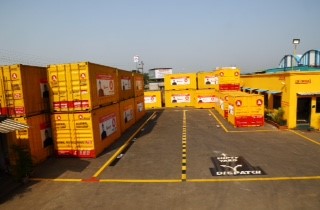
Agarwal Movers Group is highly process driven which is working to maintain and keep quality– we have a day in the month assigned for activities like – ‘cleaning and filing day’ where even my chest of drawers is removed and are turned upside down – this helps us to locate misplaced documents as well to declutter. Another process we follow is assigning a ‘safety day’ every month– where we take a rain-check on all safety and security measures both offline and online. Other assigned days are ‘outstanding review day’ and a ‘claim clearance day’ and ‘darbar day’.
Darbar day is held on the fourth of every month from 8:30-9:30am across our 103 offices. The day and time are inked which cannot be moved. This is the showcase hour for best practices, customer grievances& team appreciations. The hour also encompasses addressing internal team grievance, details of which is shared with the head office by noon. We have a team who looks into all the information that comes in – we look at the best practice carried out by a team member, if we find it valid we implement it across the organisation.
We pay lot of heed to customer and team grievances and try to create a onetime solution so that the issue is resolved for once & for all. Darbar Day has been a huge success for us to think out of the box and provide quality to the customer, something which we are very proud of.
You have recently introduced the concept of Trucking Cube' in India. Tell us more about it?
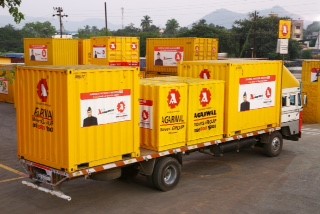
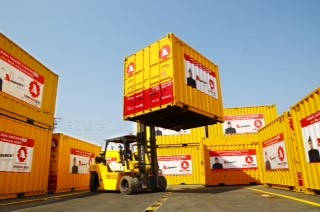
We call it Trucking Cube – which is made of marine quality material which means it is water, dust & fire proof. Trucking Cube will change the way packing and moving industry functions in India as it gives Zero Transhipment to the end customer – be it a home mover or a commercial customer. Zero Transhipment means Zero Loss Zero Damage for the end customer. – We introduced Trucking Cube in July 2015 – and would shift all our packing and moving services via trucking Cube by July 2016.
You can do the math – every year India loses goods worth 42,000 crores during transhipment via surface logistics – Trucking Cube is a small drop in the ocean – however if we as an industry can provide Zero Transhipment loss it will have an immediate impact on the country’s GDP as well.
You are spreading wings outside of India too. You recently opened an office in Singapore. What are the international laws and issues at play when you look to the future?
With the liberalization of business activities and easing entry norms makes it simpler to build a global brand. The market is maturing and there are very few limitations that restrain a new venture in any foreign market. We already have a presence in182 countries across the world through our channel partners and registered agents. We launched our first international office in Singapore which we view as a growing market.
By looking at current international business laws and policies we can predict that doing business at International level will be smoother than it was ever before.
What should the Governments at the Central and State level do to better facilitate your line of activity? Will the Inland Waterways and expressways help in anyway?
The Government at Central and State level can do plenty of things to facilitate logistics
business in the country. A step taken to ease down highway regulations, with less highway badgers. A better management of highway tolls or implementation of E-toll can resolve plenty of worries for any logistic company.
Inland waterways and expressways can be a major boon for logistic industry if managed well and is facilitated in a proper way.
Do you think India's overall business climate is improving under Narendra Modi?
Indian Business environment has seen certain constructive changes under the current government, many new policies and plans have been implemented which have supplemented the growth. Having said this, the pace of growth needs to be quicker, currently it is pretty slow
Apart from being a savvy businessman, we hear that you have a philanthropic side. What is your advice to the future generation that is filled with budding and eager entrepreneurs?
Every business should pay back to the society from where it has learned and earned. I call it “Guru Dakshina”. I feel that it should be prime activity to develop the surroundings because it is a place from where business procures all its resources that play a significant role in growth of business.
A developed society will always produce skilled labour and prosperous market, which are pillars of any economy.



 Loading...please wait
Comments