




Munir, Shehbaz Sharif’s Kashmir ‘Liberation’ remarks rising fresh concerns over regional stability
- In Reports
- 03:00 PM, Feb 06, 2026
- Myind Staff
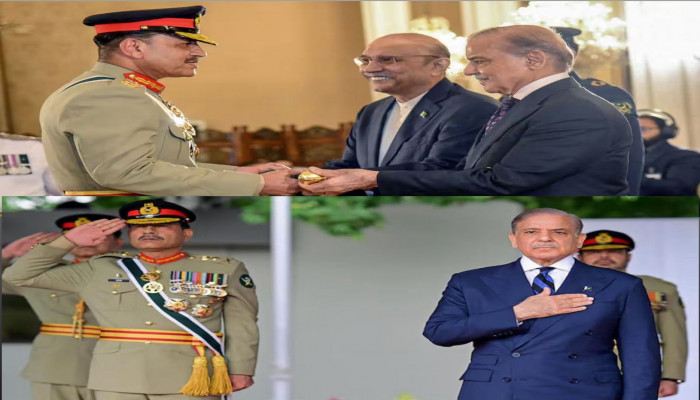
Pakistan’s top civilian and military leadership have once again sharpened their hostile narrative against India on the Kashmir issue, raising concerns about peace and stability in the region. Prime Minister Shehbaz Sharif and Chief of Defence Forces (CDF) and Chief of the Army Staff Field Marshal Asim Munir recently made separate high-profile visits to Pakistan-Occupied Kashmir (PoK), where they delivered strong statements about Jammu and Kashmir.
The visits come at a time when tensions between India and Pakistan remain high. The two countries were involved in a four-day military conflict in May last year. The conflict followed the April 22 Pahalgam terror attack, after which the Indian military launched Operation Sindoor. Since then, relations between the neighbours have continued to remain tense.
Pakistan Prime Minister Shehbaz Sharif visited the PoK Assembly in Muzaffarabad on Thursday (February 5), when Pakistan observed the so-called “Kashmir Solidarity Day.” During his speech, he expressed strong support for the people of Kashmir.
Sharif said he was there to show support for Kashmiris. “The solution to the Jammu-Kashmir dispute is to honour the wishes of the people of Kashmir and the implementation of the [United Nations Security Council] UNSC’s resolutions,” he told the PoK Assembly, according to PTI.
Sharif also said, “I was there to express solidarity with ‘our brothers in Kashmir on behalf of the Pakistani people and the Pakistani leadership’.”
Making a direct statement about Pakistan’s stand, he declared, “Kashmir will become a part of Pakistan.”
Referring to the four-day military conflict with India, Sharif claimed that the Kashmir issue had been diplomatically “reignited with full force” since then. He also accused India of promoting terrorism inside Pakistan through proxies.
“India is now intensifying terrorism through proxies. We want peace, but this peace can be established on the basis of equality and justice,” Sharif was quoted as saying.
He further stated that Pakistan would “continue to support” Kashmiris until they were granted their right to “self-determination,” according to Dawn.
Sharif also repeated Pakistan founder Muhammad Ali Jinnah’s description of Kashmir as Pakistan’s “jugular vein” and said that this idea still remains a key part of Pakistan’s foreign policy.
Pakistan Army chief Field Marshal Asim Munir also made a major visit to PoK, where he travelled to a forward post and interacted with troops stationed at the frontlines.
Sources told that Munir publicly promoted jihad and vowed Kashmir’s “liberation.”
During his visit, Munir said Kashmir would “soon witness the dawn of freedom, in accordance with the will and destiny of the people of Kashmir,” as reported by The Express Tribune.
He also said Pakistan would continue to raise the Kashmir issue internationally. Munir stated that Pakistan will continue to raise the Kashmir issue at all relevant international forums “until a just resolution of the dispute is achieved in accordance with the United Nations Security Council resolutions.”
According to a statement from Inter-Services Public Relations (ISPR), the media wing of Pakistan’s Armed Forces, Munir praised the troops stationed in PoK for their readiness despite difficult conditions.
ISPR said Munir hailed the “professionalism, morale and combat readiness” of officers and soldiers stationed at PoK despite “challenging operational conditions”.
The statement added that Munir highlighted the importance of staying prepared at all times. “CDF emphasised the imperative of maintaining peak operational preparedness, vigilance, and seamless synergy across all domains to effectively deter and decisively respond to any hostile provocation,” the ISPR statement read.
Munir also visited the PoK capital Muzaffarabad as part of his trip.
The aggressive narrative being used by Pakistan’s leadership is being seen as a worrying development for peace in South Asia. According to the report, such statements can increase instability and raise tensions on the ground, especially in sensitive border areas.
Top intelligence sources told News18 that Sharif’s statement asking India to stop what he called “aggressive, expansionist designs and nefarious conspiracies” for lasting peace in South Asia reflected Pakistan’s hardline military stance.
The sources said such rhetoric is becoming harmful and could lead to more tension, infiltration, and violence, especially for those living close to conflict zones.
The report also mentions that there is growing frustration and fear among people living in PoK. According to sources, many locals feel that such harsh statements are more about “political messaging” than real concern for the people living there.
The report added that sections of civil society, including traders and youth groups, have stated that this kind of narrative has caused “economic disruption” and the loss of lives.
Locals reportedly believe that these provocations are more focused on political signalling rather than protecting the safety and livelihoods of Kashmiris. Pakistan’s repeated calls for “liberation” are said to have negatively affected daily life in PoK, including tourism, education, and employment opportunities. People living near the border are facing the most impact due to rising friction between the two countries.
The report concludes that such strong statements and hostile messaging from Pakistan’s top leaders could further increase tensions at a time when the region is already dealing with instability and security concerns.



 Loading...please wait
Comments