




MP discovers rare Tatya Tope record, Queen of Jhansi portrait in historic manuscript drive
- In Reports
- 02:31 PM, Jul 20, 2026
- Myind Staff
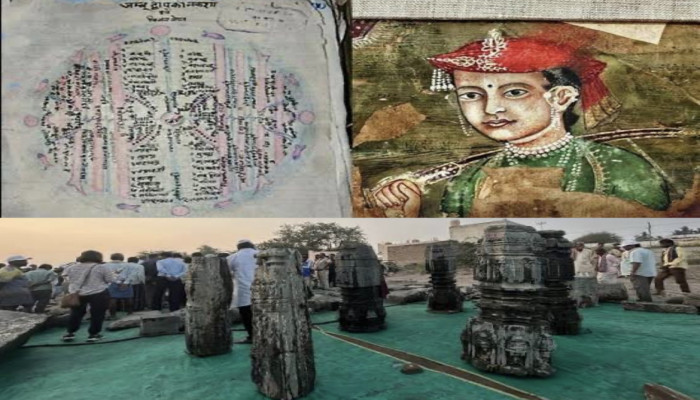
Madhya Pradesh has uncovered several rare historical treasures during a statewide manuscript collection drive under the Centre’s Gyan Bharatam Mission. The collection includes a rare document related to the 1857 revolt signed by freedom fighter Tatya Tope, an original portrait of the Queen of Jhansi commissioned by the queen herself, centuries-old manuscripts, ancient maps and several other valuable records.
The Union government launched the Gyan Bharatam Mission last year to preserve and digitise rare manuscripts kept by citizens across the country. Under the programme, people submitted historical documents for verification and digitisation before the June 30 deadline. Authorities will return the original documents after completing the process. District-level committees carried out the collection and verification work.
Madhya Pradesh received nearly 3.4 million submissions under the mission. Officials have verified around 1.2 million manuscripts so far, the highest among all states. Uttar Pradesh recorded 2.9 million submissions, followed by Rajasthan with 2.3 million and Gujarat with 1.5 million.
Madan Kumar, commissioner of the state archaeology department, said experts verified the documents using palaeography, the study of historical handwriting. The process helped confirm the authenticity and age of the manuscripts.
One of the most significant discoveries is a document linked to Tatya Tope and the 1857 revolt against British rule. The record carries his signature, making it an important historical find. Kumar said, “This is the first document bearing his signature and never documented anywhere. This document was given to the government by the princely state of Shivpuri after Independence and was with a heritage trust that gave it to us.”
The department also received an original portrait of the Queen of Jhansi from a resident. Officials said the queen had commissioned the painting herself. The artwork later reached a museum in Datia. Archaeologist Wasim Khan said, “The paintings date back to 1853. The use of natural colours, gold, and intricate artwork clearly proves it is original. It was discovered in Jhansi palace by workers from Datia and placed in the museum after Independence. However, it remained confined there and never gained wider recognition. The popular painting of Rani Jhansi seen everywhere today was prepared after her death and commissioned by her son.”
Another important addition is a rare compendium dated 1877. The manuscript lists 62 rulers from undivided India, covering regions from Muscat to Nepal and Kabul to Cochin. It contains portraits and detailed information written in Devanagari script with Persian and Urdu administrative languages. The text also records the relationships among various princely states.
The compendium remained with the Nawab of Ratlam for many years. Later, Mahesh Sharma, a resident of Jawara Tehsil and president of the district Pujari Sangh, preserved it. Sharma said, “My forefathers gave me this. I knew it was very important, so I registered for its digitisation. I am happy that my collection has added value to the state’s historical manuscripts.”
The archaeology department has also collected photographs of Rani Ahilyabai Holkar and her husband Khanderao Holkar. They ruled the Malwa region for nearly 30 years during the 16th and 17th centuries. Rani Ahilyabai Holkar earned recognition for her courage and leadership after the death of her husband. She fought against invading forces and became one of the region’s most respected rulers.
Another major discovery is a 70-page manuscript of Rasikpriya found in Panna. Keshavdas wrote this literary work in Braj during the 16th century. The manuscript explores love, romance and the relationship between Bhagwan Krishna and Radha. It also explains the principles of Shringara rasa, different categories of heroines and the qualities of heroes.
Archaeologist Nilesh Lokhande said, “This is a treatise on poetics that codifies the conventions of Shringara rasa (the erotic/romantic sentiment), nayika-bheda (the elaborate classification of heroines by circumstance, temperament and stage of love) and corresponding types of heroes. It is an original version as the papers and handwriting belong to the 16th century.”
The department has also received what it believes is one of the oldest maps in the country. The circular map presents the Earth with seven regions and six mountain ranges under the name Jambu Dweep. A Jain temple submitted the map during the collection drive. Lokhande said the temple authorities informed officials that the manuscript had remained there for over 100 years. He added, “Its actual source is unknown, but from the palaeography test, it appears to be centuries old.”
Officials also collected several other ancient maps and artworks from Jain temples in Shivpuri, Vidisha and Tikamgarh. These collections focus on Jain cosmology, traditional Indian cartography and Digambara art. The discoveries have strengthened Madhya Pradesh’s position as one of the leading contributors to India’s effort to preserve its historical and cultural heritage through the Gyan Bharatam Mission.



 Loading...please wait
Comments