




Mojtaba Khamenei’s push seals critical US-Iran ceasefire: Report
- In Reports
- 09:16 PM, Apr 08, 2026
- Myind Staff
A tense standoff between Iran and the United States came to a dramatic pause after both sides agreed to a ceasefire just 90 minutes before a major escalation deadline set by Donald Trump. The conflict, which had lasted for over a month, had brought the world close to a dangerous turning point. Trump had issued a stark warning that “A whole civilisation will die tonight,” raising fears of a massive military strike. However, a breakthrough in negotiations arrived just in time, offering temporary relief to global leaders and markets.
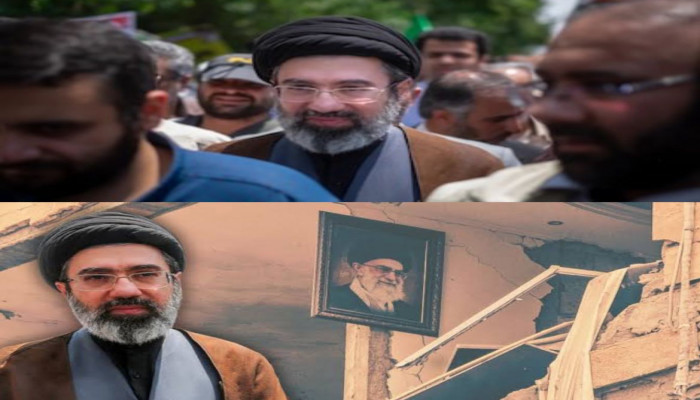
At the centre of this sudden shift was Mojtaba Khamenei, Iran’s newly appointed Supreme Leader and son of Ali Khamenei, who was killed in an airstrike at the beginning of the conflict on February 28. According to reports, Mojtaba Khamenei had largely stayed out of public view since assuming power. Despite this, he played a decisive role behind the scenes. For the first time since the war began, he instructed Iranian negotiators to move towards an agreement, which proved to be the turning point in the talks.
Iran’s Foreign Minister Abbas Araghchi confirmed that under the two-week ceasefire agreement, maritime traffic through the crucial Strait of Hormuz would remain secure. This route is vital as it carries a significant portion of the world’s oil and gas supply. Araghchi stated, “The transits ‘will be possible via coordination with Iran's Armed Forces and with due consideration of technical limitations.’” His role was key not only in negotiating with the United States but also in convincing Iran’s Revolutionary Guards to accept the deal.
From the US side, the agreement was welcomed as a strategic success. White House Press Secretary Karoline Leavitt described the ceasefire as a “victory” for the country. She said, “The success of our military created maximum leverage, allowing President Trump and the team to engage in tough negotiations that have now created an opening for a diplomatic solution and long-term peace.” The announcement immediately boosted global market confidence, with equities rising on hopes that the crisis might ease.
Behind the public statements, the final hours before the deal were intense and uncertain. US forces in the Middle East and officials at the Pentagon were preparing for a large-scale bombing campaign targeting Iranian infrastructure. At the same time, there was confusion about Trump’s final decision. Regional allies were also on high alert, expecting possible retaliation from Iran on a massive scale.
During this period, US Special Envoy Steve Witkoff was actively engaged in negotiations. Described as “very angry,” he reportedly called Iran’s initial 10-point proposal “a disaster, a catastrophe.” This led to a hectic round of revisions. Pakistani mediators played a crucial role by passing drafts between Witkoff and Araghchi. Foreign ministers from Egypt and Turkey also helped in narrowing differences between the two sides.
By late Monday night, the US had approved an updated proposal for a two-week ceasefire. However, the final decision rested with Mojtaba Khamenei. Despite facing threats of assassination from Israel, he remained actively involved in the process. Reports suggest that he communicated through handwritten notes delivered by trusted aides due to security concerns. His approval was described as a “breakthrough,” with sources confirming that without his consent, no agreement would have been possible.
At the same time, international pressure was mounting. China reportedly advised Iran to find a way out of the conflict. Meanwhile, US Vice President JD Vance was coordinating efforts from Hungary, mainly communicating with Pakistani officials. Israeli Prime Minister Benjamin Netanyahu remained in constant touch with Trump, although Israeli officials were reportedly worried about losing influence over the situation.
Despite progress in negotiations, Trump continued to issue strong warnings. Some US media reports claimed that Iran might withdraw from talks, but sources involved in the process denied this. By Tuesday afternoon, there was growing confidence that an agreement was close.
The breakthrough became official when Pakistani Prime Minister Shehbaz Sharif publicly shared the ceasefire terms on social media and urged both nations to accept them. Trump soon confirmed the decision, stating, “I agree to suspend the bombing and attack of Iran for a period of two weeks.” He later spoke directly with Pakistan’s Field Marshal Asim Munir to finalise the arrangement.
Sharif also invited both the Iranian and US delegations to Islamabad for further discussions. Within minutes of Trump’s announcement, US forces were ordered to stand down. Araghchi followed with a confirmation that Iran would honour the ceasefire terms.
For now, the situation appears stable. The agreement has provided a short window for diplomacy and reduced immediate fears of escalation. However, the coming days will be crucial in determining whether this temporary pause can lead to a lasting resolution.



 Loading...please wait
Comments