




Mizoram Polls 2023: An Analysis
- In Politics
- 10:44 PM, Oct 22, 2023
- Ankita Dutta
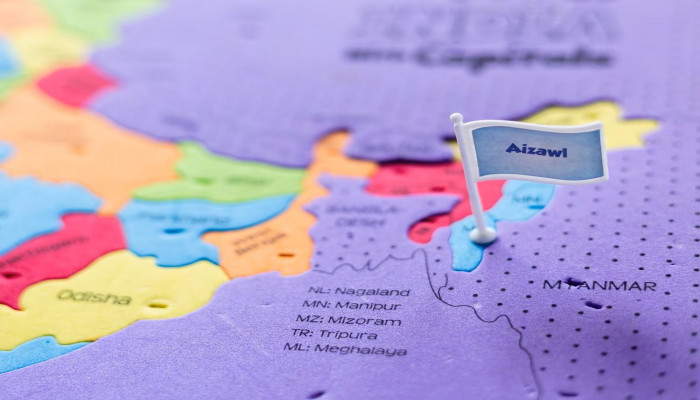
The upcoming election to the 40-member Mizoram Legislative Assembly is extremely crucial in the backdrop of the ongoing strife in Manipur, especially considering the fact that it is being held just a few months before the Lok Sabha elections in April-May, 2024. The Election Commission of India (ECI) has already issued the statutory notification for the elections in Mizoram to be conducted on November 7, 2023. The filing of nominations by candidates is now complete, with the last date for withdrawal being October 23.
However, all political parties in Mizoram are demanding that the poll panel reschedule and change the date of the counting of votes to any day between Monday and Friday, which has now been fixed on a Sunday, i.e. December 3, 2023 – a sacred day of prayers in the Christian-majority state. It may be noted here that as per the Census of 2011, Christians of various denominations, although predominantly Presbyterian, constitute around 87% of the total population of Mizoram. Hindus constitute a meagre 2.7% of the state’s population.
Sundays are devoted to full-day Church services in all towns and villages across the state. The conglomerate of fifteen major Churches – Mizoram Kohhran Hruaitute Committee (MKHC) – being a major socio-political decision-making body of the state, has also urged the ECI to change the date of counting of votes. The Church occupies a very powerful position of influence in the society, politics, and culture of Mizoram, so much so that public opinions in the state are very often moulded by it. The Church leaders and their opinions on diverse issues are of paramount importance in the Mizo society.
Although a section professes an anti-BJP sentiment, they wield considerable power and influence on key issues. As a matter of fact, Mizoram refrained from celebrating the International Day of Yoga on June 21 for some years after its declaration in the year 2015 by the UN General Assembly. According to the Church, Yoga is an ancient form of exercise that is not compatible with the Christian beliefs of the Mizos. In fact, Yoga virtually became untouchable in the state after the MKHC had boycotted all celebrations associated with any form of exercise “dipped in Hinduism” and related to the Hindu philosophy.
However, the ECI is yet to decide upon the issue of the change of date of the counting of votes. All political parties in Mizoram including the ruling Mizo National Front (MNF), Congress, BJP, Zoram People’s Movement (ZPM), and People’s Conference (PC) have sent their separate representations to the ECI requesting a change in the counting date. In a significant move, the Aam Aadmi Party (AAP) recently announced its participation in the upcoming elections to the Mizoram Assembly. It has already released its first list of four candidates from Aizawl North III, Aizawl West I and III, and Aizawl South I.
This decision comes as a part of the party’s strategy to expand its reach and presence in the Northeastern region by actively engaging in the political landscape of each of the states. The party aims to provide the people of Mizoram with an alternative choice in the elections. The establishment of a Coordination Committee and a dedicated North-East cell to facilitate the party’s organisational expansion in the region is already on the cards. The MNF, led by the 79-year old incumbent Chief Minister Zoramthanga, is looking for a second straight term and has already announced its candidates for all the 40 seats.
Zoramthanga is seeking re-election from his existing constituency of Aizawl East-I for the record seventh time. This time, the ZPM seems to be the electoral dark horse in Mizoram. Formed in 2017 as a coalition of various parties, the ZPM has announced the names of all its 40 candidates. The Congress and the BJP have, however, decided to field candidates in all the seats on their own. The BJP has already released the names of its candidates for 12 Assembly seats in Mizoram, while the Congress Party has released the list of all 40 candidates.
Currently, the ruling MNF holds 28 seats in the Mizoram Assembly, the Congress has 5, and the BJP 1. The BJP has been gradually expanding its footprints in the Northeast since 2014. In Mizoram, with the seasoned two-time MLA K Beichhua leaving the MNF to contest under the banner of the BJP, the party is eyeing more Assembly seats this time than the last. Although contentious issues such as beef continue to implore the party leadership, the BJP, however, has been able to carve out for itself a significant presence among the Christians in Manipur, Nagaland, and Mizoram, of late.
Mizoram has either been ruled by the MNF or Congress since it became a separate state in 1987 after the signing of the Mizo Peace Accord by the then Prime Minister Rajiv Gandhi. While the MNF has ruled the state for three terms, its principal rival, the Congress, has had four terms in power. Hence, for almost three decades, the post of the Chief Minister has passed between two leaders – Congress chief Lal Thanhawla and MNF supremo Zoramthanga. In the last Assembly elections of 2018, the Congress was voted out of power by the MNF which had bagged 28 seats with a vote share of 37.8%.
But, for the first time since 1989, a new CM-aspirant is in the reckoning in Mizoram. Former Finance Minister of Mizoram Lalsawta, known for his policies of fiscal prudence, is the new face leading the Congress Party this time. The Congress leadership argues that Mizoram needs a party like the Congress to preserve its religious identity, given the fact that the MNF is a part of the BJP’s North-East Democratic Alliance (NEDA) led by Assam Chief Minister Dr. Himanta Biswa Sarma. The formation of the Mizoram Secular Alliance (MSA) can be understood in this context.
Recently, the Congress formed the MSA with two local parties – the People’s Conference (PC) and the Zoram Nationalist Party (ZNP) – to unitedly fight against the BJP. The Congress has urged other political parties too, to join the alliance for the “survival of the Mizos and their religion.” In the current Mizoram Assembly, the PC and the ZNP do not have any representation. This year in July itself, Congress President Mallikarjun Kharge had constituted a 12-member Mizoram State Election Committee headed by State Party Chief Lalsawta.
Former Chief Minister of the state and long-time State Party President Lal Thanhawla is also a part of this panel. There have been continuous assurances from Union Ministers of the BJP visiting Mizoram that the party takes care of the interests and needs of all sections of the society equally, irrespective of their religious affiliations. The ZPM, however, has emerged as a new challenge to the binary politico-electoral equation in the state, especially in urban areas such as Aizawl. The Congress speculates that the ZPM might align with the BJP if it comes to power.
This time, therefore, there is a new formidable contender for the post of Chief Minister in the ZPM leader Lalduhoma – a former officer of the Indian Police Services (IPS) who was first elected as an MP in 1984. Electoral calculations in the Lunglei Municipal Council (LMC) polls earlier this year were eventually determined by the opposition ZPM, dealing a severe blow to the ruling MNF by winning all eleven seats. The MNF managed to come second by securing 29.4% of the votes. The ZPM, on the other hand, won handsomely, having successfully able to secure the lion’s share of 49.31% of the votes.
The Congress, which also fielded candidates in all the seats, came third by securing 20% of the votes. The BJP, which had contested from nine seats, managed to get only 0.75% of the total votes polled. The LMC, established in 2022, is the second civic body in Mizoram after the Aizawl Municipal Corporation (AMC), which was established in the year 2010. Currently, the ZPM has 6 MLAs in the 40-member Mizoram Assembly. In the upcoming Assembly elections, the Zoramthanga-led MNF would be answerable to the electorate for the high debt and several pending developmental works in the state.
In this regard, will the MNF be able to bring back the state to a position of financial stability? Would the party be eventually able to convince the public that it has shed its reputation of being a corrupt party? These are important questions staring at the face of every voter in Mizoram. The state is drowned in debt, with loans primarily being used to sustain the failing state machinery and pay salaries to the Government employees. However, the crippling impact of the COVID-19 pandemic has been used by the MNF leadership to justify its failures on these fronts.
Nevertheless, the MNF, with a strong presence in the rural areas, is expected to have an edge over all other parties because of its impressive performance in the distribution of financial assistance under the state’s flagship Socio-Economic Development Policy (SEDP) Programme. Both the major political parties – the Congress and the BJP – have distributed funds under the guise of economic development policies. For instance, the Congress Party provided Rs. 1 lakh to its supporters under the New Land Use Policy (NLUP) scheme, while the MNF has promised Rs. 3 lakhs under its SEDP scheme.
Besides, the MNF’s handling of the refugees and displaced Kuki-Chin-Zo people from Myanmar, Manipur, and Bangladesh, and the rising tide of Zo nationalism as a reaction to the displacement of the community in recent times, shall work in its favour. Zoramthanga has himself, too, expressed confidence that his party will retain power in the upcoming polls. Hordes of Kuki-Chin refugees displaced from their homes in Myanmar and strife-torn Manipur have made the already financially burdened state of Mizoram their home.
Both Mizoram and Manipur share borders with Myanmar. Directions to the Governments of both these states by the Union Ministry of Home Affairs in April this year to identify the illegal immigrants from Myanmar and obtain their biometric and biographic details has met with vehement resistance from the ruling MNF, which has been a silent rebel against the Centre. In the month of June 2023, both states were directed by the Central Government to complete the campaign by the end of September and prepare a plan of action to initiate the process.
But, in a significant decision, Zoramthanga and his Government have been consistent in defying the Central Government’s order to deport Myanmar nationals by refusing to collect their biometric data. It has said that it could not do so as it would “amount to discrimination against people who are of our blood and kindred brothers and sisters.” However, this might not be enough to secure the MNF’s electoral prospects and rescue Mizoram from its financial woes. Much before the outbreak of the conflict in Manipur, Mizoram had already opened its doors to refugees fleeing the Army crackdown in Myanmar.
Earlier too, it had ignored the Centre’s orders to close the border. Mizos believe that the Kuki-Chins of Myanmar and Bangladesh share with them a common ethnicity and that they were left on the other side of the border after the signing of the Treaty of Yandaboo (1826) and the redrawing of the borders in the North-East by the British Government. Mizoram’s Minister of Information and Public Relations Lalruatkima, had specifically mentioned that the state has not collected the biometric data of any immigrant to date and that they have decided not to do so on “humanitarian grounds”.
He also estimated the number of refugees from Myanmar and the Chittagong Hill Tracts (CHT) area in Bangladesh staying in Mizoram at around 60,000. The stance of the Mizoram Government is clear. The issue of the refugees from Myanmar is a political one and no move can be made on this matter till the elections are done. Six of Mizoram’s eleven districts – Champhai, Siaha, Serchhip, Saitual, Hnahthial, and Lawngtlai – share a 510-km long unfenced and mountainous border with Myanmar’s Chin state. Mizoram also shares a 318-km long unfenced border with Bangladesh.
As mentioned above, refugees have been entering en-masse into Mizoram from Myanmar since the February 2021 military coup in the country. The Centre has repeatedly asked the state to stop the inflow of refugees with immediate effect, pointing out that State Governments do not have the power to grant “refugee’ status to any “foreigner”. However, since the BJP is an ally of the MNF-led Government in the Mizoram Legislative Assembly, only time can say how far this problem can be resolved. Moreover, a majority of the Kuki-Chin people migrating from Myanmar are Christians.
Hence, it is easy for them to settle in the Christian-majority state of Mizoram and adopt the Mizo culture and language. Moreover, the similarity of their facial features with the local Mizos makes them almost indistinguishable. It is suspected that a huge number of people residing in Mizoram, especially the border districts, and calling themselves “Mizos” are illegal immigrants from Myanmar. The BJP is expected to gain in the areas inhabited by the Christian Maras, Siaha district in particular, although it wouldn’t gain votes enough to defeat the MNF until the Congress collapses completely.
It may be recalled here that the region today inhabited by the Mizos was the original homeland of the Hindu Reangs and the Buddhist Chakmas (collectively known as the Bru community or Brus), who were systematically made to leave Mizoram for resisting conversions, first during the MNF-led insurgency and again later in 1997-98, and once more again in 2009. The last remaining population of the Reangs in Mizoram’s Mamit district are BJP voters, but this wouldn’t be of much significance for the party in fattening the number of its seats.
It may be recalled here that as per the Census of 1961, the Reangs of Mizoram were 100% Hindus, but almost more than 90% of them are Christians now. They were allowed by the Church to stay in Mizoram only on the ground that they adopt Christianity and the Mizo culture. The section of the Reangs that vote for the BJP, however, claim that the ones who converted to Christianity are still ‘crypto-Hindus’. A major demand of the Reangs is the establishment of a Bru Autonomous Council on the lines of that of the Chakmas, Maras, and Lais. But, the Christian Mizos are firmly against such a step.
Ethnic cleansing of the Reangs from their own homeland was followed by the removal of their names from the voters’ lists and the encroachment of their lands by the Mizos. A significant majority of the population of the Lais (Aka Pawi) in Mizoram are MNF supporters and are likely to vote for it. The Lais, known as Hakka Chins in Myanmar, constitute the largest ethnicity in the country’s Chin state. With the Congress votes of the Chakmas of Mamit, Lawngtlai, and Lunglei districts now having shifted en-masse to the MNF, the BJP has all the chances of being in the main opposition this time.
BJP’s growth prospects in Mizoram hold good chances, although it will take much time and effort. Zoramthanga has also cultivated the image of a leader of the Mizos, including that of the Kuki-Chin people across the border. In 2019, Mizoram Sports Minister and MNF Advisor Robert Romawia had clearly mentioned that the current Government headed by Zoramthanga “knew no international boundary as far as the unification of Mizo communities is concerned and special allocation would be made in the State’s budget for the unification of all Mizo tribes living in different parts of the country and the globe.”
The number of Kuki-Chins fleeing the violence in Manipur and currently staying in Mizoram has been estimated at more than 12,000. With the Government of Zoramthanga being firm in its stand, the Government of Manipur too, has sought an extension for the collection of biometric data of the refugees. Manipur, however, had begun the process on July 29 with the assistance of officials from the National Crime Records Bureau (NCRB). But Chief Minister Biren Singh had recently said that he would request the Centre for an extension of the timeline by a year since the ongoing strife is delaying the exercise.
In the Assembly elections of 2018, the MNF ousted the Congress Party from power, which had managed to retain just 5 seats, although it received nearly 30% of the votes polled. Under its new President, the Congress, this time, is on a spree of introducing reforms within the party through steps such as roping in youngsters under its fold. However, the traditional stronghold of the Congress in Mizoram has been waning, mainly because of the rise of the ZPM as an alternative political force, replacing the Congress Party as the principal opposition.
Zoramthanga’s espousal of the cause of the Kuki-Chin-Zo refugees has also been partly responsible for this phenomenon. In the Assembly elections of 2018, the ZPM surprised all by winning 8 seats despite garnering a far lower 22.9% of the vote share. All its nominees had contested as Independents back then. One of the objectives of the ZPM is to introduce a new political system in the state, completely different from the currently existing one. Its Working President K Sapdanga has claimed that “people, including the Government employees, are anxious to see a new Government and a new political system.”
The ZPM promises “change” – something that younger people in Mizoram desire and yearn for. Despite some instability in its leadership, there is an opportunity for the new party to grow. It has already selected several candidates aged under 50 for the upcoming polls. Other issues that would play a key role in determining the electoral calculations in Mizoram are alcoholism, drug addiction and drug trafficking. In the run-up to the 2023 Assembly elections, both ZPM leader Lalduhoma and Congress Legislature Party leader Zodintluanga have openly addressed these concerns in their respective campaigns.
Lalduhoma co-related the high incidences of HIV-AIDS in the state to the use of drugs, while Zodintluanga highlighted concerns over the increasing availability of drugs and the corresponding scenario of a rapid rise in the rates of addiction among the youth. Earlier, it was estimated that there are about 25,000 drug users in the state and according to the 2016-17 HIV Sentinel Survey conducted by the National AIDS Control Organisation (NACO), Mizoram has an HIV prevalence rate of almost 20% among Injecting Drug Users (IDUs), which is the highest in the country.
The ongoing smuggling of Foreign-Origin Cigarettes, besides gold, explosives, weapons, arms and ammunition, is another major cause of concern for the state, especially in the districts of Champhai, Lunglei, and Siaha situated along the Indo-Myanmar international border. Mizoram is also one of the fastest-growing hubs of gold smuggling from China. With almost all the other hill states of the Northeast being affected by insurgency in some form or the other, Mizoram is considered a safe haven for smuggling of various kinds.
The 2018 elections saw debates over liquor bans, with the then-ruling Congress Party opposing total prohibition while its main opposition MNF advocated for a complete ban. During its tenure, the MNF had imposed a ban on locally brewed grape wine. Bottles of alcohol were confiscated from shops, only to later permit their sale again. Overall, in the backdrop of these developments and many more, Mizoram needs a political party that can deliver on the aspirations of the common people while at the same time, also check the growing tide of pro-immigrant sentiment in the state from the perspective of national security.
Image source: Business Standard
Disclaimer: The opinions expressed within this article are the personal opinions of the author. MyIndMakers is not responsible for the accuracy, completeness, suitability, or validity of any information on this article. All information is provided on an as-is basis. The information, facts or opinions appearing in the article do not reflect the views of MyindMakers and it does not assume any responsibility or liability for the same.



 Loading...please wait
Comments