



Mizoram declared insurgency-free after last militant group laid down arms
- In Reports
- 01:02 PM, May 01, 2026
- Myind Staff
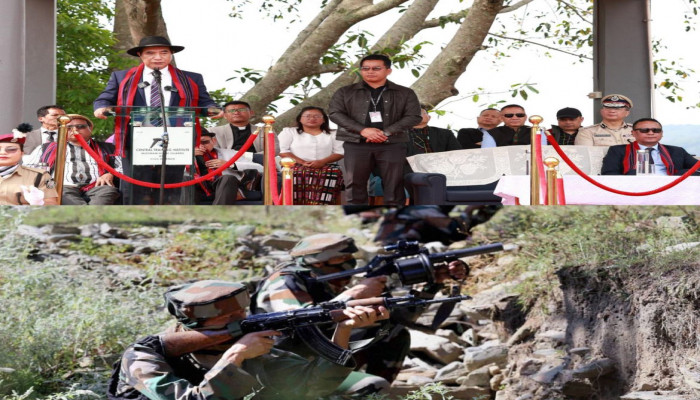
Mizoram has officially become “insurgency-free” after the last remaining militant group in the state laid down arms, marking a significant milestone in its long journey towards peace. Chief Minister Lalduhoma announced the development on Thursday, calling it a proud and emotional moment for the state.
The final breakthrough came when a faction of the Hmar People’s Convention (Democratic), also known as HPC(D), surrendered during a “homecoming and arms-laying ceremony” held at Sesawng near Aizawl. This faction was led by Lalhmingthanga Sanate and was considered the last active insurgent outfit in Mizoram. Although the group had remained mostly inactive in recent years, officials said it was still involved in occasional criminal activities, which kept concerns alive about complete peace in the region.
The surrender followed a peace agreement signed on April 14 between the state government and the HPC(D). This agreement formally ended insurgent activity in Mizoram. A total of 43 cadres, including their leader Sanate participated in the ceremony and gave up their arms. The event symbolised not just the end of militancy but also the return of these individuals to mainstream society.
The HPC(D) had long demanded the creation of an autonomous district council for the Hmar community. This demand was rooted in their identity and governance concerns. Over time, this political demand turned into an armed movement. With the latest agreement, the group has now chosen dialogue and peace over conflict.
Speaking at the ceremony, Lalduhoma reflected on the significance of the moment and the efforts that led to it. He said the presence of HPC(D) had been a lingering challenge in the state’s otherwise peaceful image. “We approached negotiations with an open heart. Today, we have reached our goal and can proudly say Mizoram is truly peaceful,” he said. His statement highlighted the importance of trust and willingness from both sides in achieving this outcome.
He also stressed the need for unity among different Mizo tribes. He reminded people that no subgroup should consider itself above the larger shared identity of the state. “We will thrive only through unity,” he said. His statement underscored the need to strengthen social harmony and prevent future divisions.
Lalduhoma’s role in the peace process carries personal significance. Before entering politics, he served as an IPS officer. He had resigned from service decades ago to help mediate during the earlier phase of the Mizo insurgency. His long association with peace efforts in the region added depth to this achievement. He acknowledged that peace had come at a high cost and appreciated the decision of the militants to surrender. He praised the cadres for choosing a peaceful path and rejoining society.
The history of the HPC dates back to 1986, when it began as a political movement. Its objective was to secure an autonomous council for the Hmar community under the Sixth Schedule of the Constitution. However, the movement turned insurgent in 1987 after differences with the government. This shift led to years of conflict and instability in certain parts of Mizoram.
In 1994, a peace agreement was signed, which resulted in the formation of the Sinlung Hills Development Council. This was meant to address some of the demands of the Hmar community. However, not all members were satisfied with the outcome. Dissident groups later formed the HPC(D), continuing the struggle separately.
The organisation saw further divisions over time. In 2011, it split into rival factions. One of these factions signed a peace accord with the government in 2018, bringing down insurgency activities. However, the faction led by Lalhmingthanga Sanate remained outside the agreement until recently.
Talks with Sanate’s faction began again in 2024. These discussions gradually built trust and created a path towards resolution. The final agreement signed in April this year paved the way for the surrender that took place on Thursday. This step has now closed the last chapter of insurgency in the state.
Officials believe that this development will strengthen peace and stability in Mizoram. It is expected to boost development efforts and improve the overall environment for growth. The absence of insurgency will also help in better governance and social progress.
The surrender is not just a political achievement but also a social milestone. It reflects the willingness of all sides to move forward and leave behind a history of conflict. For the people of Mizoram, this marks the beginning of a new phase defined by unity and peace.
The state, which once witnessed periods of unrest, now stands as an example of successful conflict resolution through dialogue. The government’s approach of negotiation and inclusion played a key role in this outcome. The cooperation of the insurgent group also proved crucial in bringing this long-standing issue to an end.
With this final step, Mizoram has firmly established itself as a peaceful state. The focus now shifts to maintaining this peace and ensuring that such conflicts do not arise again. The emphasis on unity, as highlighted by the chief minister, will remain important in shaping the state’s future.



 Loading...please wait
Comments