




‘Misuse by non-state actors ‘no longer a distant possibility’: EAM Jaishankar warns
- In Reports
- 06:22 PM, Dec 01, 2025
- Myind Staff
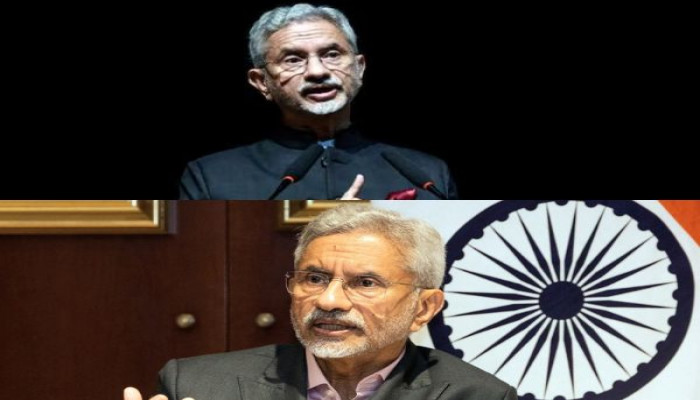
The misuse of biological weapons by non-state actors is no longer a “distant possibility” and the Biological Weapons Convention must be modernised as it has no compliance system and no way to track new scientific progress, external affairs minister S Jaishankar said on Monday.
EAM Jaishankar stressed again that India wants stronger compliance measures under the Convention, including verification that suits the present time, and regular reviews of scientific and technological changes so that governance can keep up with fast-moving innovation. He was speaking at the conference marking 50 years of the Convention with a focus on improving biosecurity for the Global South.
He said that India has a long record of supporting efforts to stop the spread of sensitive and dual-use goods and technologies. It has a strong legal and regulatory system to carry out the provisions of UN Security Council resolution 1540 on non-proliferation and strategic trade controls.
“Misuse [of biological weapons] by non-state actors is no longer a distant possibility. Bioterrorism is a serious concern that the international community has to be adequately prepared for,” Jaishankar said, pointing out that the Convention still lacks basic institutional structures, a compliance system, a permanent technical body and a method to track new developments.
“These gaps must be bridged in order to strengthen confidence,” he said, adding that India has pushed for stronger compliance measures in the Convention and supported global cooperation and assistance that helps countries exchange materials and equipment for peaceful use.
India has also suggested a National Implementation Framework that includes identifying high-risk agents, oversight of dual-use research, domestic reporting, incident management and continuous training. He said, India believes that assistance during biological incidents must be quick, practical and humanitarian.
“For 50 years, BWC has stood by one simple idea that humanity rejects disease as a weapon. But norms survive only when nations renew them…We must modernise the Convention, we must keep pace with science and strengthen global capacity so that all countries can detect, prevent and respond to biological risks,” he said. He added that India is ready to act as a trusted partner of the Global South and a strong supporter of global biosecurity.
Speaking to an audience that included Principal Scientific Adviser Ajay Kumar Sood and Defence Research and Development Organisation (DRDO) chairman Samir Kamat, Jaishankar said the international security situation had become more uncertain. The rapid scientific progress has made advanced biotechnology tools more accessible, affordable and lowered the cost of sequencing and synthesis.
“Recent outbreaks, including the Covid 19 pandemic, which affected each and every one of us, have imposed a steep learning curve for policymakers and practitioners alike. These developments have raised new questions to be considered in the context of the implementation of the BWC,” he said.
He said a biological threat, whether natural or deliberate, spreads quickly, crosses borders and can overwhelm systems, which makes it important for public health and security to support each other. He said systems that detect natural outbreaks also help in dealing with deliberate ones and that no country can handle such threats alone, making international cooperation essential.
He said the Global South must be at the centre of this work because many countries face “deep gaps” like weak healthcare, limited surveillance, too few laboratories and slow emergency response. “If biosecurity is uneven, so is global safety. The Global South is the most vulnerable and has the most to gain from stronger biosecurity. It also has the most to contribute. Its voice must therefore shape the next 50 years of the BWC,” Jaishankar said.
He said India has a responsibility to support the Global South because it has strong capacities in public health, pharmaceuticals, vaccines and biosciences. He said India supplies more than 20 per cent of global generic medicines and that 60 per cent of Africa’s generics come from India. He added that India’s growing healthcare investment and research network can detect and respond to many biological threats and that India will remain a reliable global partner.



 Loading...please wait
Comments