




Minister Shivraj Chouhan unveils first indigenous H5N1 bird flu vaccine
- In Reports
- 07:18 PM, Nov 20, 2026
- Myind Staff
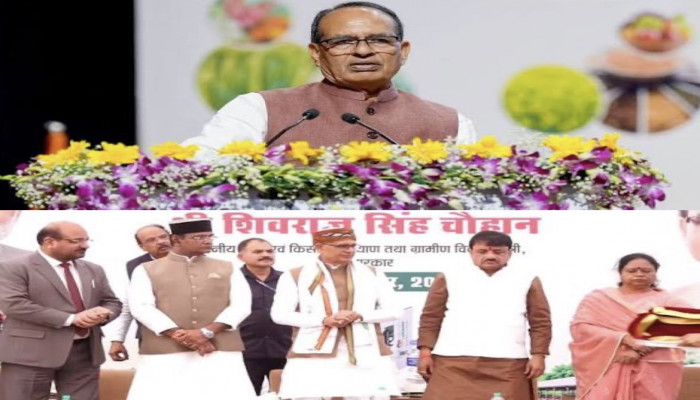
Union Minister for Agriculture and Farmers’ Welfare Shivraj Singh Chouhan on Friday dedicated India’s first indigenous H5N1 bird flu vaccine to the nation. Developed by the National Institute of High Security Animal Diseases (ICAR-NIHSAD), Bhopal, under the Indian Council of Agricultural Research (ICAR), the vaccine marks a major step towards self-reliance in animal healthcare.
Addressing the media, Chouhan described the development as a proud moment for the country. He said, “This is a proud moment for the nation; the vaccine has been dedicated to the country. This is an example of an Atmanirbhar Bharat. The first bird flu vaccine has been prepared, serving as proof of India’s scientific capability. Scientists of ICAR-NIHSAD have developed this vaccine.”
Comparing the achievement with India's COVID-19 vaccine development, Chouhan said the country had developed two coronavirus vaccines within nine months. “The vaccine reflects the nation’s capabilities. India also developed the coronavirus vaccine… India reflects the capability of its scientists. A major step toward a Self-Reliant India,” he added.
In a post on X, Chouhan called the development a historic achievement in India's animal health sector. He credited Prime Minister Narendra Modi's vision and said the vaccine would help protect the poultry sector and strengthen the livelihoods of poultry farmers. He also congratulated the scientists and researchers involved in its development.
Explaining the vaccine's importance in a video message, Chouhan said, “Bird flu is such a disease that if it spreads, it causes heavy damage. A large number of chickens are of course killed, but there is also a risk of this disease spreading from chickens to humans. And so far, outbreaks of bird flu have occurred 500 times in our country. But now there is nothing to fear. The NIHSAD institute of the Indian Council of Agricultural Research has developed an indigenous vaccine that, if administered to chickens, will protect them from bird flu. And not only will the chickens be saved – along with saving the chickens, this disease will not spread to humans either, and the losses caused by this epidemic can be avoided.”
He said the fully indigenous vaccine was dedicated to the nation on November 20. Chouhan also announced plans to establish a BSL-4 laboratory at NIHSAD in Bhopal to strengthen research infrastructure.
Highly pathogenic avian influenza (HPAI), commonly known as bird flu, can cause up to 100 per cent mortality among infected birds. Outbreaks often lead to mass culling and trade restrictions, resulting in heavy losses for poultry farmers. India first detected the disease in 2006 and has since recorded over 500 combined outbreaks of the H5N1 and H5N8 subtypes.
Chouhan also highlighted India's agricultural progress, stating that the country had surpassed China to become the world's largest rice producer. India also ranks first globally in milk and fish production. He cited a rise in grain production from 265 million to 378 million tonnes, horticulture from 280 million to 366 million tonnes, and fruit production from 5.4 million to over 12.3 million tonnes.



 Loading...please wait
Comments