




MEA assures Bihar’s water needs will be taken care of ahead of Farakka Treaty renewal
- In Reports
- 03:04 PM, Sep 03, 2026
- Myind Staff
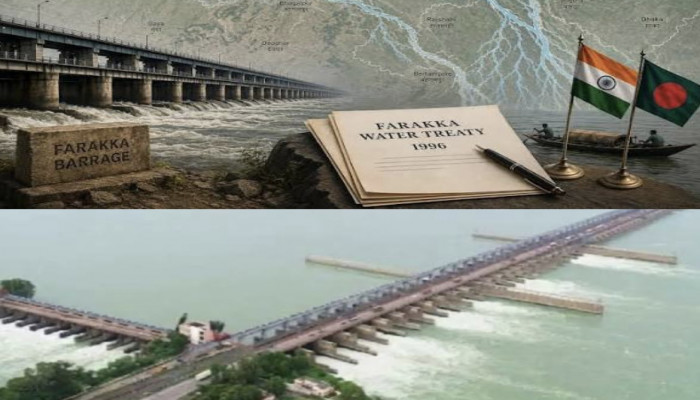
The Ministry of External Affairs (MEA) has assured Bihar that the state’s drinking water and irrigation requirements will be taken into consideration before India renews the Ganga Water Treaty with Bangladesh. The treaty, also known as the Farakka Treaty, was signed in 1996 to govern the sharing of Ganga water between the two countries. It is set to expire on December 12.
The assurance comes after the Janata Dal (United), an ally of the ruling National Democratic Alliance, urged the Centre not to renew the treaty in its present form. The party has raised concerns over its impact on Bihar’s water availability, particularly during the lean season when the state faces greater demand for Ganga water.
Sanjay Jha, Rajya Sabha MP and national working president of the JD(U), raised the issue in Parliament during the last monsoon session through a Special Mention. He argued that the treaty had affected Bihar’s drinking water supply, agriculture and irrigation needs. Jha pointed out that water continues to be released to Bangladesh during the lean season, a period when Bihar itself requires adequate Ganga water. He said this leaves the state facing water shortages.
In response to Jha’s demand, External Affairs Minister S Jaishankar assured him that Bihar’s concerns would be taken into account while reviewing the treaty. The minister said the Centre would consider the state’s potable water requirements along with its industrial needs before making any decision on the treaty’s renewal.
Jaishankar gave the assurance in a letter dated August 28. He said the Union government fully understands Bihar’s concerns regarding the agreement. The minister also informed Jha that the Ministry of Jal Shakti had held inter-ministerial discussions on the matter. These discussions included various stakeholders and representatives of the Bihar government.
The meetings will comprehensively examine both the implementation of the existing treaty and its future. The Centre is considering the concerns raised by Bihar as part of its broader review of the agreement with Bangladesh.
Welcoming MEA’s response, Jha described it as a matter of satisfaction for the people of Bihar. He said the issue of securing a fair share of Ganga water for the state has been raised by Bihar Chief Minister Nitish Kumar since his first term as chief minister.
“From his very first term as chief minister, Nitish Kumar has been raising the issue of fair share of water for Bihar...I am thankful to Dr Jaishankar for his considered response. We sincerely hope that any decision taken by the Government of India on the Ganga Water Treaty will factor in Bihar’s interests fully and fairly. Bihar is not seeking a favour. We are asking only for what our own scientific assessment establishes, so that 13 crore [130 million] people are not left short of drinking water, irrigation and industrial supply for another 30 years,” Jha said.
The JD(U) has maintained that Bihar should not face water shortages due to the terms of the treaty. The party’s demand comes at a crucial time as India and Bangladesh prepare to review the agreement ahead of its expiry. The Centre’s assurance indicates that Bihar’s water requirements will form an important part of the discussions before any decision is taken.
The issue is particularly significant for Bihar, where the Ganga is an important source of water for drinking, agriculture and industrial activities. Jha has argued that the state’s requirements must be assessed before water-sharing arrangements are extended for another period.



 Loading...please wait
Comments