




Mattala Airport in spotlight as Gulf aviation crisis pushes Emirates and Qatar to seek new hub
- In Reports
- 12:56 PM, Mar 20, 2026
- Myind Staff
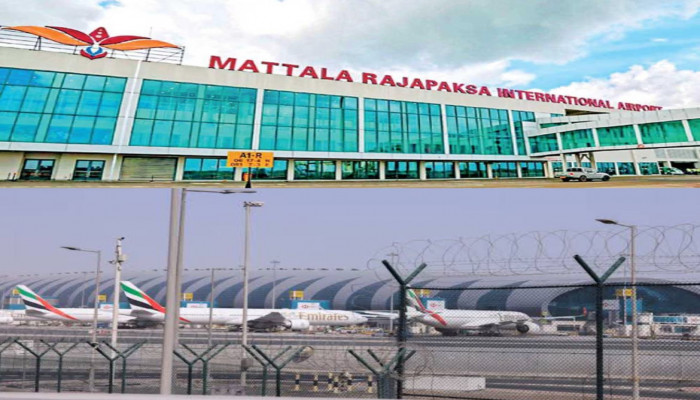
The Sri Lankan government has begun early discussions with Emirates and Qatar Airways to use Mattala Rajapaksa International Airport as an alternative transit hub. This move comes at a time when rising geopolitical tensions have severely disrupted major aviation routes across the Middle East. The crisis has created an urgent need for stable and secure alternatives, prompting global carriers to explore new operational bases outside the conflict zones.
Tourism and aviation authorities in Sri Lanka have confirmed that both Middle Eastern airlines have shown strong interest in shifting part of their operations to Mattala. The sudden demand for alternative routes has increased sharply, especially for transit passengers and repatriation flights. The global aviation system is currently under heavy strain, and airlines are struggling to manage the pressure caused by limited airspace availability.
The growing interest in Mattala is linked directly to the conflict that began in late February 2026. This situation has led to one of the biggest disruptions in global air travel in recent years. Several countries, including Iran, Iraq, Israel, Qatar, and parts of the United Arab Emirates, have either fully or partially closed their civilian airspace. As a result, major global aviation hubs such as Dubai, Doha, and Abu Dhabi have been forced to suspend or significantly cut down their operations. These hubs usually handle a large share of passenger traffic between the East and the West, making the disruption even more severe.
Industry experts believe that Mattala offers a strong geographical advantage in the current situation. The airport is located in the southeastern part of Sri Lanka, placing it directly along key Indian Ocean aviation routes that connect Europe, Southeast Asia, and Australia. It is also positioned far from the conflict-affected regions in the Persian Gulf and Arabian Peninsula. This makes it a safer and more reliable option for airlines that need uninterrupted transit operations.
In addition to its location, the airport has the required infrastructure to support large-scale airline operations. Its 3,500-meter runway is capable of handling wide-body aircraft, which are commonly used by major carriers like Emirates and Qatar Airways. This is an important factor, as these airlines operate large fleets designed for long-haul international travel. The availability of such facilities strengthens Mattala’s position as a potential backup hub.
The current crisis has also put pressure on SriLankan Airlines. The national airline is unable to fully meet the increased demand created by the disruption of Middle Eastern carriers. Officials told Mirror Business that SriLankan Airlines has already maximised the use of its wide-body A330 aircraft to maintain essential routes. The airline is operating continuous flights to major European destinations such as London, Paris, and Frankfurt, along with its services to Australia.
The long-distance routes to Europe require wide-body aircraft; smaller A320 planes cannot be used for these operations. This has left the airline with no extra capacity to handle the additional number of transit passengers. As a result, SriLankan Airlines is unable to fill the gap created by the reduced operations of Middle Eastern airlines.
At a broader regional level, Turkish Airlines has emerged as one of the few carriers still operating normally. Its main hub in Istanbul remains open, and Turkish airspace is not affected by the conflict. This has made Istanbul a key transit point between Europe and Asia. However, the sudden rerouting of global flights has caused heavy congestion at the airport. This situation highlights the urgent need for additional hubs like Mattala to support global aviation networks.
For Sri Lanka, the possible shift of operations to Mattala could provide an important economic boost. The ongoing aviation crisis has already led to the cancellation of hundreds of flights to the country. Tourist arrivals for March are expected to drop by around 20 to 25 per cent. This decline is estimated to cause an immediate revenue loss of about 40 million US dollars.
If Emirates and Qatar Airways finalise their plans to use Mattala as a transit hub, it could help recover some of these losses. It may also support the tourism sector during a difficult period. In the long run, this development could strengthen the role of Mattala airport. It may finally prove its value as a strategic backup hub for international aviation, something that has been debated for years.



 Loading...please wait
Comments