




Manipur: The Interminable Battleground
- In Current Affairs
- 02:16 PM, Jul 09, 2026
- Ankita Dutta
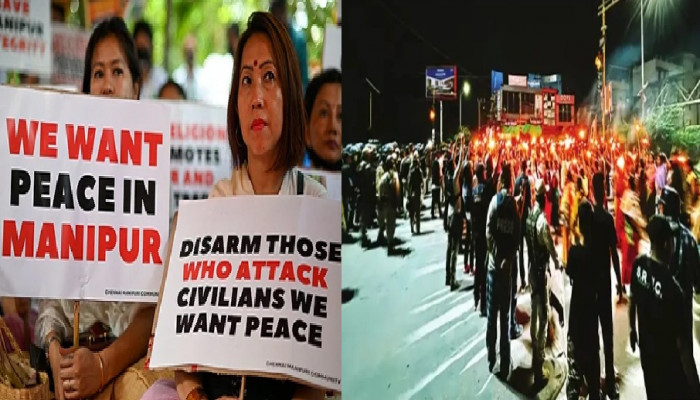
Manipur is the sacred homeland of communities that have co-existed for a long time, with the Meiteis being the numerically dominant. Tribes such as Anal, Angami, Chiru, Chothe, Inpui, Kabui, Lamkang, Liangmei, Mao, Maram, Maring, Monsang, Moyon, Poumei, Rongmei, Sema/Sumi, Tangkhul, Tarao, Thangal, Zeme, etc. are organisationally identified as ‘Naga’. Others like Gangte, Koirao, Mate, Paite, Ralte, Simte, Suhte, Thadou, etc. are identified as ‘Kuki’. Although Mizo, Hmar, and Zou maintain separate identities, they are allied with Kukis. Intermediary communities such as Aimol, Kharam, Koireng, Kom, Purum, and Koirao maintain separate identities, but they shift organisational affiliation depending upon time and circumstances. All these tribes except the Meiteis are listed as Scheduled Tribes (STs). There are other linguistic groups of recent migrants as well. They together constitute the ‘People of Manipur’.
Manipur’s pre-colonial past was marked by sporadic tribal feuds and raids for resources and booty. After 1949, there have been aberrative but reconciliable communal conflicts incited by external divisive forces and internal dissensions, leading to numerous intra- and inter-community clashes, e.g. clashes among different ST communities either for land or domination over cross-border trade routes: Naga-Kuki conflict (1992-1997), Kuki-Paite conflict (1997-1998), etc. These were controlled and the warring factions were brought to reconciliation largely by the pressure of democratic forces that upheld the need for collective co-existence. But Manipur has been in a civil-war-like situation for more than three years now. A conflict that began in the summer of 2023 simply doesn’t seem to end!
A state with a centuries-old history, and known to the rest of the world for its scenic beauty, rich cultural heritage, beautiful dance forms, and world-renowned artists and sports talents, has been reduced to a failed state characterised by uncertainty, unprecedented violence and chaos. It is an engineered violence that has somehow allowed the people of Manipur and across the world to realise that we are living in a dangerous environment amidst not one, but many civilisational enemies. Immigrants from other lands and their militants have taught the Manipuris a tough lesson. The conflict certainly cannot be read or analysed only through the lens of issues like demand for ST status by Meiteis, perceived discrimination against tribals, and development gaps, while overlooking other critical cultural, historical, and civilisational factors.
Regrettably, the world has been inundated with several one-sided, false and manipulated narratives on the conflict since the very beginning. Such narratives have targeted in a prejudiced and unfavourable spotlight only one community, amounting to a severe violation of indigenous people’s human rights. On the other hand, claims of an imaginary “Christian Ancestral Homeland” by a migratory community of people and their political ambitions pose serious challenges to India’s national security and territorial integrity. Their claims of “indigeneity” are closely related to the cherished political goal of this “Homeland”. They had been preparing for a long time to take over Manipur, though these attempts have failed time and again. Thus, the only alternative left was to start physical violence, shift all blame to the Government, and transform their acts of aggression and war crimes into an “ethnic clash” by provoking the “Majority” Meiteis.
Then, in order to achieve their pre-conceived goal, they began following the time-tested strategy: propagating lies of victimhood via paid media houses, begging for help in the name of “Minority”, “Tribal”, and “Christian”, thereby proving in every way possible that they can never live at peace with the Meiteis and thus, move a step further in exerting their dominance in the politics of the state and eventually demanding a “Separate Administration”. By taking their militant groups into confidence, they orchestrated the violence in an extremely planned manner. It was evident in the calculated deployment of rallies, social media manipulation, and different forms of violence, including highway extortion and illegal tax collections backed by militants in collusion with top political leaders and officials of the state. In short, it was simply a propaganda strategy of projecting the violence as a “Majority Meitei” versus a “Minority Tribal” conflict.
Forced expulsion of Meiteis from Churachandpur, Tengnoupal, and Kangpokpi districts of Manipur by means of terror, persecution, and inhuman acts is an important indicator of “ethnic cleansing” or exodus. It has inflicted immense physical, psychological, economic, and political damage upon various sections of the Manipuri society. Disturbing reports of war crimes, including the recruitment of children and teenagers by militants, have emerged, which is a serious threat to our security establishment. These young individuals are subjected to arms training in different areas of Manipur by militant groups that are known to possess sophisticated assault weapons and drones, posing a grave threat to civilian life. The economy stands worst affected, with thousands of homes and properties destroyed beyond recovery and several thousand people reduced to abject poverty.
Not just that, the fate of several Government and private infrastructure projects remains uncertain, with many destroyed by militants. On the one hand, they have been obstructing the free flow of essential commodities on the National Highways; and, on the other, they have intensified extortions from the limited number of commercial vehicles passing through their barricades. The prices of consumer goods have soared. With many hotels and restaurants being almost completely shut, the tourism industry has been hit hard. Many people have lost their jobs. Many have committed suicide. Several thousands of hectares of paddy fields in the state could not be cultivated due to continuous armed attacks by militants. The education and health sectors too, have suffered major blows. Victims of the violence are still suffering, unable to access proper relief and rehabilitation.
The overall situation compels us to think – who is benefiting from this tragedy in Manipur? The answer is undoubtedly those inimical forces that are hell-bent upon destroying the North-East, the integrity of the region’s territory, its polity and society, and its image at the national and international fora. This is their coordinated attack and aggression on the territory of Manipur, its people, trade and economy, forests, peace and tranquillity. It must be considered as an attack on Bharat and its territorial integrity. Over the decades, the Indian Government has deployed heavily armed forces protected by special laws such as the Armed Forces (Special Powers) Act, 1958, in order to address the country’s security concerns (both external aggression and internal disturbance) in this sensitive border state. Any attack on Manipur, therefore, is to be seen as an attack on India’s security and honour.
But we fear that many regions of Manipur have already transformed into an extended corridor of the dreadful ‘Golden Triangle’ of drugs in Southeast Asia. Historically speaking, the drug trade began to establish its hold in Manipur from the mid- and late 1990s onwards, around the same time the Burmese drug trade faced severe Government crackdowns and soil fertility loss. Forest lands were cleared, affecting lakes and rivers, destroying aquatic flora and fauna and leading to a serious water crisis. All these consequences can be directly attributed to the drug trade, which provided a cheap, parallel economy and an extremely rich source of seasonal labour. It was because the opium business offered an incentive for the poor. Many people from the Imphal Valley started working in the poppy fields as labourers during the cultivation season.
Decades of poppy cultivation have caused soil erosion and loss of fertility. Poppy is such a profitable cash crop, and to increase productivity, farmers began using chemical fertilisers and other toxic chemicals such as di-ammonium phosphate, adversely affecting local animals, birds and humans too, in terms of health. There has been an exponential increase in kidney-related ailments, different forms of cancers, and male and female infertility, etc. among the people of Imphal. Since the soil in Manipur was naturally found to be more suited for poppy cultivation, the drug trade shifted from the ‘Golden Triangle’ to the hill areas of the state, i.e. Ukhrul, Churachandpur, Tengnoupal, and Chandel in particular, and a few parts of Tamenglong too.
The next most important aspect involved in the drug trade is the smuggling route, the most common being the Chattogram-Teknaf route in Bangladesh and the Cambodia-Thailand route. Since both these routes lie in the middle of a pincer between the US and Chinese zones of influence, there is a lot of disturbance. This, along with the heavy presence of security personnel in these areas, makes the transfer of drugs via the Imphal Valley a risky business. Hence, Mizoram is the safest route opted by smugglers to smuggle drugs and other contraband. There have been many chilling incidents in the past where police officials were targeted because of their vocal opposition to the drug trade. Murdering security personnel has become the norm if they take any action against drugs. The role of the Church is crucial too.
Superficially, pastors can be heard speaking out against drugs, but they haven’t taken any convincing stand against the problem. There were instances of militant outfits working in close collaboration with the Church and donating large amounts of money. It has been alleged that profits from the drug trade by militants go to the coffers of the Church indirectly. That is why cross-border narco-terrorists and unions of communal and chauvinist separatist elites worked in tandem in Manipur for vested interests. This collusion of anti-India forces plays an extremely important role in the state’s legislature, bureaucracy, intelligence, and service sectors. They have been sponsoring large-scale infiltration of people from not only Bangladesh but also other countries such as Myanmar.
The subsequent establishment of new immigrant colonies/neighbourhoods in the state expanded territorial occupation, intensified timber felling, strengthened the illicit drug business, and illegal poppy farming. Over a period of time, immigrants were absorbed into the Manipuri society and converted into Indian citizens with fake documents, thus enabling them to enjoy the privileges constitutionally meant for STs at the cost of the indigenous tribal people. They destroyed Manipur’s rich and luxuriant forests, encroached upon the Reserved and Protected Forest Zones, and obstructed the natives of Manipur from undertaking their annual pilgrimages to the hills. They now want exclusive control of the trade routes passing through Manipur, including business hubs such as Moreh and public distribution systems.
Therefore, when the Government of Manipur began to initiate programs such as ‘War on Drugs’, destruction of poppy farming, protection of Reserved and Protected Forests, eviction of encroachers from Government lands, curbs on illegal immigration, detection of refugees from Myanmar sheltered in designated relief camps, population surveys, etc. the collusion of narco-terrorists and separatist political leaders felt the heat. They projected the Government’s actions by misinterpreting them with communal undertones and attacked the Meiteis to create disturbance, destabilise the Government, misinform and mislead the media, divert popular attention and public opinion in India and elsewhere so that they can cover up their diabolic agenda. And they are continuing with their armed aggression.
The focused and brutal campaign to achieve their goal of a ‘Separate Christian State’ has ensured that no peace prevails in Manipur. Slogans and posters such as “No Separate Administration, No Peace”! can often be seen and heard in different parts of the state. The indigenous people have been raising concerns time and again against the unregulated cross-border influx of immigrants. For instance, the students’ agitation of 1980 that demanded the detection and deportation of illegal immigrants came to an end with the Government of Manipur agreeing to start the processes of identification, detection, and deportation of immigrants who infiltrated into Manipur after 1951. However, the terms of this Agreement were not fulfilled. Agitation erupted again in 1994. It ended only after the Government agreed to implement the terms of the Agreement of 1980. But the promise remained unfulfilled this time too.
In the mid-2000s, another movement began demanding the implementation of an Inner Line Permit (ILP) System to regulate the entry and exit of immigrants into Manipur from other parts of India. The movement witnessed a series of violent incidents marked by deaths, injuries, and collateral damage. On December 12, 2019, the Government of India extended the ILP or the Bengal Eastern Frontier Regulation, 1873, to Manipur. After this, on December 31, 2019, the Government of Manipur adopted the Inner Line Permit Guidelines, 2019. On September 23, 2022, it again notified the Manipur Inner Line Permit (Amendment) Guidelines, 2022. But the question remains whether the Government’s initiatives could adequately address the specific demands of the indigenous people of Manipur. These demands include –
- a regulatory mechanism to stop the unrestrained inflow of migrants;
- prevention of migrants from owning land;
- prevention of migrants from owning buildings and other immovable properties;
- prevention of migrants from becoming permanent citizens and enjoying voting rights; and,
- fixing of 1951 as the base year so that anyone entering Manipur after 1951 may be identified and deported.
Therefore, to ensure that peace prevails at any cost by preventing the further loss of lives and property, the following measures need to be implemented at the earliest-
- Prevention of cross-border illegal immigration: collaborative identification, detection and deportation of illegal immigrants in possession of forged documents such as Aadhaar Cards and PAN Cards and who are hiding in their friends’ or relatives’ places in different places of Manipur must go on simultaneously;
- Ensuring proper security of the highways;
- Immediate enactment of the National Register of Citizens (NRC) to detect illegal immigrants, after taking adequate precautions against the possibility of sabotage from Mizoram;
- Conducting special drives to check all illegal documents that immigrants have already procured; those who helped them in this regard must also be booked;
- Faithful implementation of the Manipur Merger Agreement (1949) and upholding its terms and conditions which is crucial for addressing historical grievances and ensuring inclusivity;
- Revisiting the Manipur Land Revenue and Land Reforms (MLRLR) Act, 1960 and revising it to frame land laws in the best interests of all communities in the state without compromising their rights of equal access to and ownership of land;
- Revisiting The Manipur (Hill Areas) District Councils Act (1971) and the Scheduled Castes and Scheduled Tribes Amendment Act (2002); also, the Gazette Notification 903A, 2022 of the Imphal High Court must be implemented at the earliest, ensuring equal rights to all indigenous people while disincentivising illegal immigrants.
- Abolition of Chieftainship among the Kukis that operates as a semi-feudal system, infringing upon democratic institutional mechanisms in the name of customary rights, and the Chief’s control over land ownership and the founding of new villages which has led to a form of autocratic rule, violating individual rights of land ownership;
- Prioritising the completion of border fencing and negotiating with the Government of Myanmar for regulating the cross-border movement of people;
- Withdrawing and abrogating the tripartite Suspension of Operations (SoO) Agreement with Kuki militants, since it lacks justification and hinders progress, besides allowing militants to freely roam around with arms, and inflict violence upon ordinary Indian citizens.
While the proposed solutions offer a comprehensive roadmap for addressing historical grievances, ethnic tensions, and political difficulties, achieving lasting peace in Manipur necessitates acknowledging the fundamental problem of the protection of the indigenous Meiteis under the Constitution of India by granting them ST status. Since Meiteis are not recognised as STs at present, they are not able to protect their lands, culture, and civil rights. It has deprived them of their right to settle in the “Hill Districts” of Manipur, which comprise approximately 90% of the state’s total land area. Over the decades, this has led to systematic erosion of Meitei ancestral lands, ancient literature, culture and civilisation. Due to this lack of constitutional protection, Meiteis have become minorities in their own lands.
In many border areas of Manipur, the demography has vastly changed and no matter how much fencing is done, immigrants who have already settled there have created an ecosystem that allows the entry of people from their own kindred. In these places, a minimum settlement zone or high surveillance zones or no-settlement zones of at least 10 km should be demarcated where the Indian Army should be allowed the right of shoot-at-sight, if not across the border. In this way, India can at least help ensure that an ecosystem to facilitate illegal immigration is no longer allowed to expand. This will help minimise illegal immigration to a certain extent, even if not completely. Manipur is a landlocked state whose very existence depends upon territories passing through immigrant-dominated, militant-infested areas. The objective of the anti-India forces is to destabilise Bharat along all possible fault lines to check and stall its economic progress.
Manipur, as we all know, is the nodal point of India’s Act-East Policy. So, a disturbed and destabilised Manipur clearly benefits the hostile, anti-India forces. The defensive outlook of the Government in the initial stages of the conflict gradually led to dire consequences, as we can see, for it allowed heavily armed militants to pick and choose where and when to strike. They have created small teams and are moving into selected areas, launching high-intensity (mostly hit-and-run) attacks, and they are able to get away with it, which is a matter of serious concern. This has been happening due to a lack of proactive military operations. We must understand that peace-keeping operations akin to patrolling are simply not enough in Manipur anymore. We need proper combing operations, similar to what was launched in Chhattisgarh against the Maoists in areas like Dantewada.
The conflict in Manipur has metastasised. Therefore, the solution to it has to be multi-faceted. It cannot be solved within a short period of time since it will require international cooperation at multiple levels, considerations of border security and internal security. It will also require providing alternatives to drugs and conducting elaborate awareness campaigns. Lack of proactive measures reassuring the common Manipuris of their basic security against drugs and militancy has led the fragile situation to turn into an open rebellion against the Indian State. This kind of anti-national sentiment is also fuelled by a large section of the intelligentsia who have been maintaining a strange silence since the very beginning of the violence. They have done everything possible to not only keep the Manipuri society isolated from their fellow brethren in the country but also justify illegal immigration into the state on ‘economic’ or ‘ethnic’ grounds.
But the assimilation of population from any neighbouring country due to ethnic conflict, identity politics, or economic and livelihood crises cannot and should not be permitted under any circumstances. Peace and stability in Manipur can only be sustained in the long-run by strong, grounded, and all-inclusive societal and economic measures that help to preserve the state’s delicate ethnic and demographic balance and build a more peaceful and progressive future for its people. Saving the cultural and civilisational landscape of Manipur from expansionist foreign ideologies to create a sustainable future for all Manipuri residents is the need of the hour. Lasting peace in such complex situations is rarely achieved through one-stop single solutions. It requires a multifaceted approach that takes into account all the contributory factors responsible for the current state of affairs.
(Acknowledgement: A special note of thanks to Vladimir Adityanath for his detailed inputs on the subject).
Disclaimer: The opinions expressed within this article are the personal opinions of the author. MyIndMakers is not responsible for the accuracy, completeness, suitability, or validity of any information on this article. All information is provided on an as-is basis. The information, facts or opinions appearing in the article do not reflect the views of MyindMakers and it does not assume any responsibility or liability for the same.



 Loading...please wait
Comments