




Manipur Assembly Elections 2022 – An Analysis Part 2
- In Politics
- 01:00 AM, Mar 10, 2022
- Ankita Dutta
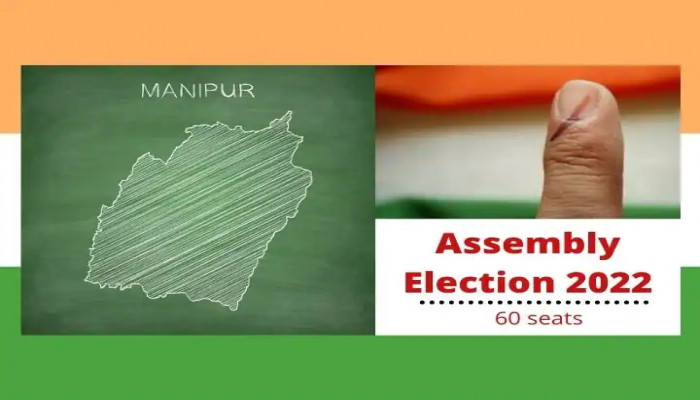
Let us now understand the population and geographical dynamics of Manipur that have always been crucial in influencing the electoral outcomes of the state. As per the Census data of 2011, Manipur has a population strength of a little over 28 lakh people and a voter base of around 20 lakh. Geographically speaking, the state of Manipur is covered with hills on all the sides and a valley (known as Kongba in Manipuri) at the centre. The fertile valley that occupies almost 90% of the area of the state comprises just a mere 8% of the total land, but it is home to almost 60% of the population.
Demographically speaking, the state is inhabited by three different communities – the Meiteis (who are largely Hindus) and a small section of the Pangals or Manipuri Muslims residing in the valley; and, the population of the Tangkhul Nagas and the Kukis, who are predominantly Christian and reside in the hills. Overall, Manipur has a fairly equal population share of both Hindus and Christians at around 41%, and the third largest population of Muslims in the North-East after Assam and Tripura.
It is common knowledge now that Manipur has been witness to deep ethnic strife for several decades in the past. The Meiteis, Nagas, and Kukis have mutually strained relations because of various reasons, partly historical and partly religious. So, the entire state is fixed in a complex zero-sum game between various communities, since any significant gains for one community is seen at the cost of the other. A majority of the people in the hills believe that they have always been unfairly treated.
To some extent, this grievance holds ground because several hill districts of Manipur which also share an international border with Myanmar, such as Churachandpur, Ukhrul, Chandel, Senapati, Tamenglong, etc. still do not have even one government-owned multispecialty hospital. In case of any health emergency, the village residents of these districts are referred to the capital city of Imphal.
The success of the BJP in bringing the Inner Line Permit (ILP) Act of 2019 in Manipur has proved to be a major bargaining factor for the party in the Assembly elections of 2022. This is especially true because of the fact that in the year 2015, the then Congress Government under Okram Ibobi Singh had drastically failed to address this issue. This factor cannot be overlooked while we try to understand the causes behind increasing hill-valley tension during the previous Congress regime in the state. Implementation of the Inner Line Permit System (ILPS) was a long-pending demand of the common people of Manipur.
The Christian vote vs. the Meitei vote
The Imphal Valley has 40 of the 60 seats in the Manipur Assembly, while the hills add up to the remaining 20. These 20 seats are reserved for the Scheduled Tribes (STs) which are mainly Christian. Now, this has been one of the major factors in deciding the outcome of almost every election in Manipur. The increasing influence of the Christian vote in the politics of Manipur can be understood from the Election Commission of India (ECI)’s decision to reschedule the first phase of the polls from February 27 to February 28. Several Christian organisations in the state and their functionaries had organised protest meetings against the conducting of elections on a Sunday, i.e., February 27.
In fact, in yet another development just a few days ahead of the polls, the Manipur Conference of Seventh-Day Adventist Christian Church had appealed to the ECI to change the date of the second phase of polling, i.e., March 5 (Saturday), since it happened to be a day of worship and rest. In a press release, the Church body stated that the 7th day (Sabbath) is strictly observed by it and many other Churches in the hill districts of Manipur. However, the electoral importance of the Meitei vote and local people’s faith in the leadership qualities of Congress stalwart Okram Ibobi Singh on the one hand and the BJP’s Biren Singh on the other deserves an honest debate.
Out of an estimated 23-24 lakh population in the state, there are around 13 lakh Meitei Hindus and 1,67,000 Meitei Muslims. The issue of territorial integrity of a state like Manipur is very close to almost every Meitei’s heart. Even Meitei Muslims back CM Biren Singh in what they say has been his “continuous fight” for protecting Manipur’s territorial integrity. In fact, it was in the year 2019 that Biren Singh had led a delegation to Union Home Minister Amit Shah and convinced him that nothing should be assured to the Naga insurgents before taking his state, and especially the Tangkhul Naga population, into confidence.
For several days, there were protests and violence in the valley areas since there was an apprehension that the Naga insurgent group NSCN (I-M) may get away with some major concessions ‘within the state of Manipur’. It needs to be mentioned here that the NSCN (I-M) is a strong outfit of several hundreds of Tangkhul Naga cadres. This community of Tangkhul Nagas has a sizeable presence in Ukhrul and a few adjoining hill areas of Manipur.
For his part, former Congress CM Ibobi Singh (73) has already crossed his prime. He was best at winning three subsequent elections for the Congress, including in 2012, and ruled the state for an uninterrupted 15 years. Political observers are quite well-aware of Ibobi Singh’s flamboyant style of functioning. He was adept at the art of giving tough times to even his own party colleagues when the UPA Government was in power in Delhi.
In 2010, the then Home Minister P. Chidambaram reportedly agreed to allow the Naga rebel leader Thuingaleng Muivah to visit his native village Somdal situated in a remote hilly region of Manipur. Accordingly, Ibobi was asked to handle the matter cautiously by the Congress high command. He was precisely asked to handle the ‘Meitei sentiment’ because among the Meiteis, the Naga movement has always been perceived as a major move to change the geographical dynamics of the state.
While in Delhi, Ibobi agreed readily, assuring the top Congress leadership that he will facilitate Muivah’s visit. But, back in Manipur, he played the Meitei card secretly to the hilt by sabotaging Muivah’s visit to his native village in Ukhrul district. This strategically well-planned move by Ibobi proved crucial in strengthening his grip over the politics of the state. Despite this incident leading to a sort of trust deficit between Ibobi and the Congress high command, the former CM was seen to have got all the importance from his party higher-ups ahead of the elections. He had also defended the alliance of the Congress with the Left in Manipur.
An Account of Pre-Poll Violence in Manipur
Manipur has been a witness to a deadly spate of violence among rival insurgent outfits in the run-up to the elections. Militant activities have increased, forcing the authorities to ask the security forces to intensify vigil in the sensitive and vulnerable areas, especially those bordering Myanmar. As per data available in the office of the Chief Electoral Officer of Manipur, since the announcement of the poll dates on January 8, 60 FIRs have been filed and 58 persons arrested under different charges.
Besides, a total of 18,120 licensed arms have been deposited in the nearest police stations and cash, drugs, liquor, gold and other illegally procured items including narcotics amounting to Rs. 165.47 crore have been seized by various law-enforcement agencies including the Income Tax Department since January 8, 2022. Beginning with the ghastly killing of the family of Col. Viplav Tripathi of the 46 Assam Rifles, including three other paramilitary force personnel, near Sialsih village on the Indo-Myanmar Road in the Singhat subdivision of Churachandpur district on the 13th of November, 2021, there does not seem any end to the violence.
Such violence has had its own share of impact both in the valley and the hill areas of Manipur. As a part of the confidence-building measures, several hundred companies of the Central Armed Police Forces (CAPFs) were deployed in the state ahead of the elections, to be effectively used in area domination and for providing security in the vulnerable locations. Moreover, in order to curb the illegal movement of people and inimical elements, over 285 checkpoints are now operational across Manipur.
In several assembly constituencies of the state such as Heirok in Thoubal district that have always had a history of pre-poll violence, there were reports of masked men terrorising families and election campaigners. Many individual houses had been ransacked, their women assaulted, and a few journalists too, were beaten up by the goons. This increase in the spate of insurgent activities prior to the elections was anyways quite expected, leaving very little, if any, space for constructive dialogue and debate between the government and the insurgents.
Security forces were on high alert after a series of several violent incidents that began 3-4 months ahead of the elections, with the Assam Rifles proactively guarding the unfenced 400-km India Myanmar border. It has foiled several terrorist bids to carry out violence in the poll-bound state. E.g., on February 23, just a few days ahead of the first phase of the elections on February 28, the Moreh Battalion of the Assam Rifles recovered a large cache of explosive materials and six IEDs with cortex, electric wires, and explosive materials near Betuk village along the Myanmar border.
Ahead of the second phase of the Assembly elections on March 5, Union Home Minister Amit Shah had addressed a meeting at Heirok, in which he promised to take steps for talks with militant outfits if the BJP is re-elected to power in Manipur. Former Minister Th Radheshyam is pitted against Congress heavyweight M Okendra at Heirok. Following a High Court order on March 3, the ECI had asked the young voters of Heirok Assembly constituency to produce two separate documents as proof of date of birth for the final phase of the polls that took place on March 5.
The Court gave the above directive following a petition, alleging that many underage youths have been included in the voters’ list. On the second and final phase of the polls on March 5, a video journalist named L Kanta of Mami TV, Manipur was assaulted by miscreants in Thoubal district, which was strongly condemned by a host of organisations in the state including the All Manipur Working Journalists’ Union.
During the visit of PM Modi in the month of November 2021, the Coordination Committee (CorCom), a conglomerate of seven Manipur-based armed outfits, had called for a complete boycott of the PM’s visit and imposed a total shutdown, alleging that “attempts were being made to expand colonial administration in Manipur.” The National Revolutionary Front, Manipur (NRFM) had also called for a 12-hour bandh on the 4th of January, 2022 saying that “there is no reason to celebrate the visit of the Prime Minister.”
The very next day after the PM’s visit, i.e., on January 5, 2021, an Assam Rifles jawan was killed and another injured in two powerful IED blasts at a place called Lilong Usolpokpi Sangomsang in the same Thoubal district. Again, a few days later on January 10th, two people including a police commando were shot dead by unknown assailants at Wangoi in Imphal West district. Local residents later alleged that the killings were done with a political purpose as one of the deceased whose name was Abujam John was a BJP worker and a close aide of the State Agriculture Minister.
On the night of February 12, miscreants had triggered a blast at the residence of a party worker campaigning for the National People’s Party (NPP) candidate from the Khurai assembly constituency. The blast went off at a place called Khabeisoi under Porompat Police Station of Imphal East district. In another such incident on the same day, supporters of a candidate had allegedly dismantled the polling camp of a rival candidate in Thongju constituency of the same district. On the night of February 19, the father of a candidate from the NPP was shot at by unknown gunmen at Yairipok Yambem village in Imphal East district.
NPP candidates have increasingly been on the target of miscreants in poll-bound Manipur. After the February 19 incident, a powerful bomb blast went off at the entrance to the residence of the NPP candidate for the Khurai constituency in Imphal East district on the 24th of February. A polling booth was also destroyed under the impact of the blast. A group of people attacked another NPP candidate at a place called Laphupat Tera in Mayang Imphal constituency on the same day. Although the NPP candidate Urikhimbam Ramesh Singh and his supporters escaped unhurt, several vehicles including that of the candidate were shattered in the attack.
It needs to be recalled here that the NPP, the dominant party of the Meghalaya Democratic Alliance (MDA) Government, has been an ally of the BJP in both Meghalaya and Manipur since 2017. But, in the current Manipur Assembly elections, both the parties are contesting against each other. Again, on the night of February 27, just a day before the first phase of the polls, unidentified assailants shot at and injured a Janata Dal (United) candidate Wahengbam Rojit Singh for the Kshetrigao constituency in Imphal East district.
Sit-in demonstrations were staged at various places across Kshetrigao to protest against this incident, with the protesters demanding immediate arrest of the culprits. On the 21st of February, people belonging to different communities and different political parties attacked each other injuring several people, in Western Manipur’s Jiribam district. Prohibitory orders under Section 144 CrPc were immediately promulgated in the district after the outbreak of ethnic and political clashes in the mixed population areas of this district.
Uncertainty over the Naga Problem
Ahead of the elections, the NSCN (I-M) launched a campaign in the Naga-dominated areas of the state (the hill districts in particular), under the leadership of its Central Administrative Officer D.G. Robert. Their idea is to make people understand the importance of its ongoing talks with the Centre under the 2015 Framework Agreement, which has yet not been able to yield a final outcome. Robert, while addressing a meeting at Tahamzan in Manipur’s Senapati district a few days before the first phase of the elections, requested the people to never compromise with the rights of the Nagas for monetary gains.
Further, he appealed to both the NSCN (I-M) and the Centre to expedite the Naga peace process based on the Framework Agreement, inclusive of the Naga National Flag and the Naga Constitution (Yehzabo). He also stressed upon the fact that the solution should be honourable and acceptable to the Nagas based on what he said to be the “uniqueness of Naga history.” The Central Government, however, has earlier rejected the demand for a separate flag and a constitution for Nagaland. The NSCN (I-M) headed by Thuingaleng Muivah, is the leading group among the several Naga insurgent outfits. It has been engaged in peace negotiations with the Government of India for over two decades now.
Greater Nagalim, or integration of the Naga-inhabited areas of Assam, Manipur, Arunachal Pradesh, and as well as Myanmar, has been one of the core demands of the NSCN (I-M). But it has met with vehement opposition in all the three states. The Central Government has been separately holding peace talks with the NSCN (I-M) and eight other Naga outfits, which came together a few years ago under the banner of ‘Naga National Political Groups’ (NNPGs).
The role of the NSCN (I-M) in influencing the elections in Manipur this time, especially the hill districts, cannot be downplayed or overlooked at any cost. In fact, the northern boundary wall of a mini stadium in Ukhrul district of Manipur was seen to be adorned with a freshly painted mural of Naga rebel leaders, late Khodao Yanthan, late Isak Chisi Swu, and Thuingaleng Muivah, with their hands holding up Naga flags in the background.
Hanging from the top right corner of this same place was a BJP flag tied to a post and on the left was that of the Naga People’s Front (NPF). The frame was enough to mirror the current election mood in the small hill town of Ukhrul where people have voted with the lingering effect in their minds of the unfinished talks between the Central Government and the NSCN (I-M) under the Framework Agreement signed in August, 2015. This also serves as a reminder to the violent past in districts like Ukhrul had to witness during the Naga insurgency.
The common people of Ukhrul are desperate for long-lasting peace and development. Although there has been a perceptible change and relative peace after the announcement of the Framework Agreement, but, the dark shadow of the past looms large. It is a sense of uncertainty over the question – What if the Nagas do not get what they have been demanding? The long wait for the talks to conclude is now beginning to take a toll on the patience of the common man here. There is a sense of curiosity among the people to know what has been agreed under the Framework Agreement since it is important in deciding their future.
For the Ukhrul Assembly constituency, sitting Congress MLA Alfred Kanngam S Arthur, former national footballer Somatai Saiza of the BJP, and retired IAS officer Ram Muivah of the Naga People’s Front (NPF) are locked in a three-cornered contest. Whether people have voted party-wise or chosen a candidate based on the latter’s credentials is something that would be interesting to look into after the final declaration of the results.
Naga & Kuki Militancy
It may be recalled here that the NSCN (I-M) and other insurgent outfits entered into a ceasefire agreement with the Centre in 1997. In the subsequent years, they have held more than 85 rounds of political negotiations. However, to what extent political solutions have been or will be successful in resolving a seemingly religious problem that Nagaland is facing is a matter of another debate altogether. Kuki militancy is also on the rise in Manipur, especially the hill districts where a majority of the Kukis are concentrated.
Militant outfits like the Kuki National Organisation (KNO) and the United People’s Front (UPF) have been demanding a separate state for the Kukis of Manipur. The districts of Churachandpur and Kangpokpi have a sizeable presence of the KNO, which is an umbrella body of armed groups that has been under a Suspension of Operations (SoO) pact with the Government of India since 2008. The Government has also signed a Suspension of Operations (SoO) agreement with the UPF.
The pro-talks militant outfits, especially the Kuki groups, which are under ceasefire agreements with the Government for the past four years, are currently residing at various designated camps in Manipur. Around 2,000 cadres of these militant outfits are living in the 14 designated camps in different hill districts of Manipur. In a door-to-door election campaign in Churachandpur district, Union Home Minister Amit Shah assured that if re-elected to power, the BJP Government would hold peace talks with all the Kuki insurgent outfits so that their issues are resolved in the next five years.
He cited examples of the Bodo militancy and the Karbi militancy in neighbouring Assam which are almost on the verge of decline today, because of what he said were ‘timely’ and ‘well-calculated’ political moves adopted by the Government. Immediately thereafter, in an unprecedented development, the KNO announced support to all the candidates of the ruling BJP for the elections. The Opposition Congress was quick to react to this development and urged the ECI to take appropriate and strong actions against the KNO.
Later, in a sensational revelation, former Union Minister and senior Congress leader Jairam Ramesh, had claimed 48 hours before the second phase of the elections that around Rs. 16.63 crore was given to the banned militant groups under the SoO in Manipur. He also alleged that “this is bribery to influence the voters in the poll-bound state, for it stood in a shocking and flagrant violation of the ECI’s Model Code of Conduct.”
He further went on to mention that the money had been released by the Union Home Ministry and made by the State Government. However, the Manipur Election Department, referring to reports of the State’s Home and Finance Departments, made it clear that these amounts were the outstanding stipend and financial benefits of both the KNO and the UPF.
Drugs Smuggling – Manipur & the North-East
While talking about the major issues that are likely to influence the electoral outcomes in Manipur, the drug issue certainly cannot be left behind. Biren Singh’s campaign named Ruihhlo Do against drugs launched in the state has definitely yielded some positive results. The common people, especially women, from districts like Peh and Ukhrul were seen to have whole-heartedly embraced the campaign by themselves destroying huge acres of poppy cultivations. But several corrupt politicians still supporting the drug lords and drug cartels continue to ruin Manipur, especially the youth.
A disturbing trend that has emerged lately is the spread of African drug trafficking rackets in the entire North-East, a fact evidenced by a record number of arrests of African citizens from Kenya, Nigeria, and Senegal in several states of the region, especially Assam, during the last few years. As per police sources, most of them enter Assam and then spread to the rest of the states to strengthen the base of the drug cartel, the financial stakes of which are very high.
While in some cases, it has been found that they tend to overstay in India, thereby violating the visa norms, there have also been instances where they had entered Assam (India) illegally via Bangladesh. Slowly but surely, it is the Nigerians who are emerging as one of the major players in the drug smuggling racket, when it comes to the supply of hard narcotics like cocaine.
Despite continuous crackdown by the Assam Police, persistent smuggling of drugs, especially heroin, through an intricate network and innovative ways continue unaffected along the Dhansiri river of the Assam-Nagaland border in Karbi Anglong and Dima Hasao districts. Drug smugglers have now changed strategies and developed new tactics to smuggle drugs into Assam so as to avoid the gaze of the security forces. The ongoing smuggling of areca nuts is another major cause of concern for the North-East, especially those districts in the state of Mizoram which are situated along the India-Myanmar border neighbouring Manipur and Nagaland.
BJP’s Development Mantra in Manipur
Manipur requires a lot of things in the coming times in terms of infrastructure, more hospitals, better roads, better internet connectivity, better education facilities, etc. The state has a huge potential in the areas of tourism, hydroelectricity, rice production, horticulture and food processing, handloom and handicrafts. But it has been facing a huge unemployment crisis since a long time now, despite the tourism sector being a major source of employment. Jobs could also be created by providing adequate financial and material support to small and medium-scale industries.
PM Narendra Modi harbours a vision of making Manipur one of the best sports hubs in the country. India’s first National Sports University is being set up in Imphal on the lines of an international institute at a cost of Rs. 825 crores to guide and empower the youth of Manipur and as well as the rest of the country in the field of games and sports. This is a significant step to promote sports, sports education, sports management, and technology.
A decision has also been made by the Government to establish one Khelo India Centre in each of the 16 districts of the state so as to tap local talents and provide them with a platform to excel. Moreover, as announced by Union Home Minister Amit Shah, an ‘Olympic Park’ spread over 10 acres, would be built to provide training facilities to State-level players so that they become international athletes.
However, these were not the major poll issues this time; since people are expected to vote based on the potential immediate benefits of electing a particular leader. With many defections already having been taken place from the Congress to the BJP, it seems quite clear that the ruling party enjoys a decisive edge of securing a comfortable and clear majority in the elections. Although the anti-incumbency factor might work against the BJP to an extent, but it wouldn’t be to the extent of damaging the prospects of CM Biren Singh of making a return to power.
Prospects of the BJP vs. Others
The BJP deciding to contest alone in all the 60 seats, with a fairly ambitious target of grabbing 40 seats in the Assembly, would mean a quantum leap from its 2017 tally of just 21 seats. In the process, two of its allies – the NPP and the NPF – were shown the door. The ‘regional sentiment’ has thus been hurt and many in the state are now of the opinion that the BJP may fall below the half-way mark of 30, and will therefore need the support of regional parties and even Independents.
Signboard parties in Manipur like the Janata Dal (United), Lok Janshakti Party (LJP), Kuki People’s Alliance (KPA) and even the not-so-serious contender Trinamool Congress are keeping their fingers crossed and waiting in the wings to make it big if a fractured mandate throws up a hung Assembly on March 10. We must not forget that five years back, in 2017, with a modest four seats, the NPP of Meghalaya CM Conrad Sangma had bargained hard for the deputy chairman’s post and ministerial berths for all four. It is because nothing benefits a hung Assembly or Parliament more than these smaller regional parties.
In 2017, the BJP’s vote share in Manipur had risen from a negligible 1.3% in 2012 to 36.3%. There was also an impressive increase in the number of seats to 21 from 0. N. Biren Singh’s development mantra and efforts to establish peace in the state would facilitate the BJP to retain power this time as well. Overall, these elections have high stakes for both the ruling BJP and the Congress. The BJP going alone and contesting all 60 seats on its own after sharing powers with the NPP and the NPF for five years has made the contest all the more interesting for poll watchers.
Both the NPP and the NPP are making all-out efforts to retain their kingmaker roles. Since the BJP is a constituent of the ruling coalition in Meghalaya led by the NPP and shares power with the NPF in Nagaland, the outcome of the Manipur polls and the post-poll equations will also determine the party’s poll strategy in Meghalaya and Nagaland which are going to the polls next year. The BJP is striving for securing an absolute majority on its own in a bid to avoid overdependence on regional parties in the subsequent process of formation of the Government.
Desertion and defections have, no doubt, left the Congress Party weaker in the last five years which has emboldened the BJP to take a big leap in Manipur’s electoral politics. The Congress fell short of the magic number by only two seats in the 2017 Assembly polls and deft political manoeuvring by the BJP prevented it from retaining power for the fourth consecutive term. Having learnt its lessons for dithering on stitching post-poll equations with regional parties, the Congress is pinning its hopes on this election throwing up a hung House to return to power with the support of the NPP and the NPF.
The BJP, too, has kept its post-poll options open in the event of a fractured verdict, but exuding confidence of a single majority to woo voters to increase its tally. Despite fighting against each other, both the BJP and the NPP continue to be constituents of the BJP-led North-East Democratic Alliance (NEDA), and if the need arises, the BJP hopes to fall back on the two regional parties in a post-poll scenario. This has also made BJP poll strategists believe that the party would be having an edge over the Congress even in a hung House.
But nothing is impossible in the arena of electoral politics and the numbers are definitely going to play a critical role in determining the permutations and combinations of post-poll possibilities. We must not forget that the NPP led by Meghalaya CM Conrad Sangma originated in Manipur and it therefore nurtures a larger ambition of growing into a strong pan-North-East regional party. Therefore, improving its tally in this Assembly polls is crucial to shaping the trajectory of its political influence in the coming times.
Electioneering in Manipur was initially on low key due to COVID restrictions on rallies and roadshows but gradually picked up with relaxations. The BJP was quick to rope in PM Narendra Modi to push its campaign of ‘double-engine Government’ – the Government led by Modi at the Centre and the Government in the state led by incumbent CM Biren Singh. The ruling party is also harping on blockade and bandh-free five years during the BJP-led regime compared to frequent disruption of normal life due to long spells of blockades during the previous Congress regime. It is also showcasing its claim of bridging the gap between the hill and the valley to be reflective of inclusive governance.
The Congress, on the other hand, roped in Rahul Gandhi and Priyanka Gandhi as star campaigners, as it struggles to keep its bastions in the North-Eastern states protected from the ever-expanding growth and popularity of the BJP. The Congress is not only out of power from all states in the region, but it has been left weaker in almost every election. The party’s performance in Manipur this time is going to indicate whether it will be able to make a comeback anytime soon.
As mentioned earlier, the Congress has forged a five-party alliance with Left parties. But, since the influence of its allies is limited to only a few pockets, it is largely continuing on its own electioneering strategy, harping on its allegation that the incumbent BJP-led Government failed to deliver on its poll promises. The Congress has made the issue of rise in unemployment a major poll plank in a bid to counter the BJP’s claim of development and delivering good governance.
The NPP, on the other hand, in a bid to project itself as an alternative to both the BJP and the Congress, kept on accusing the two national parties of failing to fulfil the aspirations of the people. A number of BJP rebel candidates jumping in the electoral fray on tickets of rival parties as well as Janata Dal (United) – BJP’s coalition partner in Bihar and in National Democratic Alliance (NDA) – has left poll pundits guessing on the poll prospects of parties in key constituencies. The JD (U), which has put up 38 candidates out of a total 60, could play a vital role in Government formation if they get a reasonable number of seats.
It was good to see the issues of development and governance taking centre-stage in the insurgency-ravaged state. All eyes are now on March 10 as Manipur is poised for an interesting multi-cornered contest to elect a new set of legislators.
(These write-ups are based on a ground-survey conducted by the author between January-February, 2022, supplemented by an analysis of reports from two newspapers – The Ukhrul Times and The Sentinel).
A special note of acknowledgement to S. Sarma Barua and Sapam Kalpana Ji, and all those who helped me collect materials on the subject.
Image source: ABP Live-ABP News
Disclaimer: The opinions expressed within this article are the personal opinions of the author. MyIndMakers is not responsible for the accuracy, completeness, suitability, or validity of any information on this article. All information is provided on an as-is basis. The information, facts or opinions appearing in the article do not reflect the views of MyindMakers and it does not assume any responsibility or liability for the same.


 Loading...please wait
Comments