



Mali, Burkina Faso announce reciprocal visa bans on US citizens after Trump travel restrictions
- In Reports
- 06:17 PM, Dec 31, 2025
- Myind Staff
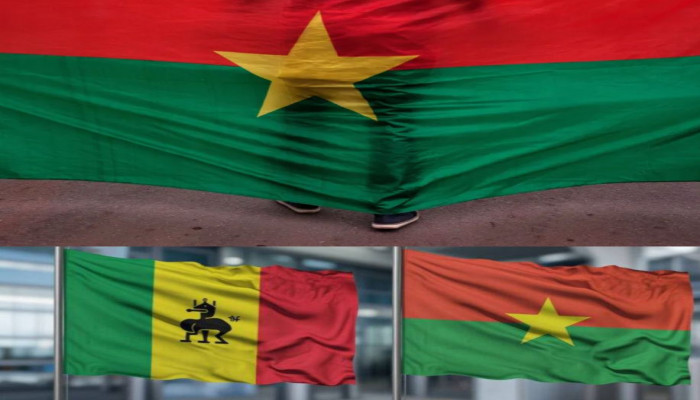
Mali and Burkina Faso have announced that they will impose visa restrictions on citizens of the United States, responding to recent travel bans introduced by US President Donald Trump. The two West African countries said their decision was based on the principle of reciprocity, as their own citizens now face restrictions when travelling to the United States.
In separate official letters shared late on Tuesday, both governments made it clear that Americans travelling to Mali and Burkina Faso would now face similar conditions to those imposed on their nationals by US authorities.
Mali’s Ministry of Foreign Affairs and International Cooperation said that US citizens entering Mali would be subject to “the same conditions and requirements as those imposed by the American authorities on Malian citizens entering the United States”. The ministry added that the decision was being implemented “as a matter of reciprocity and with immediate effect”.
Burkina Faso issued a similar statement, saying it would apply “equivalent visa measures to citizens of the United States of America”. The government also stressed that Burkina Faso “remains committed to mutual respect, the sovereign equality of States, and the principle of reciprocity in its international relations”.
These announcements came weeks after President Trump said on December 16 that he was expanding a US travel ban by adding seven more countries and the holders of Palestinian Authority documents. The decision meant that nationals from these places were “fully” restricted and limited from entering the United States.
Mali and Burkina Faso were among the countries added to the list, which mainly included Arab and African nations. According to Trump, the expanded ban was introduced to meet US “foreign policy, national security, and counterterrorism objectives”.
In a section explaining the reasons for banning nationals from Burkina Faso, the US Department of State said it had found that “terrorist organisations continue to plan and conduct terrorist activities throughout Burkina Faso”. The statement also referred to issues such as visa overstays and a past refusal by the country to “accept back” its nationals who were deported from the United States.
Regarding Mali, the US announcement said the State Department had determined that “armed conflict between the Malian government and armed groups is common throughout the country”. It further stated that “terrorist organisations operate freely in certain areas of Mali”.
With the inclusion of Mali and Burkina Faso, the total number of countries affected by Trump’s travel bans rose to 19, along with Palestine. Trump had also introduced similar travel restrictions during his first term as president.
Along with Niger, which was also added to the US ban list in mid-December, Mali and Burkina Faso have, in recent years, moved away from close relations with Western countries. The three nations have formed a regional alliance called the Alliance of Sahel States (AES), aimed at strengthening cooperation among them.
All three countries are currently led by military governments. In recent years, they have deepened their ties with Russia while ordering French and US troops to leave their territories. Mali, in particular, has welcomed Russian forces, including around 1,500 personnel from the Wagner mercenary group and about 1,000 fighters from the Kremlin-controlled paramilitary group Africa Corps.
At a recent Sahel summit held in Bamako, Mali, Burkina Faso, and Niger announced the creation of a joint military battalion. This force aims to fight armed groups operating across the region.
Despite these efforts, the security situation in the Sahel remains fragile. The three countries continue to face increasing attacks from separatist groups as well as armed organisations linked to al-Qaeda and ISIL (ISIS). So far, the new regional cooperation hasn’t made any clear improvement in security on the ground.
The reciprocal visa bans announced by Mali and Burkina Faso highlight growing tensions between the Sahel states and the United States, as well as their determination to respond directly to policies they view as unfair to their citizens.



 Loading...please wait
Comments