




Malaysia PM orders strict action against Rohingya refugees gathering outside UNHCR office
- In Reports
- 08:52 PM, Jul 27, 2026
- Myind Staff
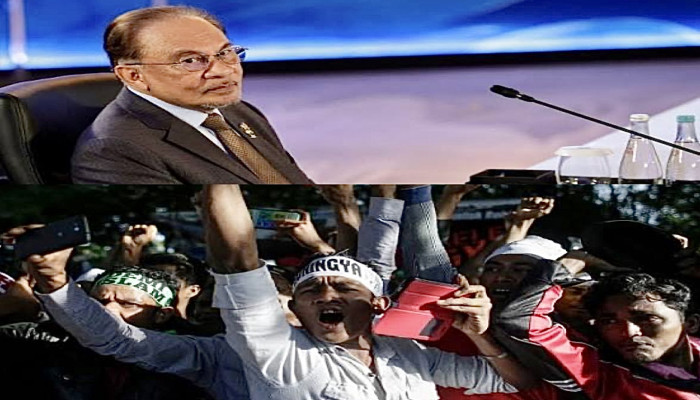
Malaysian Prime Minister Anwar Ibrahim has directed enforcement agencies to take strict action against a group of Rohingya Muslim refugees who gathered outside the office of the United Nations refugee agency (UNHCR) in Kuala Lumpur. He said authorities would detain those who do not have valid permits and warned that the government would strictly enforce the country's immigration laws.
The Prime Minister issued the directive on Monday after a large group of Rohingya refugees assembled outside the UNHCR office to seek assistance. According to reports, the gathering raised concerns among local residents. Anwar said the government would not allow anyone to occupy public spaces without permission and stressed the need to uphold the law.
According to the New Straits Times, hundreds of Rohingya refugees were allegedly evicted from their homes in Malaysia's northern Penang state on Sunday. After the eviction, they travelled to Kuala Lumpur in buses to seek help from the UNHCR. The refugees reportedly hoped the agency would assist them with their resettlement process.
The reported evictions came at a time when the Rohingya community has faced increasing hostility in Malaysia. Since May, online hate speech and misinformation targeting Rohingya refugees have increased. The growing negative campaign has led to greater scrutiny and harassment of the ethnic community. Reports have also linked the situation to widespread school closures affecting Rohingya children.
The United Nations High Commissioner for Refugees (UNHCR) has registered a large refugee population in Malaysia. According to the agency, around 215,600 refugees and asylum-seekers were registered in the country at the end of February. More than half of them are ethnic Rohingya Muslims who fled persecution in neighbouring Myanmar.
In a video shared on his official social media accounts, Prime Minister Anwar Ibrahim explained the government's position on the gathering. He said authorities must enforce the law without exception and expressed concern over the occupation of public spaces. Addressing the issue, he said, "No one has the right to take over any part of the city," he said. "I have directed immigration, police, and the local authorities to take strict action. Those without permits are to be brought to (the Immigration Department). The rest should be warned that action can be taken against them."
The Prime Minister's statement made it clear that the government intends to act against individuals who do not have legal permission to remain in the country. His remarks also signalled that authorities would closely monitor similar gatherings in the future.
The UNHCR office in Kuala Lumpur did not immediately respond to requests for comment on the latest developments. However, the agency had earlier expressed concern over the rising hostility faced by Rohingya refugees in Malaysia. Last Friday, UNHCR told Reuters that it was worried about the increase in online hate speech, disinformation and dehumanising narratives targeting Rohingya refugees and other displaced communities. The agency said such campaigns could fuel harassment and discrimination in everyday life.
Malaysia has long served as a destination for Rohingya refugees escaping violence and persecution in Myanmar. Although the country is not a signatory to the 1951 United Nations Refugee Convention, many Rohingya have considered Malaysia a relatively safe place to seek shelter. The country's Muslim-majority population has also contributed to its reputation as a refuge for members of the persecuted community.
Public attitudes toward the Rohingya changed during the COVID-19 pandemic. During that period, many refugees faced accusations of spreading the virus. They were also criticised for allegedly disrespecting local cultural norms and competing with Malaysian citizens for employment opportunities. Those claims increased public resentment and placed the Rohingya community under greater scrutiny.
The latest action ordered by Prime Minister Anwar Ibrahim reflects Malaysia's tougher approach toward undocumented refugees and asylum-seekers. At the same time, humanitarian agencies continue to express concern over the growing discrimination faced by Rohingya refugees. The situation has once again highlighted the challenges surrounding refugee protection, immigration enforcement and public sentiment in Malaysia.



 Loading...please wait
Comments