




Maharashtra government accepts all demands of tribal students, appeals to end hunger protest
- In Reports
- 06:36 PM, Aug 29, 2026
- Myind Staff
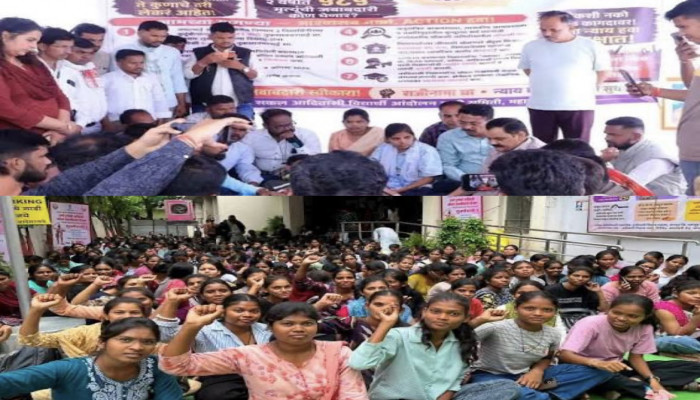
The Maharashtra government has accepted all the demands raised by tribal students who have been on a hunger strike in Pune, Nagpur and Nashik. Tribal Development Minister Ashok Uike announced the decision on Saturday, August 29, after Chief Minister Devendra Fadnavis held discussions with representatives of the protesting students.
The demands mainly focused on the recruitment of Scheduled Tribes (ST) candidates to government posts and improving facilities at residential schools for tribal children. The students had started their protest following the deaths of three tribal girls who died after snakebites at a residential school in Gadchiroli district.
The hunger strike is expected to be called off later on Saturday following the government’s decision. Representatives of the protesting students thanked state Congress leaders, the National Students’ Union of India (NSUI) and others who supported their agitation.
Speaking to reporters, Uike said Fadnavis had met delegations of the protesting students and accepted all their demands. “The chief minister has also assured them that after three months, a meeting will be held again to review the implementation of the decisions and to see whether there are any difficulties,” the minister said.
Uike appealed to the students who are on hunger strike to end their protest and return to their studies. He said the government had agreed to address their concerns through a time-bound process and would review the progress after three months.
One of the major demands involved the placement of Scheduled Tribes in the second position in the point roster under the relevant government resolution. Uike said the government had already formed a committee to examine the matter. It will take further action after receiving the committee’s recommendations, which are expected within three months.
The government also held detailed discussions on recruitment under the Panchayats (Extension to Scheduled Areas) Act, commonly known as PESA, as well as recruitment in non-PESA areas. Uike said nine of the 17 cadres covered under PESA had already completed their recruitment process. The government has now directed officials to immediately begin recruitment for the remaining cadres.
Another key issue involved the creation of supernumerary posts for Scheduled Tribe candidates. The students had raised the issue in connection with a Supreme Court judgment dated July 6, 2017. Uike said the government would determine the number of such posts within three months. It would then complete the process within six months.
The condition of tribal residential schools also formed an important part of the students’ demands. The government has directed that third-party audits be carried out at both aided and government-run tribal residential schools. The audits will identify deficiencies in the schools. Uike said the government would take prompt action to address the problems found during these audits.
The protesting students said their main demand was the recruitment of candidates to 12,500 vacant posts. They said the government had agreed to provide a clear timetable for filling these positions. According to the student representatives, Fadnavis assured them that the government would identify the vacant posts within three months.
The students also raised concerns over candidates who secured government jobs without obtaining caste validity certificates. They claimed that some candidates appointed in 2018, 2019 and 2020 continued to remain in government service despite failing to submit the required validity certificates within six months.
The student representatives said the chief minister assured them that action against such candidates would begin from Sunday. This could include removing them from service wherever applicable.
The government also agreed to another demand related to the Direct Benefit Transfer (DBT) scheme. The students said the government cancelled the scheme on Saturday as they had demanded.
The central kitchen system at tribal residential schools was another issue discussed during the meeting. The students said the government had appointed a committee to examine the matter. The committee is expected to submit its report within 15 days to one month. The chief minister will take a final decision after receiving the report.
The student representatives said they were satisfied with the outcome of their meeting with the government. They said the administration had provided a time-bound programme to address their demands. They also credited the support they received from political leaders and student organisations for helping bring greater attention to their concerns.
The students specifically acknowledged the support of Congress leader Rahul Gandhi, NCP (SP) leader Rohit Pawar, state Congress leader Yashomati Thakur and NSUI. They said these leaders and the organisation helped provide them with a platform and brought media attention to their protest.
“The increased media coverage compelled the government to take note of our demands,” they said.
Earlier on Saturday, the Bombay High Court had also directed the Maharashtra government to ensure the well-being of the students who were on hunger strike. A division bench comprising Acting Chief Justice Ravindra Ghuge and Justice Gautam Ankhad said it did not want any more young lives to be lost.
With the state government agreeing to the demands and assuring the students of a fixed timeline for implementation, the protest in Pune, Nagpur and Nashik is expected to end later in the day.



 Loading...please wait
Comments