




Maharaja Nandakumar: The Gallows of Power
- In History & Culture
- 12:19 PM, Aug 11, 2026
- Bidhayak Das Purkayastha
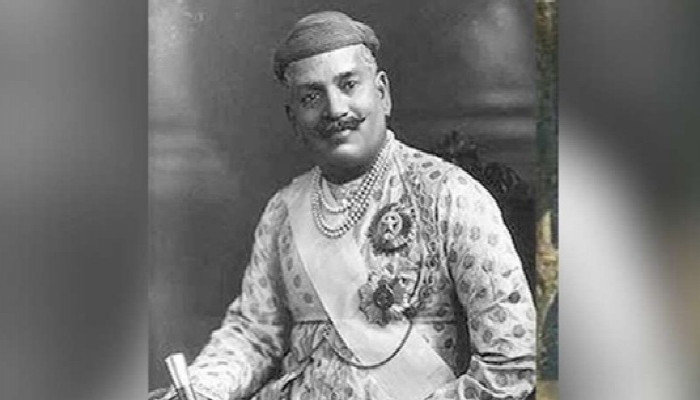
He accused the powerful—and ended up on the gallows.
On 5 August 1775, in Calcutta, Maharaja Nandakumar was hanged.
He was nearly seventy.
His official crime was forgery. His place in history, however, was secured by something far more consequential. Only months before his execution, Nandakumar had accused Warren Hastings, the most powerful British official in Bengal, of accepting bribes and abusing public office. Soon afterwards, Nandakumar himself was arrested, tried before the newly established Supreme Court at Calcutta, convicted under an English statute and sentenced to death.
The sequence was so extraordinary that it became one of the most enduring controversies in the history of British India.
Was it justice? Political retaliation? Or the frightening consequence of a colonial legal order whose institutions were still taking shape while its power was already expanding?
Nearly two and a half centuries later, the case still resists a simple verdict.
Before he became the man known in British records as Nuncomar and in history as Maharaja Nandakumar, he was Nanda Kumar Ray, a son of Bengal's old administrative society.
Born around 1705 at Bhadrapur, in present-day Birbhum, he came from a Bengali Brahmin family bearing the surname Ray. His father, Padmanabha Ray, was associated with revenue administration, and Nanda Kumar followed that path. The personal name of his mother has not been securely preserved in the surviving historical record—a curious documentary silence in the life of a man whose final days were recorded in extraordinary detail.
Family tradition traces the earlier roots of the Ray family to Jarul, in the present Murshidabad region, from where his great-grandfather, Ramgopal Ray, is said to have moved to Bhadrapur after marriage. The intervening generation is identified as Chandicharan Ray, followed by Padmanabha Ray and then Nanda Kumar. This genealogy, however, rests principally upon later regional tradition rather than an unbroken contemporary documentary record and should therefore be treated as family tradition, not immutable fact.
Bhadrapur, nevertheless, is central to Nandakumar's story. It was the landscape from which he emerged and is consistently associated with his birthplace and ancestral home. Local and official regional accounts continue to preserve that connection, while West Bengal Tourism records a tradition linking his ancestral residence with nearby Akalipur, where the historic Guhyakali temple is also associated with his patronage.
His later life acquired another geographical imprint far from Bhadrapur. He became associated with Basudevpur Mouza in present-day Purba Medinipur, traditionally said to have come to him in recognition of services rendered to the Tamluk royal house. The area subsequently became known as Nandakumar. It is important, however, to distinguish this later landed association from his ancestral homeland at Bhadrapur.
His family too remained within Bengal's administrative and political world. Later traditions identify his wife as Rani Kshemankari and record a son, Gurudas, together with three daughters—Sammāni, Anandamayi and Kinumani. Gurudas subsequently entered the Nawabi administrative sphere. The family legacy, therefore, was not simply one of landed privilege; it was rooted in the fiscal and administrative structures of Bengal itself.
This background matters.
Nanda Kumar did not emerge from nowhere. He was born into an indigenous administrative elite that had flourished under the Mughal-Nawabi order. His later confrontation with British authority was therefore not an encounter between a political outsider and a foreign government. It was the collision of an established Bengali political class with a new imperial power that was steadily taking control of the institutions through which Bengal was governed.
Nanda Kumar built a formidable career in that changing world. He served successive political authorities and became deeply involved in Bengal's revenue machinery. The East India Company itself employed him as a revenue administrator. In 1764, Mughal Emperor Shah Alam II conferred upon him the title “Maharaja”—an honorific marking his political standing, not evidence that he was a sovereign king.
He therefore understood both worlds: the old political order and the rapidly advancing power of the Company.
That knowledge would eventually place him at the fault line between them.
After Plassey in 1757 and Buxar in 1764, the East India Company was no longer merely a commercial enterprise. It was becoming a territorial and fiscal power. Yet its political authority had outrun its institutional framework. Bengal was being governed through an unstable mixture of Company administration, indigenous institutions, revenue machinery and personal influence.
The Regulating Act of 1773 attempted to impose order on this expanding power. It created the office of Governor-General of Bengal and established the Supreme Court of Judicature at Fort William in Calcutta. The Court began functioning in 1774, with Sir Elijah Impey as its first Chief Justice.
This was a turning point.
English law had arrived in Bengal with imperial authority behind it. But the boundaries of its jurisdiction, its relationship with the Company's administration and its application to Indian subjects remained deeply contested.
The Nandakumar affair would become the first great collision between these competing systems of authority.
In March 1775, Nandakumar brought serious allegations against Warren Hastings before the Supreme Council. He accused Hastings of accepting substantial sums of money in return for political favours and official decisions. Among the allegations was the claim that Hastings had received money from Munni Begum, the influential widow of Nawab Mir Jafar.
The charges were politically explosive.
Hastings was already locked in an increasingly bitter struggle with members of his own Council, particularly Sir Philip Francis and his allies. Nandakumar's accusations therefore entered a political atmosphere already charged with factional conflict.
Yet they cannot simply be dismissed as the inventions of a disgruntled rival.
There was substance to at least part of the financial controversy. Hastings acknowledged receiving 1.5 lakh rupees from Munni Begum, although he denied that the payment constituted a bribe and described it as an established form of entertainment allowance.
The explanation remained contested.
But the transaction itself was real.
Nandakumar had therefore not merely circulated rumours. He had placed specific financial accusations against the Governor-General before the highest political authority in Bengal.
Then came the astonishing reversal.
An old accusation of forgery against Nandakumar was revived. The alleged offence concerned a document dating from 1769—years before the Supreme Court at Calcutta existed. In May 1775, Nandakumar was arrested.
The timing was devastating.
The man who had just accused the Governor-General of corruption was suddenly facing a capital prosecution.
And the case was to be heard by the very institution representing the new British judicial authority in Bengal.
There was another circumstance that made the proceedings particularly troubling.
The Chief Justice was Sir Elijah Impey, a longstanding personal friend of Warren Hastings.
Friendship, by itself, proves no conspiracy. Nor does the proximity of a prosecution to a political accusation establish that the prosecution was fabricated. History cannot substitute suspicion for evidence.
But chronology matters.
So does institutional independence.
A Governor-General facing serious allegations. A political accuser suddenly facing a capital charge. A newly established court applying English criminal law in Bengal. And a Chief Justice personally connected with the man whose political position the accused had just challenged.
Even if no documentary proof exists that Hastings personally ordered the prosecution, the circumstances inevitably raised the appearance of political influence.
Nandakumar was tried for forgery before the Supreme Court. The prosecution relied upon an English statute under which forgery was a capital felony.
He was convicted.
The sentence was death.
But the legal controversy did not end with the verdict.
The alleged forgery had occurred before the creation of the Supreme Court. Questions arose over whether the English statute invoked against Nandakumar could properly be applied in Bengal and whether the Court possessed jurisdiction to impose such a punishment upon an Indian subject for an offence committed under an earlier legal order.
Later legal historians have disagreed sharply over these questions.
That disagreement goes to the heart of the case.
The issue was not merely whether Nandakumar had forged a document. It was whether a newly established colonial court could legitimately apply an English capital statute to an Indian defendant for conduct allegedly committed before that court existed.
A conviction may be procedurally regular and still provoke profound questions about the legitimacy of the law under which it was obtained.
On 5 August 1775, Nandakumar was taken to the gallows at Calcutta.
He was executed.
He became the first person executed under the jurisdiction of the newly established Supreme Court there.
With that execution, an administrator became a symbol.
The controversy did not end at the gallows. It travelled from Calcutta to London. The conduct of Warren Hastings and Elijah Impey became part of the wider British debate over the morality and governance of the Company's territories. During the later impeachment of Hastings, the Nandakumar affair became one of the episodes invoked in questioning the conduct of British power in India.
The language surrounding the execution gradually hardened.
Nandakumar came to be remembered as the victim of a “judicial murder.”
Thomas Babington Macaulay's enormously influential account of Hastings helped establish that interpretation in the popular historical imagination.
But powerful prose is not the same thing as conclusive evidence.
The surviving record does not permit us to state as an established fact that Hastings personally ordered Nandakumar's prosecution or execution. Nor can every allegation Nandakumar made against Hastings be treated as proven. Nandakumar himself was a political operator, with ambitions, alliances and enemies. He was deeply embedded in the factional politics of eighteenth-century Bengal.
Yet acknowledging that complexity does not remove the darker questions surrounding the case.
It sharpens them.
The real historical question is not simply whether Nandakumar was guilty or innocent.
It is whether law was able to remain independent of political power at the very moment when colonial authority was consolidating itself in Bengal.
That question remains uncomfortable.
The British presented the rule of law as a foundation of legitimate government. Yet in Bengal, law was being introduced simultaneously with conquest, revenue extraction and political domination. The institutions of justice were not developing inside a settled constitutional state. They were being constructed within an expanding colonial order.
Nandakumar's case exposed that contradiction with unusual clarity.
Colonialism did not always confront its opponents as open rebels. Sometimes it confronted administrators, petitioners, intermediaries and former allies—men who knew the system from within and became dangerous when their interests collided with those of the men who controlled it.
Nandakumar belonged to that dangerous category.
His story also warns us against imposing modern political categories upon the eighteenth century.
To call him a freedom fighter would be historically inaccurate. He was not fighting for an independent Indian nation. Modern Indian nationalism had not yet emerged as the political framework through which such a struggle would be understood.
But history often gives individuals meanings beyond their own intentions.
Nandakumar's execution became symbolic because it demonstrated the vulnerability of an Indian political actor confronting the emerging machinery of British power—and discovering that the machinery of law could reach him with lethal force.
That is why the case endured.
The deepest tragedy is not simply that an old man was hanged.
It is that law and power became almost impossible to separate.
Perhaps Hastings never explicitly ordered the prosecution. Perhaps Impey sincerely believed he was administering the law. Perhaps Nandakumar was, in fact, guilty of the offence charged.
None of those possibilities eliminates the larger historical problem.
A justice system must be judged not merely by its ability to punish the guilty, but by the independence of those who administer it, the legitimacy of its jurisdiction, the fairness of its procedures and the confidence it inspires among those subject to its authority.
In Nandakumar's case, these questions converged at precisely the moment when British power was becoming entrenched in Bengal.
The consequence was irreversible.
Nandakumar died.
Hastings survived.
The Company survived.
The Empire expanded.
But the controversy survived with it.
And perhaps that is Nandakumar's most enduring legacy.
He stands at the threshold between two Bengals: the Bengal of Mughal-Nawabi political culture and the Bengal of British colonial administration. His career belonged to the first; his execution revealed the coercive power of the second.
He was an insider who became an accuser.
An administrator who became an accused.
A political player who became a historical symbol.
And finally, a man who entered history through the gallows.
Two hundred and fifty years later, the most important question is no longer simply whether Maharaja Nandakumar was guilty of forgery.
The larger question is more enduring:
When political power and judicial power operate within the same imperial structure, who ensures that justice remains justice—and does not become an instrument of power?
Bengal confronted that question in 1775.
Nandakumar paid for it with his life.
And history has never quite stopped asking it.
Image source: IndiaTV News
Disclaimer: The opinions expressed within this article are the personal opinions of the author. MyIndMakers is not responsible for the accuracy, completeness, suitability, or validity of any information on this article. All information is provided on an as-is basis. The information, facts or opinions appearing in the article do not reflect the views of MyindMakers and it does not assume any responsibility or liability for the same.



 Loading...please wait
Comments