



Madurai Court sentences nine cops to death in Sathanukulam father-son custodial death case
- In Reports
- 01:13 PM, Apr 07, 2026
- Myind Staff
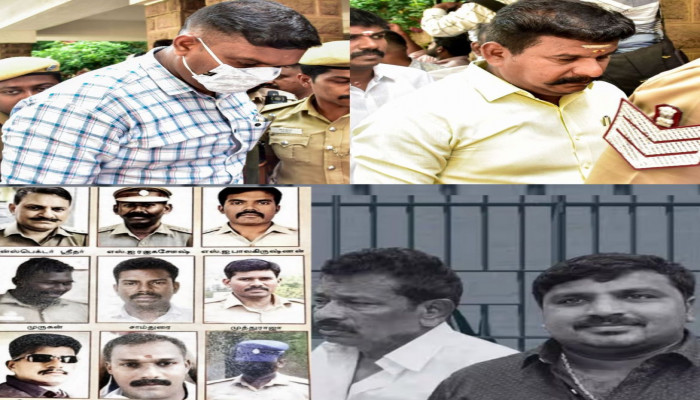
A court in Tamil Nadu’s Madurai district on Monday sentenced nine policemen to death for their role in the custodial torture and deaths of trader P Jayaraj and his son J Benicks. The incident, which took place in Thoothukudi district in June 2020, had sparked outrage across the country and raised serious concerns about police brutality and human rights violations.
The convicted officers include Inspector Sridhar, Sub-Inspectors Balakrishnan and Raghu Ganesh, and police personnel Murugan, Samadurai, Muthuraja, Chelladurai, Thomas Francis, and Veilumuthu. The court described the case as a grave misuse of power and made it clear that such actions cannot be justified under any circumstances. At the same time, it noted that there are many honest officers in the police force and said the judgment would not “instill fear among police”.
Delivering strong remarks, the court said, "Father and son stripped, ruthlessly assaulted... Heart shudders reading about it." It further observed that the victims were "stripped and ruthlessly assaulted in front of each other as an act of vendetta," and added that "the heart shudders on reading about it." These observations highlighted the brutality of the crime and the emotional impact it carries.
The court stressed that the incident was a clear case of abuse of authority. It said that those who are paid from public funds cannot use stress as an excuse for such acts. It also noted that if not for the constant monitoring by the Madurai Bench of the Madras High Court, “the truth would have been buried.” This underlined the importance of judicial oversight in ensuring justice.
The Central Bureau of Investigation (CBI), which handled the case, had argued that the crime fell under the “rarest of rare” category. It pushed for the maximum punishment, either a death sentence or life imprisonment without parole. The prosecution said that the brutality of the act shocked the conscience of society. It also pointed to testimonies from three direct witnesses as key evidence. The agency highlighted that the victims were beaten mercilessly with weapons, making it a severe violation of human rights.
The case dates back to June 19, 2020, during the COVID-19 lockdown. Jayaraj and Benicks, who owned a mobile shop, were arrested for allegedly keeping their shop open beyond permitted hours. This claim was later found to be false. They were taken to the Sathankulam police station and later sent to judicial custody. Within a few days, both died.
Family members alleged that the two were tortured overnight at the police station. They reported serious injuries, including rectal bleeding and other signs of extreme physical abuse. These claims were later supported during the investigation.
The case was initially handled by the state’s CB-CID but was later transferred to the CBI following directions from the Madras High Court. The CBI arrested 10 policemen, including an inspector, sub-inspectors, and constables. Murder charges were filed against them.
A major breakthrough in the case came from the testimony of a woman constable. She reportedly told investigators that the victims were assaulted throughout the night. She also mentioned seeing blood stains on tables and lathis at the station. This statement played a crucial role in strengthening the case.
Investigators also faced hurdles during the probe. Important CCTV footage from the Sathankulam police station had been deleted. It was revealed that the recordings were set to be erased each day automatically and were not preserved, raising questions about evidence handling.
The trial lasted for more than five years and involved the examination of over 100 witnesses. The long legal process reflects the complexity of the case and the effort taken to ensure accountability.
This judgment marks a significant moment in the fight against custodial violence in India. It sends a strong message about the consequences of abusing power and violating basic human rights.



 Loading...please wait
Comments