



Lok Sabha rejects fast-track women’s quota bill after NDA falls short of required majority
- In Reports
- 01:10 PM, Apr 18, 2026
- Myind Staff
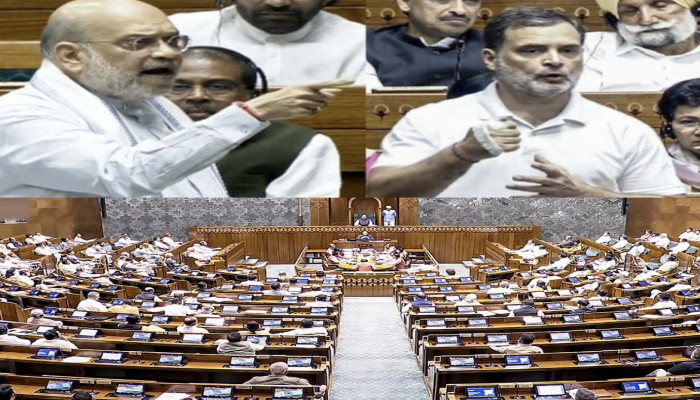
The Lok Sabha on Friday rejected a key bill that aimed to speed up the implementation of women’s reservation in legislatures without conducting a fresh Census. The proposal failed to secure the required two-thirds majority, despite receiving support from a significant number of members.
Out of the 528 members who participated in the voting process, 298 voted in favour of the bill while 230 opposed it. However, the National Democratic Alliance (NDA) needed at least 352 votes to pass the legislation.
The bill was designed to fast-track the implementation of the women’s quota by removing the requirement of a new Census before carrying out delimitation. This requirement has been a major condition linked to the rollout of reservation for women in Parliament and state assemblies. By bypassing this step, the government aimed to operationalise the quota sooner.
Following the bill’s failure, Union Minister Kiren Rijiju requested Speaker Om Birla not to proceed with two other related legislations. These included the Delimitation Bill, 2026 and the Union Territories Laws (Amendment) Bill, 2026, which were also part of the broader plan to restructure representation.
This development comes during a special three-day session of Parliament held from April 16 to April 18. The session was specifically convened to discuss amendments to the "Nari Shakti Vandan Adhiniyam", also known as the Women’s Reservation Act. This law provides for 33 per cent reservation for women in the Lok Sabha and state legislative assemblies.
The proposed amendments were intended to ensure that the reservation could be implemented by 2029. As part of the plan, the government also suggested increasing the total strength of the Lok Sabha from the current 543 seats to 850 seats. This expansion was meant to accommodate the reservation framework ahead of the next general elections.
Another major aspect of the proposal was to carry out delimitation based on the last published Census instead of waiting for a new one. This move drew strong criticism from opposition parties. They argued that such a step could impact the fairness of representation and demanded that the government withdraw the amendments.
Reacting to the outcome, Leader of Opposition in the Lok Sabha, Rahul Gandhi, strongly criticised the bill. He questioned its intent and accused the government of trying to alter the country’s electoral structure. "We have defeated the bill in the Lok Sabha. We have always said that the bill was not aimed at uplifting women, but an attempt to change the electoral structure of the country. I am asking Prime Minister Narendra Modi to implement the Women's Reservation Bill 2023 and the entire Opposition will help you in doing that," Rahul Gandhi said while speaking to reporters outside Parliament.
On the other hand, the Bharatiya Janata Party (BJP) continued to support the idea of reserving 33 per cent seats for women in both the Lok Sabha and state assemblies. The government maintained that the proposed changes were necessary to implement the reservation effectively and within a defined timeline.
Prime Minister Narendra Modi addressed concerns raised by the opposition, especially regarding the impact of seat expansion on southern states. He assured that the proposed increase in Lok Sabha seats would not disadvantage these regions.
Union Home Minister Amit Shah also spoke in the House to clarify the government’s position. He stated that the representation of southern states would be protected even after the expansion. He added that these states might even see a slight increase in their representation when the Lok Sabha’s strength grows from 543 to around 816 seats.
The rejection of the bill highlights the ongoing political differences over how and when to implement women’s reservation in India. While there is broad agreement on the need for greater representation of women in legislatures, the method of achieving it remains a point of contention between the government and the opposition.
The outcome also raises questions about the timeline for implementing the Women’s Reservation Act. With the bill failing to pass, the process may continue to depend on the completion of a fresh Census and subsequent delimitation, unless a new approach gains consensus in Parliament.



 Loading...please wait
Comments