



Lok Sabha, Rajya Sabha reject opposition’s bid to remove CEC Gyanesh Kumar
- In Reports
- 01:07 PM, Apr 07, 2026
- Myind Staff
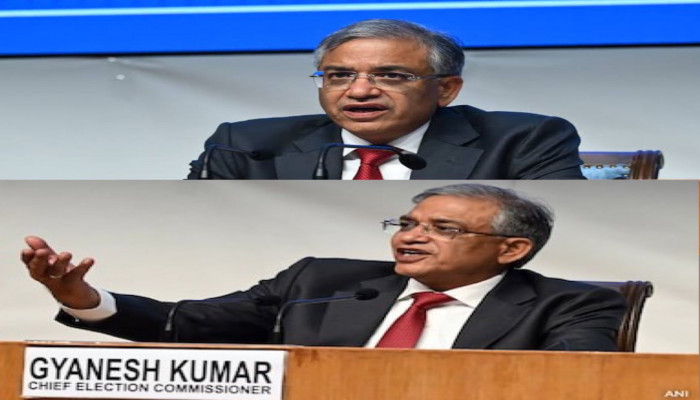
In a significant development, both the Lok Sabha and the Rajya Sabha have rejected notices submitted by Opposition parties seeking the removal of Chief Election Commissioner Gyanesh Kumar. The move marks the end of the first-ever attempt in Parliament to initiate proceedings for the removal of a sitting CEC. The notices, which were piloted by the Trinamool Congress, had been submitted separately in both Houses on March 12.
The rejection came from Rajya Sabha Chairman CP Radhakrishnan and Lok Sabha Speaker Om Birla on Monday. A communique issued by the Rajya Sabha secretariat stated that after “careful and objective assessment of all relevant aspects and issues involved, the Hon’ble Chairman, Rajya Sabha, in exercise of the powers vested in him under section 3 of the Judges (Inquiry) Act, 1968, has refused to admit the said notice of motion.”
Similarly, the Lok Sabha secretariat issued a bulletin confirming the Speaker’s decision. It stated, “Members are informed that a notice of Motion dated the 12th March, 2026 signed by 130 Members of Lok Sabha under Article 324(5) of the Constitution of India, read with Article 124(4) thereof, Section 11(2) of the Chief Election Commissioner and Other Election Commissioners (Appointment, Conditions of Service and Term of Office) Act, 2023 and the Judges (Inquiry) Act, 1968, seeking the removal of Shri Gyanesh Kumar, Chief Election Commissioner, was submitted to Hon’ble Speaker, Lok Sabha.” The statement further added, “After due consideration of the notice of Motion and a careful and objective assessment of all relevant aspects and issues involved therein, the Hon’ble Speaker, Lok Sabha, in exercise of the powers vested in him under section 3 of the Judges (Inquiry) Act, 1968, has refused to admit the said notice of Motion.”
Under the law governing the appointment and functioning of election commissioners, the Chief Election Commissioner can only be removed in the same manner as a judge of the Supreme Court. This means the process requires impeachment by both Houses of Parliament. The provision ensures a high threshold for removal to protect the independence of the Election Commission. Section 3 of the Judges (Inquiry) Act, 1968, gives the Speaker or Chairman the authority to either admit or reject such motions after reviewing all relevant materials and consulting necessary sources.
The impeachment notice in the Rajya Sabha had been signed by 63 members, while in the Lok Sabha it carried the support of 130 members. Both notices were based on constitutional provisions including Article 324(5) and Article 124(4), along with relevant sections of the 2023 law and the Judges (Inquiry) Act. The Opposition had outlined seven specific charges against Kumar. These included allegations of “partisan and discriminatory conduct in office”, “deliberate obstruction of investigation of electoral fraud” and “mass disenfranchisement through SIR”.
The decision to reject the notices drew sharp reactions from Opposition leaders. Trinamool Congress Rajya Sabha floor leader Derek O’Brien expressed strong disapproval, stating, “Notice to remove CEC Vanish Kumar by Rajya Sabha MPs rejected. Reason? NO REASON GIVEN. BJP keeps mocking our great Parliament. SHAME.” His remarks highlighted concerns over the lack of a detailed explanation for the rejection.
Congress leader and Rajya Sabha chief whip Jairam Ramesh also criticised the decision. He said, “We know what happened to the last Chairman of the Rajya Sabha who accepted a petition moved by Opposition MPs.” His comment was seen as a reference to former Vice-President Jagdeep Dhankhar, who had earlier acknowledged an Opposition-backed notice against High Court judge Yashwant Varma before resigning.
This is not the first time in recent years that the Opposition has attempted to move impeachment motions. Over the past two years, such notices have been brought against judges, the Vice-President, the Lok Sabha Speaker, and now the Chief Election Commissioner. During the recent Budget session, a motion against the Speaker was defeated in the Lok Sabha, indicating a pattern of unsuccessful attempts by the Opposition to pursue such actions.
Tensions between the Opposition and Kumar have been ongoing, particularly over the issue of special intensive revision of electoral rolls. West Bengal Chief Minister Mamata Banerjee had taken a strong stand against the CEC. She personally appeared in court and staged a five-day-long dharna in Kolkata to protest against his actions.
Adding to the controversy, Leader of the Opposition in the Lok Sabha, Rahul Gandhi, had earlier alleged that questionable voters were added to the electoral rolls in Karnataka and Maharashtra in collaboration with the BJP. These allegations were strongly denied by the Election Commission, which dismissed the claims and asked Gandhi to submit a formal complaint through an affidavit if he wished to pursue the matter.
With both Houses refusing to admit the notices, the attempt to remove Gyanesh Kumar has formally come to a close. The development highlights the high constitutional safeguards involved in the removal of key officials like the Chief Election Commissioner and underscores the ongoing political tensions between the ruling party and the Opposition.



 Loading...please wait
Comments