




Lok Sabha passes key taxation and other bills amid opposition protests
- In Reports
- 06:29 PM, Aug 06, 2026
- Myind Staff
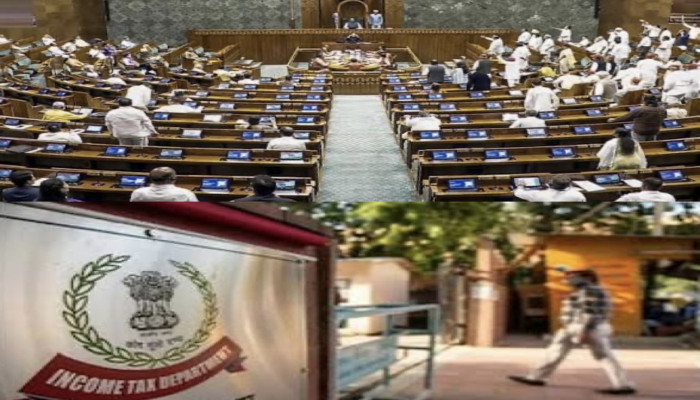
The Lok Sabha on Thursday passed the Taxation and Other Laws (Amendment) Bill, 2026, amid continuous protests by Opposition members over several issues, including the alleged theft of donations at the Ram temple in Ayodhya. The Bill was passed through a voice vote without any debate due to persistent sloganeering in the House. After its passage, the House was adjourned for the day.
The legislation aims to attract more foreign investment, strengthen domestic electronics manufacturing and make India a more favourable destination for global businesses. It also introduces changes to the Payment and Settlement Systems Act, 2007. The government said the amendments will provide "process certainty" for foreign cloud companies using Indian data centres.
One of the key provisions of the Bill extends the income tax exemption available to foreign companies that hire contract manufacturers in India to produce electronic goods. This benefit has now been extended until the financial year 2040-41. The move is expected to provide long-term policy certainty and encourage global companies to expand manufacturing operations in the country.
The list of eligible electronic products includes mobile phones, laptops, personal computers, tablets, servers and their important parts and accessories. The government expects the extended tax benefit to increase investment in electronics production and strengthen India's position as a global manufacturing hub.
The Bill also supports the electronics supply chain by offering a 15-year income tax exemption, valid until 2040-41, to foreign companies that store electronic components in customs warehouses. These components will later be supplied to contract manufacturers operating in India. The measure is aimed at ensuring a steady supply of parts for electronics factories and encouraging global suppliers to establish operations in the country.
Another important amendment relates to foreign cloud companies. The Bill removes the existing approval and notification requirements for companies that use Indian data centres. It also allows Indian data centres to operate on a leased basis instead of limiting them to direct ownership. The government believes these changes will make it easier for international cloud service providers to expand their presence in India.
The Bill also proposes changes to digital payment rules. It removes the existing link between the Payment and Settlement Systems Act and the Income Tax Act. The amendment gives the Central government legal authority to modify the zero-Merchant Discount Rate (MDR) framework for UPI and RuPay card transactions.
At present, banks and payment system providers cannot charge users, either directly or indirectly, for payments made through UPI and RuPay debit cards. Under the new provisions, the Central government will have the power to decide through a notification which electronic payment modes or transactions must continue to remain free for users.
The Taxation and Other Laws (Amendment) Bill, 2026, replaces the ordinance issued on June 5. That ordinance had provided income tax exemption on interest income and capital gains earned by Foreign Portfolio Investors (FPIs) from investments in government securities.
The Bill also seeks to make India a more attractive destination for global fund managers. It reduces the number of conditions that overseas funds must meet to ensure that their global income is not taxed in India. The government expects this change to encourage more investment firms to relocate their operations to the country.
Finance Ministry sources said, "The proposals in the Bill share a single purpose of making India a more attractive and predictable place for global capital, manufacturing and business to come and stay."
During the proceedings, the Chair invited Revolutionary Socialist Party (RSP) member N. K. Premachandran to move a statutory resolution opposing the ordinance. However, he did not make any remarks. The Bill was then put to a voice vote and passed without discussion.
This is the seventh Bill passed by the Lok Sabha during the ongoing Monsoon Session. It is also the fifth Bill to receive approval without any debate. Parliamentary proceedings have remained affected by repeated protests from the Opposition.
The House had earlier spent nearly 10 hours discussing a Bill related to amendments in the anti-paper leak law. Another Bill that proposes making the insult of the national song Vande Mataram a punishable offence received only a brief discussion with participation from two members.
Earlier in the day, Speaker Om Birla adjourned the House until 2 PM shortly after the session began due to continuous sloganeering by Opposition members. Thursday also marked the 14th day of the Monsoon Session on which the Lok Sabha failed to complete the Question Hour. The current session began on July 20 and has witnessed frequent disruptions.



 Loading...please wait
Comments