



Lok Sabha approves ₹57,000 crore economic stabilisation fund to address global market shocks
- In Reports
- 01:09 PM, Mar 14, 2026
- Myind Staff
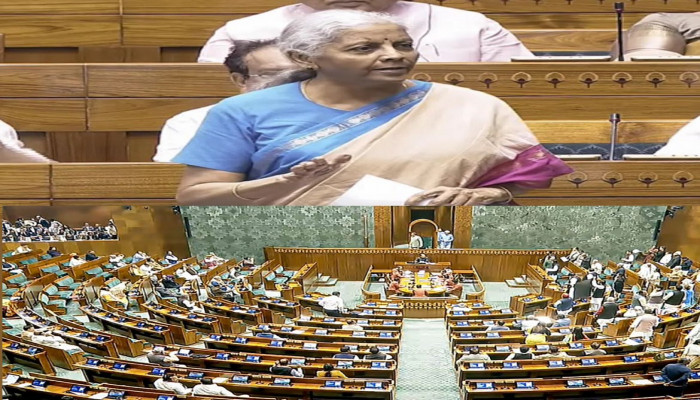
The Lok Sabha has approved a major financial provision of ₹57,381.84 crore to establish an Economic Stabilisation Fund aimed at protecting India’s economy from unexpected global challenges. The decision came as part of the supplementary demands for grants for the financial year 2025–26. Union Finance Minister Nirmala Sitharaman told the House that the new fund would give the government additional financial flexibility to deal with global economic uncertainties and sudden disruptions that could affect the country’s supply chains and markets.
According to the finance minister, the purpose of the Economic Stabilisation Fund is to prepare the government to respond quickly if global developments create pressure on the Indian economy. She explained that the fund would allow authorities to handle unforeseen disruptions in supply chains and other economic shocks that might arise due to international conflicts, rising commodity prices, or other unpredictable global events. By setting aside this financial reserve, the government hopes to ensure that India can maintain economic stability even when external conditions become challenging.
The fund was not included in the original Union Budget for 2025–26. However, budget documents for the financial year 2026–27 presented on February 1 later revealed that it had been introduced in the revised estimates for 2025–26. Initially, the revised estimate had set aside ₹50,000 crore for the fund. The Economic Stabilisation Fund has been placed under the reserve funds managed by the Department of Economic Affairs (DEA), which operates under the finance ministry and is responsible for handling important economic policies and financial management.
During the discussion in the Lok Sabha on Friday, the finance minister also addressed concerns about the government’s spending plans. She clarified that the supplementary demand for grants, which totals ₹2.01 lakh crore in net additional expenditure for 2025–26, would not affect the fiscal deficit figures already announced by the government. Parliament approved these supplementary grants after a debate in the House.
In total, the finance minister requested Parliament’s approval for spending connected to 61 separate grants. The overall expenditure linked to these grants amounts to nearly ₹2.81 lakh crore in gross terms. After accounting for adjustments and recoveries, the net cash outflow stands at about ₹2.01 lakh crore. These funds will be used by various government departments to meet additional financial requirements during the current financial year.
The Union Budget presented on February 1 had already laid out the government’s fiscal roadmap. According to the revised estimates for 2025–26, India’s fiscal deficit is expected to stand at 4.4 per cent of the gross domestic product (GDP). Looking ahead, the government continues to focus on fiscal discipline and consolidation. For the financial year 2026–27, the budget estimate has set a fiscal deficit target of 4.3 per cent of GDP, reflecting the government’s intention to gradually reduce the deficit while still supporting economic growth.
Although detailed guidelines on how the Economic Stabilisation Fund will be used have not yet been made public, government sources familiar with the discussions have suggested that the money will help shield consumers from sudden price increases, particularly in energy and essential commodities. Recent global tensions, especially the conflict involving the United States and Israel with Iran, have pushed energy prices higher in international markets. Such developments can create inflationary pressure in countries that rely heavily on imported energy, including India.
Officials indicated that the fund may also be used to strengthen supply chains for important goods. By investing in measures that improve resilience and stability in the supply of critical commodities, the government hopes to reduce the impact of global disruptions on domestic markets. This could include steps to manage price volatility, secure essential imports, and maintain the steady availability of key products for consumers and industries.
The creation of the Economic Stabilisation Fund reflects the government’s broader approach of preparing for global economic uncertainties while maintaining fiscal discipline. With the world economy facing geopolitical tensions, volatile commodity prices, and supply chain challenges, the government believes that having a dedicated reserve will help India respond more effectively to sudden shocks without disturbing its long-term fiscal targets.



 Loading...please wait
Comments