




Limits of Air Power
- In Military & Strategic Affairs
- 07:47 PM, Sep 29, 2026
- Major General Harsha Kakar
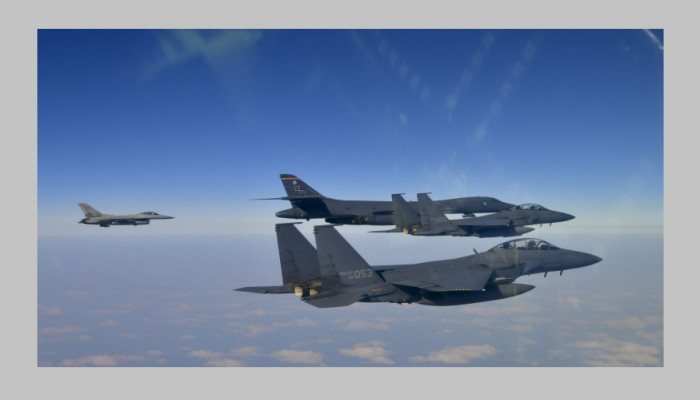
The Houthis are the latest in the fray to prove that air power can only bring about a temporary reprieve and is never a lasting solution towards terminating a conflict. Other examples in ongoing conflicts include Iran and the Russia-Ukraine war. What becomes clear is that air power and other aerial resources, including UAS (Unmanned Aerial Systems), can degrade military potential, damage critical assets, and cause civilian and military casualties, but never bring about capitulation.
In March 2025, the US, subsequently joined by Britain, launched over a thousand strikes against Houthi positions in Yemen in retaliation for their attacks on Israeli and US shipping in the Red Sea. The Houthis had begun targeting shipping in response to Israel’s strikes on Gaza. Trump had then mentioned on social media, ‘Funded by Iran, the Houthi thugs have fired missiles at US aircraft, and targeted our Troops and Allies.’
Forty-five days of relentless bombing by the two powers did damage military power of the Houthis, but failed to push them to surrender. Israel had also earlier launched air strikes against the Houthis in response to over 400 missiles fired by them against Israel. The US suddenly called off its air strikes. Trump announced that the ‘Houthis don’t want to fight anymore,’ and the US would ‘accept their word.’
The reality was that the US knew its air campaign was going nowhere. It lost multiple drones and came close to losing an aircraft. The Houthis struck back with missiles and UAS, though numbers were low. Oman brokered a ceasefire between both sides, with the Houthis announcing their intent not to target US vessels. However, Israel and its vessels remained a fair target. Trump had even stated at one time, “We hit them very hard, and they had a great ability to withstand punishment.” It never considered employing ground forces.
Saudi Arabia broke their ceasefire with the Houthis by targeting the Sanaa airport with aerial strikes, through their proxy Yemeni government, on 13th July, to stop the landing of an Iranian plane. Since then, it has faced their missiles and UAS, many fired by Iraq-based militias in coordinated operations, damaging their oil facilities and also blocking their oil exports through the Red Sea. The expansion of territory by the Houthis has further enhanced their ability to attack shipping through the Bab-al-Mandeb straits. No country has offered to join it in strikes on Yemen, aware that not much will be achieved.
On the contrary, it is the Houthis who possess the power to negotiate with the US into not entering the conflict with Saudi Arabia on the promise of not engaging their vessels. They intend to compel Riyadh to end its blockade and stop support for anti-Houthi forces in Yemen. Whether this finally plays out is to be seen. Neither the US nor the Saudis or their allies from the Mecca Pact contemplated ground operations. The lesson which flowed was that air power can provide reprieve but never bring about capitulation.
In Iran too, despite massive employment of air power from both the US and Israel, the war has not been brought to an end. Iran is insisting that the US adhere to the terms of the Islamabad MoU inked between the two nations. It continues to defy the US. Reports mention that the war cost over USD 33 billion, excluding estimates of damages to US infrastructure in the region.
The US is also critically short of essential munitions, including Patriot and THAAD missiles. Ultimately, they are compelled to adopt economic measures to bring Iran to the negotiating table, while launching intermittent strikes. They have yet to achieve their war aims of opening Hormuz and denying Iran nuclear weapons. In summary, both the conflicts that the US engaged in recent years, Yemen and Iran, banking on its superior air power to bring about a result, have failed. Reluctance to employ ground forces is a basic cause for the US not meeting its war aims.
In the Russo-Ukrainian conflict, the ground situation has largely remained frozen, and emphasis remains on aerial attacks, either UAS, missiles or air power employing standoff munitions. Both nations are engaging economic and logistical targets deep into the other’s territory, attempting to force the other onto the negotiating table. There are also reports that Ukraine has made some progress in reversing the scenario on the battlefield. Attempts at negotiations by the US to end the conflict have thus far failed. Neither side is willing to bend on its existing demands. With frozen frontlines, it is unlikely that the conflict can be brought to a close.
Operation Sindoor, where India employed aerial resources including Brahmos missiles and long-range vectors of the air force, to achieve its aims, is another example. It did bring about a ceasefire but nothing further. Tensions remain, and the possibility of operations recommencing is high.
With the advent of drones, there have been a plethora of opinions highlighting the diminished role of ground forces in future wars. There are views that army platforms, including armour and artillery guns, can become sitting ducks to loitering munitions, and future conflict will be air-dominated. Even movement of troops will face detection and engagement. Surprise is history. The only conflict where ground forces have been in contact is Ukraine, which has been taken as a basis for this view.
While the future is one of multi-domain operations, however, without ground operations, conflicts can never be brought to termination. There are major challenges which ground forces will face, including mass employment of UAS and difficulty in achieving surprise, solutions to which need to be found. More important than strategy and operational planning is determining tactics at the ground level to overcome challenges posed by loitering munitions and lack of surprise due to multiple surveillance sources, including satellites. This may involve modifications to equipment as well as wider dispersion, all of which can be tested in exercises.
In India’s case, this also has to be considered in a nuclear scenario and different terrains, as it has adversaries on both its major frontiers. Nothing is impossible once determination sets in. Patience, discussions, trials and exercises will provide the answer. However, once a solution is determined, preparing for it would take time. It also has to be a continuous process.
Disclaimer: The opinions expressed within this article are the personal opinions of the author. MyIndMakers is not responsible for the accuracy, completeness, suitability, or validity of any information on this article. All information is provided on an as-is basis. The information, facts or opinions appearing in the article do not reflect the views of MyindMakers and it does not assume any responsibility or liability for the same.



 Loading...please wait
Comments