



Life term for mass conversions: Chhattisgarh introduces strict anti-conversion bill in assembly
- In Reports
- 07:34 PM, Mar 19, 2026
- Myind Staff
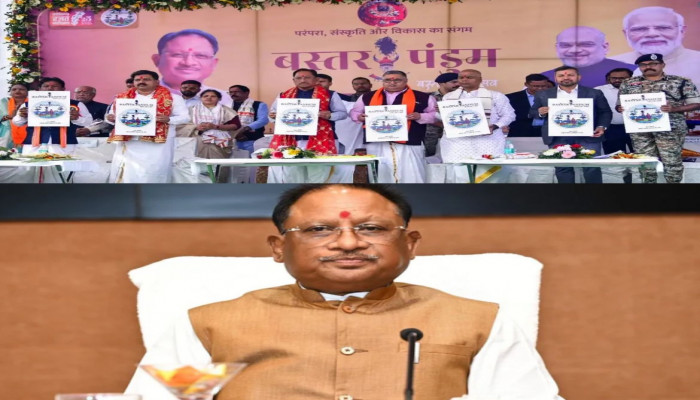
The Chhattisgarh government on Thursday presented a new bill in the state assembly aimed at curbing religious conversions carried out through force, fraud, inducement, or misrepresentation. The proposed law, titled the Chhattisgarh Dharm Swatantraya Vidheyak 2026, was introduced by Deputy Chief Minister Vijay Sharma, who also holds the Home portfolio. One of the most striking features of the bill is its provision for life imprisonment in cases involving “mass conversion,” signalling the government’s intent to enforce strict measures against unlawful religious conversions.
The bill outlines stringent punishments for different categories of offences. In cases where minors, women, persons with mental disabilities, or individuals belonging to Scheduled Castes, Scheduled Tribes, or Other Backward Classes are targeted, the punishment can extend up to 20 years of imprisonment. Additionally, all offences under this law are classified as cognisable and non-bailable, meaning the police can take immediate action without prior court approval, and bail is not easily granted.
At the same time, the bill makes a distinction between conversion and reconversion. It clearly states that returning to one’s ancestral religion will not be treated as a conversion under this law. This provision aims to address concerns related to individuals who choose to go back to their original faith.
The new legislation seeks to replace the existing Chhattisgarh Dharm Swatantraya Adhiniyam of 1968, which was originally adopted from Madhya Pradesh when Chhattisgarh became a separate state in 2000. The earlier law mainly required that the district magistrate be informed after a religious conversion had taken place. However, the government has argued that the old law is no longer sufficient due to changes in society, advancements in technology, and evolving communication methods.
The bill expands the definition of illegal conversion practices to include not only physical methods but also those carried out through digital platforms such as social media and electronic communication. It prohibits conversions done through force, coercion, undue influence, allurement, fraud, or even marriage if it is used as a tool for conversion. The term “allurement” is broadly defined to include offers of money, gifts, employment opportunities, free education, medical benefits, promises of a better lifestyle, or marriage. Similarly, “coercion” includes psychological pressure, physical force, threats, and even social boycott.
Another important aspect of the bill is its definition of “mass conversion,” which refers to the conversion of two or more persons in a single event. This definition has drawn attention due to its broad scope. The law also prohibits individuals or groups from directly or indirectly promoting or planning conversions through illegal means, whether in person or online. It also bans activities that endanger a person’s life or property for the purpose of conversion, as well as trafficking of women or minors for such purposes.
The proposed law introduces a mandatory process for those intending to convert. Individuals must submit a declaration to a designated authority, while religious leaders conducting the conversion must provide prior intimation. The “competent authority” is defined as the district magistrate or an officer not below the rank of additional district magistrate who has been specially authorised.
Once the application is submitted, the authority is required to publish details of the proposed conversion within seven days on an official website. Notices will also be displayed at the offices of the tehsildar, the local gram panchayat, and the police station. These notices will include the applicant’s name, their current religion, and the religion they intend to adopt. If the conversion does not take place within 90 days of approval, the application will automatically lapse.
The bill further clarifies that conversion carried out solely for the purpose of marriage, or marriages conducted to facilitate conversion, will be considered invalid unless proper legal procedures are followed. It also states that marriage alone will not be accepted as proof of religious conversion. Conversion certificates issued under this law will not serve as proof of identity or citizenship.
Authorities are given wide powers under the bill to verify conversions, investigate complaints, and summon necessary records. The law also restricts the acceptance of foreign or domestic funds for activities that may violate its provisions. In cases where violations are found, the state government has the authority to withdraw financial or infrastructural support from individuals or organisations involved.
The bill includes strict penalties for violations. General offences can attract imprisonment ranging from seven to ten years, along with a minimum fine of ₹5 lakh. In more serious cases involving vulnerable groups, the punishment increases to 10–20 years of imprisonment and a fine of at least ₹10 lakh. Courts are allowed to reduce the sentence in special circumstances, but the reasons must be clearly recorded in the judgment.
For mass conversions, the punishment is even more severe, with imprisonment ranging from 10 years to life, along with a minimum fine of ₹25 lakh. Repeat offenders may also face life imprisonment. If a public servant is found guilty of involvement in such offences, they can be punished with imprisonment between 10 and 20 years, along with a fine of at least ₹10 lakh.
The bill also provides for compensation to victims of illegal conversion, which can go up to ₹10 lakh. Investigations under this law will be conducted by police officers not below the rank of sub-inspector, and cases will be heard in special courts designated by the state government in consultation with the High Court. Until such courts are established, sessions courts will handle these cases. The law also aims to ensure speedy justice by directing that hearings be completed within six months from the submission of the final report, as far as possible.
The bill is currently under discussion in the assembly, where lawmakers are debating its provisions and implications.



 Loading...please wait
Comments