




Leh-Ladakh to develop ten model border hamlets: Ladakh Lieutenant Governor V K Saxena
- In Reports
- 06:28 PM, Jun 03, 2026
- Myind Staff
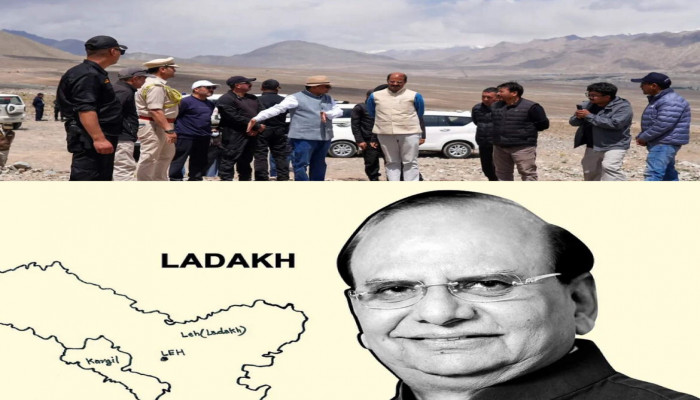
Chumur, a remote village located along the India-China border in eastern Ladakh, is set to undergo a major transformation under the Centre’s Vibrant Villages Programme (VVP). On Tuesday, Lieutenant Governor Vinai Kumar Saxena laid the foundation stone for Ladakh’s first Model Border Village in Chumur. Situated at an altitude of nearly 16,700 feet, the village is home to 24 households and a population of 91 people. Most residents depend on Pashmina rearing and livestock-based activities for their livelihood.
The project is being developed as a model for sustainable growth in high-altitude border regions. Officials said it is expected to serve as a blueprint for similar development initiatives in other remote villages across Ladakh. Chumur will be the first among 10 villages identified for development under the programme in the Union Territory.
The initiative is part of the Centre’s larger effort to strengthen border settlements, improve the quality of life of residents and reduce migration from remote frontier areas. Authorities believe better infrastructure and livelihood opportunities will encourage people to continue living in these strategically important regions.
As part of the project, families in Chumur will receive climate-resilient solar houses that are designed to withstand the region’s harsh winters. Temperatures in the area can drop to as low as minus 35 degrees Celsius. Each housing unit will include an attached bathroom, space for a kitchen garden, livestock sheds, fodder storage facilities and an additional room that can be used for homestay tourism activities.
The village will also see major improvements in civic infrastructure. Plans include a year-round water supply system, better sanitation facilities, renewable energy-based power infrastructure and improved digital connectivity. Development work will also cover the construction of a school, a primary health centre, a community hall, parks, a community-run café and a tourist interpretation centre.
Officials said the project aims to generate new livelihood opportunities for local residents. Tourism is expected to be promoted along the Korzok-Hanle circuit, while efforts will also be made to encourage the production and sale of value-added Pashmina products. These measures are expected to provide additional sources of income for villagers.
A commercial greenhouse will also be established in Chumur with support from the Defence Institute of High Altitude Research (DIHAR). The facility will allow year-round cultivation of vegetables despite the extreme weather conditions. Officials said the produce will not only meet local requirements but will also be supplied to nearby Army and Indo-Tibetan Border Police establishments.
Addressing residents during the foundation-laying ceremony, Saxena said the initiative reflects Prime Minister Narendra Modi's vision of transforming border villages into vibrant and self-reliant communities. He described the project as “an effort not only to improve living conditions but also to strengthen the strategic and economic resilience of India's border regions.”
The development of Chumur as a Model Border Village is expected to bring significant improvements in housing, infrastructure and economic opportunities. Authorities believe the project will help create a more sustainable future for residents while strengthening India’s border regions. Officials expect the first phase of housing construction to be completed by September, subject to weather conditions.



 Loading...please wait
Comments